

Commentary
- +2
Memduh Karakullukçu, Dmitri Trenin, Ümit Pamir, …
{
  "authors": [
    "Adnan Vatansever"
  ],
  "type": "legacyinthemedia",
  "centerAffiliationAll": "dc",
  "centers": [
    "Carnegie Endowment for International Peace",
    "Carnegie Europe",
    "Carnegie Russia Eurasia Center"
  ],
  "collections": [],
  "englishNewsletterAll": "ctw",
  "nonEnglishNewsletterAll": "",
  "primaryCenter": "Carnegie Endowment for International Peace",
  "programAffiliation": "SCP",
  "programs": [
    "Sustainability, Climate, and Geopolitics"
  ],
  "projects": [],
  "regions": [
    "Caucasus",
    "Russia",
    "North America"
  ],
  "topics": [
    "Climate Change"
  ]
}
Source: Getty
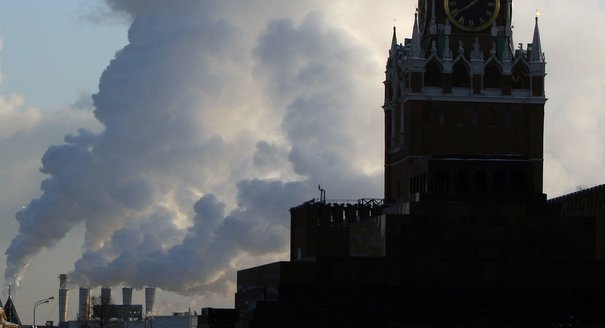
If Russia can create the right incentives for cutting energy consumption, it has the opportunity to become a leader in energy efficiency in the coming decade.
Source: The Moscow Times

But not much time is left to ensure that the next generations sail as safely as we have. The International Energy Agency, in its recently released annual report, has a stark warning: We have about five years for enacting drastic carbon emission cuts before getting “locked in” to a global temperature increase that could be excessive. Despite ongoing financial strains around the globe, delaying action is economically unreasonable. And yet, leaders convening in Durban to look for a global solution remain locked in a game of “passing the buck.” No one nation is willing on its own to take the first step and commit to a drastic new path of decarbonization. Waiting for a collective buy-in remains the first choice politically.
The time to act is now because the window of opportunity is rapidly closing. The world’s leading carbon emitters must assume leadership. With most of the attention centered on the United States and China, expectations have been far lower for another major emitter — Russia. Recently overtaken by a narrow margin by India, Russia ranks fourth in carbon emissions, and it has a lot to offer to global negotiations. Indeed, Russia played a critical role in global climate talks in the past when, by ratifying the Kyoto Protocol, the treaty went into effect in 2005. But since then, Russian leaders have shied away from any further commitments that could constitute a potential economic burden.
Such a stance is not surprising. Russia remains a land of skeptics about climate change, where policymakers face little public pressure to act. Furthermore, Russian officials feel that their country has already outperformed others in cutting carbon emissions. They proudly boast that in the aftermath of the financial crisis in 2009, Russia’s emissions were almost 40 percent below their 1990 levels. And, as the argument goes, Russia has been a leader in improving its energy efficiency as well: The energy intensity of its economy dropped 34 percent in the 2000-08 period.
These numbers are not false. But when officials from Moscow base their international climate policy on them, they miss the point. Leadership is about surmounting big challenges. When targets are perceived as too easy to meet, claims for being a leader in decarbonization lay on weak foundations. By selecting 1990 as the base year for carbon reduction targets, the Kyoto Protocol never posed a real challenge for Russia to start with. The country’s economic collapse in the 1990s brought a drastic drop in carbon emissions. Thus far, Russia has needed no additional efforts to meet its commitment not to exceed the emission levels of 1990. This has been true even for the 15 percent to 25 percent emission cut target promised by President Dmitry Medvedev following the Copenhagen climate summit in 2009.
Likewise, improvements in Russia’s energy efficiency look remarkable at first sight, but it was primarily an outcome of the post-Soviet economic restructuring rather than a deliberate effort aimed at cutting energy consumption. Also, the declining energy intensity in the past decade came against the backdrop of a more than 20 percent rise in the preceding decade, when the economy contracted much faster than the fall in energy demand.
Yet, energy efficiency remains one area where Russia has the opportunity to truly demonstrate its leadership in the upcoming decade. This may well be the best and most cost-effective path toward a lower carbon future for the country.
The opportunity for change is enormous. Russia remains one of the least energy-efficient economies in the world. It is much less efficient than any other G8 member and the other so-called BRICS countries. The IEA estimates Russia’s annual energy saving potential is about the size of Britain’s energy consumption in a year.
As a step in the right direction, two years ago Medvedev signed legislation that called for a 40 percent reduction in energy intensity by 2020. A long list of proposed measures leaves no major sector of the economy untouched.
But the perennial concern is still there: Will the new law be implemented successfully? An order from above is rarely enough, as proved by numerous energy efficiency laws in the past. What Russia needs is to create the right incentives for cutting energy consumption. Limited financing for energy efficiency projects, slow progress in retrofitting buildings, a growing gap in transportation policy in Europe and Russia, and the uncertainty that a domestic emission trading system will be ever set up in the near future indicate that the right incentives are not there yet. Energy efficiency is Russia’s low hanging fruit. It should not be left rotting again. If not now, when?
Former Senior Associate, Energy and Climate Program
Vatansever was a senior associate in the Energy and Climate Program where he specializes in the energy sectors of the former Soviet republics and Eastern Europe.
Recent Work
Memduh Karakullukçu, Dmitri Trenin, Ümit Pamir, …
Adnan Vatansever, Анна Корппоо
Carnegie does not take institutional positions on public policy issues; the views represented herein are those of the author(s) and do not necessarily reflect the views of Carnegie, its staff, or its trustees.

Russia’s ruling party would have benefited from Putin appearing as its distant patron, but as an active frontman imposing his views on the public, he has done nothing but harm both the party’s election campaign and the ruling system overall.

Andrey Pertsev
They face an uphill climb, but they could draw on a strategy that other diplomats have used in the past.


Shana Tabak, Alejandro Martin Rodriguez

European Commission President Ursula von der Leyen is about to give her annual address on the state of the EU. Here’s what she won’t—but should—say.

Rym Momtaz

Depleted financial reserves and a shrinking tax base mean it is no longer possible to simultaneously deliver high defense spending, price stability, and economic growth.

Alexandra Prokopenko

Understanding the climatic pain points is necessary for policymakers hoping to minimize the war’s negative environmental consequences.


Alejandro Martin Rodriguez, Joy Arkeh, Sarah Yerkes