• Research
  • Emissary
  • About
  • Experts
Carnegie Global logoCarnegie lettermark logo
DemocracyIran
  • Donate
{
  "authors": [
    "Stefan Lehne"
  ],
  "type": "other",
  "centerAffiliationAll": "",
  "centers": [
    "Carnegie Endowment for International Peace",
    "Carnegie Europe"
  ],
  "collections": [],
  "englishNewsletterAll": "",
  "nonEnglishNewsletterAll": "",
  "primaryCenter": "Carnegie Europe",
  "programAffiliation": "",
  "programs": [],
  "projects": [],
  "regions": [
    "Europe"
  ],
  "topics": [
    "Foreign Policy"
  ]
}
Source: Getty

Other
Carnegie Europe

More Action, Better Service: How to Strengthen the European External Action Service

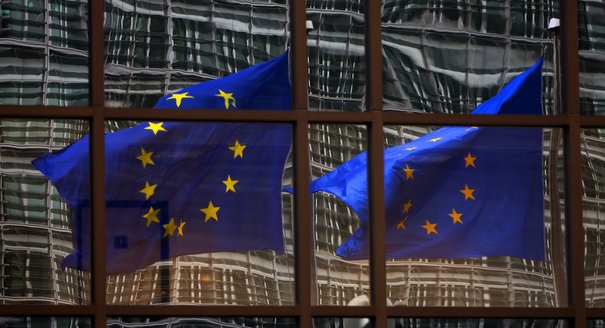
Roughly one year after its establishment, the European External Action Service still suffers from a number of design flaws, including an insufficient resource base and a lack of genuine buy-in on the parts of both the member states and the European Commission.

Link Copied
By Stefan Lehne
Published on Dec 16, 2011

The European Union is currently going through one of the most difficult periods of its existence. While the focus is on the efforts to save the euro, its foreign policy arm, the European External Action Service (EEAS), is struggling as well. Originally conceived in a more optimistic era, the foreign policy reforms of the Treaty of Lisbon are being implemented against this backdrop of crisis and loss of confidence. There is a risk that under these conditions, implementation will fall short of the full potential of the Lisbon reforms. Roughly one year after its establishment, the EEAS still suffers from a number of design flaws. It has an insufficient resource base and there is a lack of genuine buy-in on the parts of both the member states and the European Commission. These flaws can be overcome, however, if corrective action is taken:

  • Enhance the buy-in of member states: For the EEAS to grow into a dynamic leader of European foreign policy, member states must trust it more and support it more actively. In order to achieve this, the high representative should promote the systematic involvement of the member states’ diplomacies in the work of the EEAS, through increased tasking of foreign ministers with European missions, delegation-embassy teamwork, information sharing, and a supporting role for the EU delegations in the area of consular protection.
     
  • Strengthen the coherence of external action: Expectations that the Lisbon Treaty would narrow the gap between classical diplomacy and the external competencies of the European Commission in areas such as trade, development, energy, and the environment have not materialized. Both the Commission and the high representative need to take action in order to ensure that the various instruments of external policy can become part of a comprehensive and coherent strategy.
     
  • Set clear priorities: The EEAS has a lot on its plate, and without strong leadership and direction, much of its activity turns into empty words and sterile rituals. The high representative must take a stronger lead in setting priorities, in giving strategic direction, in streamlining the political dialogue with international partners, and in building a record of concrete policy successes through well-targeted personal engagement.
     
  • Improve institutional capacity: Today, there are probably fewer officials working on European foreign policy than before the Lisbon Treaty. The EEAS needs more manpower, better integration of its diverse components, and improved recruitment and training practices. The chain of command and the procedures should be reviewed to allow the EEAS to respond more rapidly to developments.

The foreign policy provisions of the Treaty of Lisbon represent the most ambitious reform effort in European foreign policy—ever. By taking action in these areas, the EU can begin to overcome some of the flaws in the system and make the vision of Lisbon a reality.

About the Author

Stefan Lehne

Senior Fellow, Carnegie Europe

Stefan Lehne is a senior fellow at Carnegie Europe in Brussels, where his research focuses on the post–Lisbon Treaty development of the European Union’s foreign policy, with a specific focus on relations between the EU and member states.

    Recent Work

  • Article
    What Can the EU Do About Trump 2.0?

      Stefan Lehne

  • Commentary
    Can the EU Meet the Trump Moment?

      Stefan Lehne

Stefan Lehne
Senior Fellow, Carnegie Europe
Stefan Lehne
Foreign PolicyEurope

Carnegie does not take institutional positions on public policy issues; the views represented herein are those of the author(s) and do not necessarily reflect the views of Carnegie, its staff, or its trustees.
More Work from Carnegie Endowment for International Peace

  • Crowds holding Iranian flags and photos of the late Khamenei
    Commentary
    Emissary
    Who Will Be Iran’s Next Supreme Leader?

    If the succession process can be carried out as Khamenei intended, it will likely bring a hardliner into power.

      • Eric Lob

      Eric Lob

  • A missile tail embedded in the ground in an open field with green ground cover and a blue sky.
    Commentary
    Emissary
    Turkey Has Two Key Interests in the Iran Conflict

    But to achieve either, it needs to retain Washington’s ear.

      Alper Coşkun

  • Commentary
    Carnegie Politika
    What Does War in the Middle East Mean for Russia–Iran Ties?

    If the regime in Tehran survives, it could be obliged to hand Moscow significant political influence in exchange for supplies of weapons and humanitarian aid.

      Nikita Smagin

  • people watching smoke rising at sunrise from rooftops
    Commentary
    Emissary
    Bombing Campaigns Do Not Bring About Democracy. Nor Does Regime Change Without a Plan.

    Just look at Iraq in 1991.

      Marwan Muasher

  • Commentary
    Strategic Europe
    Global Instability Makes Europe More Attractive, Not Less

    Europe isn’t as weak in the new geopolitics of power as many would believe. But to leverage its assets and claim a sphere of influence, Brussels must stop undercutting itself.

      Dimitar Bechev

Get more news and analysis from
Carnegie Endowment for International Peace
Carnegie global logo, stacked
1779 Massachusetts Avenue NWWashington, DC, 20036-2103Phone: 202 483 7600Fax: 202 483 1840
  • Research
  • Emissary
  • About
  • Experts
  • Donate
  • Programs
  • Events
  • Blogs
  • Podcasts
  • Contact
  • Annual Reports
  • Careers
  • Privacy
  • For Media
  • Government Resources
Get more news and analysis from
Carnegie Endowment for International Peace
© 2026 Carnegie Endowment for International Peace. All rights reserved.