

Q&A
Suzanne Maloney, Aaron David Miller, Karim Sadjadpour
{
  "authors": [
    "Karim Sadjadpour"
  ],
  "type": "legacyinthemedia",
  "centerAffiliationAll": "dc",
  "centers": [
    "Carnegie Endowment for International Peace",
    "Malcolm H. Kerr Carnegie Middle East Center"
  ],
  "collections": [],
  "englishNewsletterAll": "menaTransitions",
  "nonEnglishNewsletterAll": "",
  "primaryCenter": "Carnegie Endowment for International Peace",
  "programAffiliation": "MEP",
  "programs": [
    "Middle East"
  ],
  "projects": [],
  "regions": [
    "Middle East",
    "Iran",
    "Levant"
  ],
  "topics": [
    "Political Reform",
    "Nuclear Policy"
  ]
}
Source: Getty
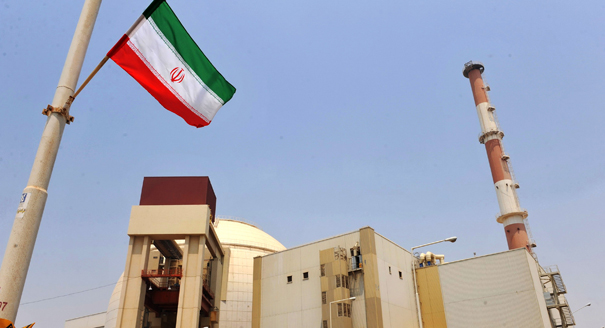
Thirty-three years after the revolution, under a reeling economy, the leaders of Iran are struggling to maintain the viability of the Islamic Republic and are increasingly turning to the military instead of the mosque to do so.
Source: Iran Primer

Demographically, Iran is a much different society than it was 33 years ago. Its population has grown from around 35 million in 1979 to approximately 75 million today. Before the revolution Iranians were a predominantly rural people (around 55 percent), while three decades later a large majority of Iranians (more than 70 percent) are urban dwellers.
Visitors to Iran are often struck by the society’s many dichotomies: Female education and literacy rates have increased dramatically since 1979, but women’s rights have been curtailed.
The median age of Iranian society is 27, but the median age of the country’s powerful political players—including the Supreme Leader, Guardian Council and Assembly of Experts—is well over 70.
Before the revolution, a secular autocracy presided over a largely traditional population, while today a religious autocracy rules over an increasingly secularized polity. (According to one oft-told joke, “Before the revolution people used to drink outside their homes and pray inside their homes; after the revolution people pray outside and drink inside.”)
33 years ago Iranian society was steeped in revolutionary fervor. Today it suffers from revolutionary fatigue. This is one reason, among many, why Iran’s 2009 uprising did not have the same durability as the popular uprisings which have unsettled and unseated numerous Arab dictatorships. People may aspire for revolutionary ends, but there’s no romanticism about, and limited appetite for, revolutionary means.
The story of the Iranian revolution and its aftermath was perhaps most incisively articulated by reformist thinker Mostafa Tajzadeh, who’s currently in prison. Before the revolution, Tajzadeh said, Iranians enjoyed all types of freedoms save for political freedom, which the revolution was meant to rectify. After the revolution, Iranians not only failed to attain political freedom, but they lost other freedoms in the process.
In some ways the political climate in Iran has come full circle over the last 33 years. In the first decade of the revolution there was a cult of personality around the revolution’s father, Ayatollah Khomeini, whose word was considered sacrosanct.
After Khomeini’s death in 1989, there was a two-decade struggle between pragmatic forces that believed the Islamic Republic needed to evolve with the times, and revolutionary purists, led by Supreme Leader Ayatollah Ali Khamenei, who believed that compromising on revolutionary ideals could unravel the entire system, just as perestroika did the Soviet Union.
Khamenei patiently but decisively prevailed, and in recent years his followers have attempted to create for him a similar cult of personality. Given his inferior clerical credentials, however, he has sought legitimacy in the military barracks more than the mosques.
Indeed perhaps the biggest difference over the past three decades has been the rise of the Revolutionary Guards as a political and economic force. The Islamic Republic is increasingly a military autocracy cloaked in clerical garb.
Iran’s international standing has also come full circle. The combination of the revolution, the hostage-taking of U.S. diplomats, and the eight-year war with Iraq turned Iran into an isolated pariah state for much of the 1980s.
After Khomeini’s death and the end of the war, under Presidents Rafsanjani and then Khatami, Iran made it a priority to reconstruct its war-torn economy and repair its foreign relations.
Over the last several years, a multitude of factors—Ahmadinejad’s bellicosity, the regime’s brutal suppression of peaceful protesters, and the Obama administration’s unprecedented but unreciprocated attempts at engagement—have in many ways returned Iran to relative isolation. To make matters worse, its only consistent ally since 1979, the Assad regime in Syria, is on the verge of collapse.
In a recent BBC survey of 27 countries, including non-Western countries such as China, Nigeria, and the Philippines, Iran was “the most negatively viewed of all countries rated,” including North Korea. Iran had only a 16 percent favorability rating.
This is a sore point for many Iranians, who are fiercely proud, nationalistic and aspire to play an important role on the global stage.
The Iranian economy remains heavily oil-dependent, but decreased domestic production (due to an aging oil infrastructure, sanctions, and limited foreign investment) and increased domestic energy consumption (due to a population boom) have meant that Iran’s oil exports have gone from 5m barrels in 1978 to a bit more than 2m barrels per day in 2012.
Given growing energy demand from countries like China and India, coupled with political risk in the Middle East, the Iranian economy has benefited from an unprecedented oil windfall.
According to some estimates, of the approximately $1 trillion in total oil income Iran has earned over the last century, a remarkable 60 percent was earned since the election of President Mahmoud Ahmadinejad in 2005.
Despite this natural wealth, the economy remains the Islamic Republic’s Achilles heel, and people complain incessantly about the country’s rampant inflation and unemployment, as well as endemic mismanagement and corruption.
Putting aside economic facts and figures, on an anecdotal level the sense of economic dismay among many Iranians has been heightened in recent years when visiting their thriving neighbors Turkey and Dubai, whom they have historically viewed with a degree of cultural superiority.
I would argue that there are three remaining symbolic pillars of Iran’s revolutionary ideology: “Death to America,” “Death to Israel,” and the veil, or hejab, which symbolizes Islamic piety.
These three pillars have in a way metastasized. They’ve become an inextricable part of the regime’s identity and are likely remain so as long as Ayatollah Khamenei remains Supreme Leader.
On a societal level, however, the utopian revolutionary ideology of 1979 has produced widespread disillusionment three decades later. Many analysts in Tehran liken it to the last decade of the Soviet Union, when few true believers remained, even among regime insiders.
In contrast to Mikhail Gorbachev, however, Iran’s leadership apparently is still prepared to use widespread and sustained repression rather than relinquish power.
As the late George Kennan once wrote about the Soviet Union, Iran’s lack of ideological legitimacy has necessitated coercive legitimacy:
“Let it be stressed again that subjectively these men probably did not seek absolutism for its own sake. They doubtless believed—and found it easy to believe—that they alone knew what was good for society and that they would accomplish that good once their power was secure and unchallengeable. But in seeking that security of their own rule they were prepared to recognize no restrictions, either of God or man, on the character of their methods. And until such time as that security might be achieved, they placed far down on their scale of operational priorities the comforts and happiness of the peoples entrusted to their care.”
In terms of how Iranian ideology resonates abroad, the young Iranian scholar Mohammad Tabaar put it best when he said, “There was a time when Iran would rely on its revolutionary ideology to project power. Today, Iran uses its power to project ideology.” In other words, as witnessed over the last year in the Arab world, Iran has increasingly few constituents in the Arab and Muslim world who wish to import their ideology. Instead Tehran has had to struggle to export it, increasingly via force and intimidation.

Senior Fellow, Middle East Program
Karim Sadjadpour is a senior fellow at the Carnegie Endowment for International Peace, where he focuses on Iran and U.S. foreign policy toward the Middle East.
Recent Work

Suzanne Maloney, Aaron David Miller, Karim Sadjadpour

Aaron David Miller, Karim Sadjadpour, Robin Wright
Carnegie does not take institutional positions on public policy issues; the views represented herein are those of the author(s) and do not necessarily reflect the views of Carnegie, its staff, or its trustees.

Sergei Kiriyenko used Russia’s parliamentary vote to further hone his strategy of corporate mobilization that is designed to maximize votes for United Russia.

Andrey Pertsev

Before the next wave of EU enlargement takes place, the union needs to grapple with thorny questions of how power is distributed among its members.


Emil Sondaj Hansen, Ditte Brasso Sørensen

The Horn of Africa countries are among those facing a new security calculus.


Andrew Leber, Lesley Anne Warner

The European far right might fail to steer EU policy in the direction Russia wants, but they will create enough chaos inside Europe to benefit the Kremlin.

Dimitar Bechev

The nuclear relationship between China and the United States is increasingly shaped by widening perception gaps rather than deliberate strategic design.

Tong Zhao