

In The Media
David Rothkopf
{
  "authors": [
    "David Rothkopf"
  ],
  "type": "legacyinthemedia",
  "centerAffiliationAll": "",
  "centers": [
    "Carnegie Endowment for International Peace"
  ],
  "collections": [],
  "englishNewsletterAll": "",
  "nonEnglishNewsletterAll": "",
  "primaryCenter": "Carnegie Endowment for International Peace",
  "programAffiliation": "",
  "programs": [],
  "projects": [],
  "regions": [
    "North America",
    "South America"
  ],
  "topics": [
    "Political Reform",
    "Democracy"
  ]
}
Source: Getty
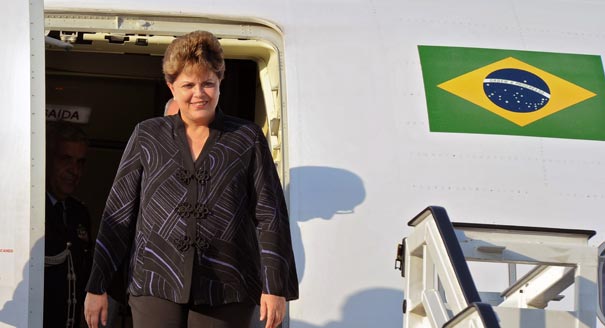
Brazil is rapidly acquiring a higher profile in the international community by virtue of its investments in soft power, and it hopes to reform many institutions of international governance.
Source: Foreign Policy

Among those at the forefront of this effort are Brazilian President Dilma Rousseff and her highly regarded foreign minister, Antonio Patriota. He was in New York last week to advance this effort at the United Nations, and we sat down for lunch together.
The challenge facing Rousseff and Patriota as public servants is a daunting one. Each follows in the footsteps of a formidable predecessor. Admittedly, Rousseff's challenge is much greater and indeed, to many, seems almost insurmountable. She succeeds two presidents who were arguably the most important in her country's modern history, Fernando Henrique Cardoso, who is credited with stabilizing the country's economy after years of volatility, and her immediate predecessor, Luiz Inácio Lula da Silva, not only her mentor but one of a tiny handful of the world's most important leaders of the past decade. But Patriota's predecessor, Celso Amorim, was also formidable, extremely influential, and a fixture on the Brazilian and international scenes. The bar was set high for her entire administration.
Nonetheless, after over a year in office, despite facing great domestic and international challenges, Rousseff has already earned a higher popularity rating than did Lula at a similar point in his tenure. And Patriota is quietly and, in the eyes of close observers, with great deftness, building on Amorim's groundbreaking work to establish Brazil as a leader among the world's major powers.
"We have a great advantage," notes Patriota. "We have no real enemies, no battles on our borders, no great historical or contemporary rivals among the ranks of the other important powers … and long-standing ties with many of the world's emerging and developed nations." This is a status enjoyed by none of the other BRICs -- China, India, and Russia -- nor, for that matter, by any of the world's traditional major powers.
This unusual position is strengthened further by the fact that Brazil is not investing as heavily as other rising powers in military capabilities. Indeed, as Tom Shannon, the U.S. ambassador to Brazil, has noted, the country is one of the few to effectively stake its future on the wise application of soft power -- diplomacy, economic leverage, common interests. It's surely no coincidence that, in areas from climate change to trade, from nonproliferation to development, Brazil under Lula and Amorim and under Rousseff and Patriota has been gaining strength by translating steady growth at home and active diplomacy abroad into effective international networks.
But Rousseff's administration is also breaking with the past. Whereas Cardoso and Lula achieved greatness by addressing and solving some of the most bedeviling problems of Brazil's past, from stabilizing the economy to addressing social inequality, Rousseff, while still cognizant of the work that remains to be done, has also turned her attention to creating opportunities and a clear path forward for Brazil's future. From her focus on education to her commitment to science and technology through innovative programs like "Science Without Borders," she is doing something that no Latin American leader has done before but that has been a proven formula in Asia. She is committed to moving Brazil from being a resource-based and thus dependent (which is to say vulnerable) economy to one that counts more for future growth on value-added industries, research and development, and educating more scientists and engineers.
Building upon this, Patriota is also looking ahead. He is moving beyond the era in Brazil's foreign policy when it was groundbreaking to have the country look outside its region and play an active role in global affairs to a period, not too many years from now, when Brazil, as a country with one of the world's five largest economies and populations, as a world leader in agribusiness and energy, is unhesitatingly assumed to deserve its place at the table.
Patriota was in New York because he thought that one of the first experiments of this era, the U.N.-sanctioned intervention in Libya, went off the tracks when the United Nations' mandate mission of protecting the Libyan people was set aside by the international forces that intervened and became instead a mission of regime change. He was no fan of Muammar al-Qaddafi, rest assured. But he does have an unwavering sense that if the international community is to work effectively together it must do so under rules that it not only collectively establishes but that are also collectively honored.
Inevitably, this approach ruffles feathers, especially among countries like the United States that are used to operating by their own set of rules. It's one reason that the 2010 Brazilian-Turkish initiative to cut a deal to defuse the Iranian nuclear crisis was so galling to Washington. The move, however naive many found it, anticipated the beginning of an era in which regional and emerging powers, like Turkey with Syria or China with Iran, are central to achieving the goals of the international community.
Patriota acknowledges that the United States, under Barack Obama, and other established powers have gone a long way toward adapting to this new reality. That said, he'd like to see Obama go further. For example, the Brazilians have been among those emerging powers pressing for real reform in the way international institutions are led. They think that the post-World War II order reflected in the power structure of the U.N. Security Council and in the automatic awarding of the leadership of the World Bank to an American is outdated and it is time for something that reflects 21st-century realities and is more consistent with the democratic principles on which these institutions were established.
It's hard to argue with the Brazilians or others on these points. And the inconsistency shown by the Obama administration on this front -- offering to support Indian but not Brazilian permanent membership on the Security Council, once seeming amenable to opening the World Bank top job to a non-American, more recently seeming to back away from this idea -- has been galling and, I would argue, ill-considered.
What Rousseff and Patriota are trying to do on the international front is, in fact, every bit as revolutionary as what their predecessors have done. They understand that successful multilateralism now requires not just large numbers of countries but openness to a multitude of ideas. During the Cold War, the debate was binary: Soviets or Americans? In its wake there was the brief delusion that we had entered an end-of-history moment in which a Washington Consensus-led philosophy of markets and democracy had earned a kind of monopoly status in the marketplace of ideas. But then came the hubris-born twin tragedies of Iraq and the 2008 financial crisis, the simultaneous rise of new powers like Brazil, China, India, and others -- and we have entered a new era. In my new book, Power, Inc., I refer to the economic side of this era as a period of competing capitalisms. But it is also a period of competing political philosophies, about the role of both state and international institutions. In that world, not only is the United States but one voice, but it is a diminished voice and one that should in any event be heard as merely the views of something under 5 percent of the planet's population.
At the same time, others must fill the void created by the resizing of U.S. influence. Brazil is attempting to do so and, it must be noted, in a way that is considerably more constructive than that evidenced by China and Russia in their pusillanimous performance regarding Syria in the Security Council. That said, emerging powers, Brazil included, must come to recognize that in this new world, if they are to play bigger roles, they are also going to have to make hard choices and not simply shrug off the complex issues as someone else's problem or as being beyond the reach of the evolving international system. They're increasingly going to have to accept that if wrongs go unchecked, the resulting costs will be laid at their doorstep.
Former Visiting Scholar
David Rothkopf was a visiting scholar at the Carnegie Endowment as well as the former CEO and editor in chief of the FP Group.
Recent Work
David Rothkopf
David Rothkopf
Carnegie does not take institutional positions on public policy issues; the views represented herein are those of the author(s) and do not necessarily reflect the views of Carnegie, its staff, or its trustees.
Europe has an interest in supporting Armenian leader Nikol Pashinyan as he tries to make peace with neighbors and loosen ties with Russia. But it is depersonalized support in the long term, not quickfire flash, that will win the day.

Thomas de Waal
The return of parliamentary politics reflects a broader shift from earlier expectations of a settlement and elections toward the reality of a prolonged war.
Balázs Jarábik
The Russian state has opted for complete ideological control of the internet and is prepared to bear the associated costs.

Maria Kolomychenko

After four years of war, there is no one who can stand up to the security establishment, and President Vladimir Putin is increasingly passive.

Tatiana Stanovaya
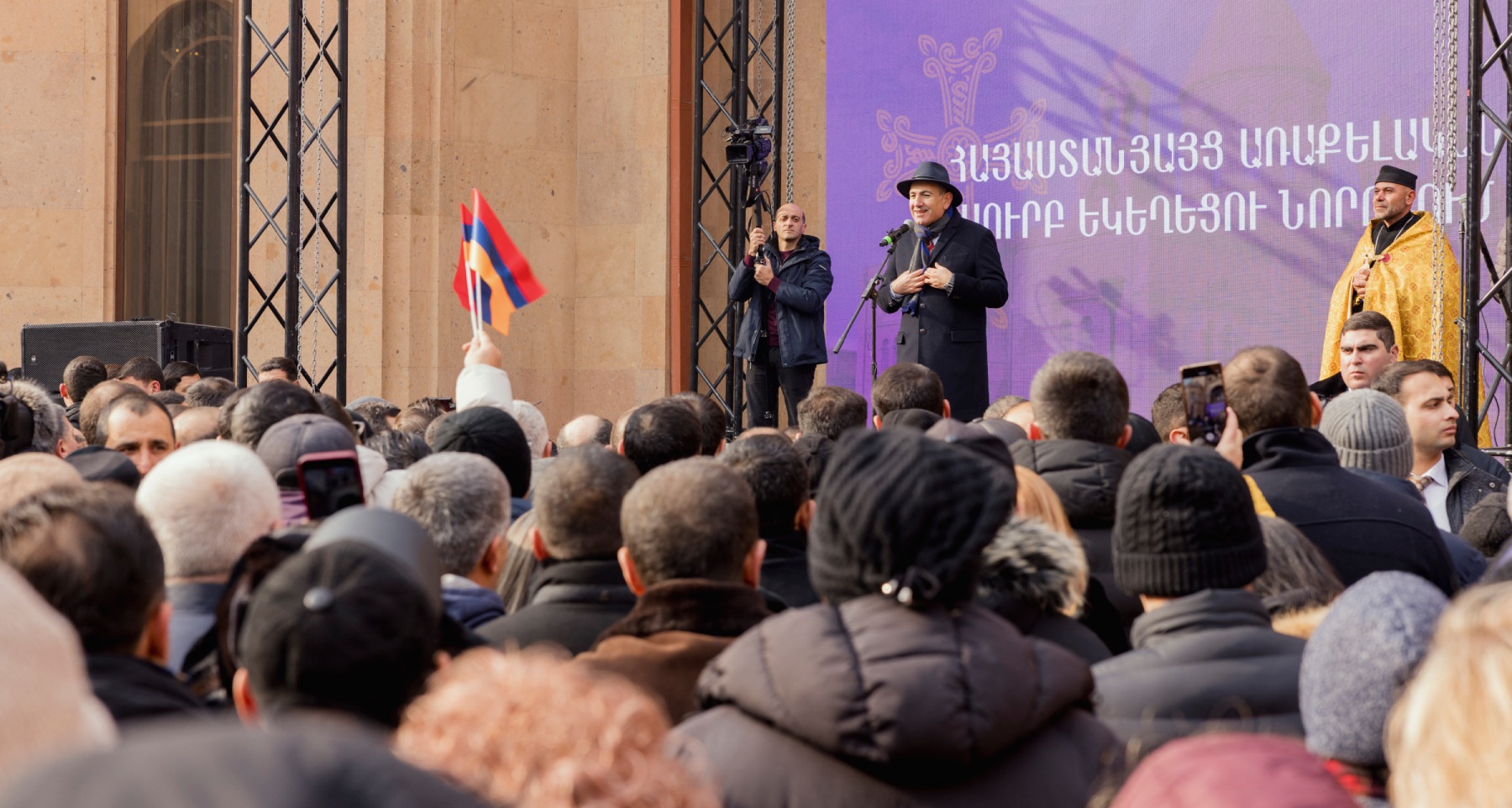
It’s true that many Armenians would vote for anyone just to be rid of Pashinyan, whom they blame for the loss of Nagorno-Karabakh, but the pro-Russia opposition is unlikely to be able to channel that frustration into an electoral victory.
Mikayel Zolyan