

Q&A
Suzanne Maloney, Aaron David Miller, Karim Sadjadpour
{
  "authors": [
    "Karim Sadjadpour"
  ],
  "type": "legacyinthemedia",
  "centerAffiliationAll": "dc",
  "centers": [
    "Carnegie Endowment for International Peace"
  ],
  "collections": [],
  "englishNewsletterAll": "menaTransitions",
  "nonEnglishNewsletterAll": "",
  "primaryCenter": "Carnegie Endowment for International Peace",
  "programAffiliation": "MEP",
  "programs": [
    "Middle East"
  ],
  "projects": [],
  "regions": [
    "Middle East",
    "Iran"
  ],
  "topics": [
    "Political Reform",
    "Nuclear Policy"
  ]
}
Source: Getty
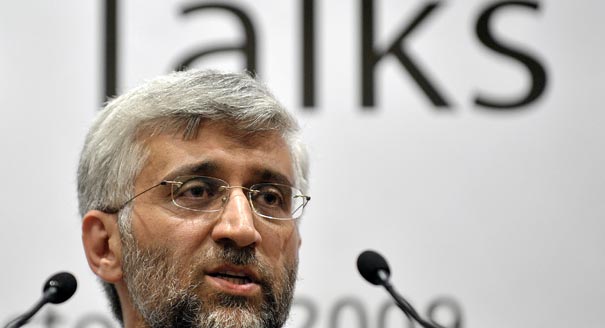
Negotiations are unlikely to resolve the problems surrounding Iran’s nuclear program at this time, but they can help deescalate tensions and maintain stability between all concerned parties.
Source: MSNBC's Andrea Mitchell Reports
Speaking on MSNBC's Andrea Mitchell Reports, Carnegie’s Karim Sadjadpour explained that any resolution to the problem posed by the Iranian nuclear program will ultimately be due to the decisions of Supreme Leader Ayatollah Khamenei. He steers the nuclear ship and no deal can be made without him. Unfortunately, noted Sadjadpour, “Khamenei views hostility to the United States and Israel as a central pillar of his revolutionary ideology.” As a result, it seems as though no deal can be made with Ayatollah Khamenei, yet no deal can be made with him.
Furthermore, Israeli national security interests and American domestic politics have only furthered exacerbated the problematic nature of efforts to reach a deal. Ultimately, Sadjadpour stated that “this conflict cannot be resolved at this time, but needs to be managed.” Negotiations like those at the recent Istanbul meeting can help to deescalate tensions and establish stability between all concerned parties.

Senior Fellow, Middle East Program
Karim Sadjadpour is a senior fellow at the Carnegie Endowment for International Peace, where he focuses on Iran and U.S. foreign policy toward the Middle East.
Recent Work

Suzanne Maloney, Aaron David Miller, Karim Sadjadpour
Aaron David Miller, Karim Sadjadpour, Robin Wright
Carnegie does not take institutional positions on public policy issues; the views represented herein are those of the author(s) and do not necessarily reflect the views of Carnegie, its staff, or its trustees.

Ex-president Gurbanguly Berdimuhamedov remains interested in politics, but his son Serdar, Turkmenistan’s current president, is becoming increasingly independent and willing to break with his father’s legacy. If their covert rivalry goes too far, both risk losing power.

Galiya Ibragimova

A notable degree of participative democracy has firmly arrived in Europe. But to have more far-reaching impact, democratic deliberation needs to move into a radically new phase.

Richard Youngs

Sergei Kiriyenko used Russia’s parliamentary vote to further hone his strategy of corporate mobilization that is designed to maximize votes for United Russia.

Andrey Pertsev

Before the next wave of EU enlargement takes place, the union needs to grapple with thorny questions of how power is distributed among its members.


Emil Sondaj Hansen, Ditte Brasso Sørensen
The Horn of Africa countries are among those facing a new security calculus.


Andrew Leber, Lesley Anne Warner