

Q&A
- +1
Sheena Chestnut Greitens, Oriana Skylar Mastro, Yukon Huang, …
{
  "authors": [
    "Yukon Huang"
  ],
  "type": "legacyinthemedia",
  "centerAffiliationAll": "dc",
  "centers": [
    "Carnegie Endowment for International Peace"
  ],
  "collections": [],
  "englishNewsletterAll": "asia",
  "nonEnglishNewsletterAll": "",
  "primaryCenter": "Carnegie Endowment for International Peace",
  "programAffiliation": "AP",
  "programs": [
    "Asia"
  ],
  "projects": [],
  "regions": [
    "East Asia",
    "China",
    "North America"
  ],
  "topics": [
    "Political Reform",
    "Economy",
    "Trade"
  ]
}
Source: Getty
For China, slower growth can actually be a good thing if it’s part of the transition to a more sustainable path.
Source: CNN

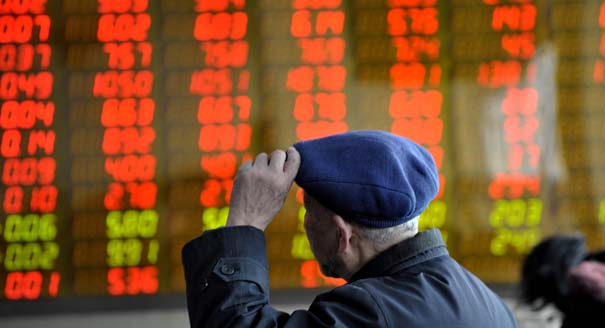
Yet, on the surface at least, such pessimism seems unwarranted. After all, no other major economy – developed or developing – is expected to come close to matching China’s performance this year, which should see it post growth of around 8 percent as its economy experiences something of a rebound in the second half of the year.
Moreover, the recent figures shouldn’t have come as a surprise as Beijing had already signaled as much as a year ago that the economy would likely be transitioning to a new “normal” of around 7 percent to 8 percent, from the near double digit rates of the past. Indeed, there’s little disagreement over the belief that China’s growth model needs to be retooled downwards to make it sustainable.
So why were markets so disappointed with numbers that only confirmed what should have been expected? And is something more alarming on its way?
The disappointment reflects how dependent the world has become on China driving the global economy given the protracted problems in the United States and Europe. In fact, in the depths of the 2008-10 financial crises, China accounted by some estimates for nearly half of the global increase in demand. And, through its trade links with other East Asian network partners, global demand for raw materials and surging overseas investments, China has propped up countries from Latin America to the Pacific Rim, while even cushioning some of the decline in the West.
For equity markets, however, near-term outcomes are what matters. A slower growing China is a severe headache when other BRIC nations (Brazil, Russia, India and China) are also faltering. Together with the vulnerabilities in the eurozone and budget stalemate in the United States, this is creating what some are calling a perfect storm.
But for China itself, slower growth can actually be a good thing if it’s part of the transition to a more sustainable path. As a maturing economy with reduced employment needs from a rapidly aging population, quality rather than quantity of growth is what now matters for Beijing.
Publicly, Chinese policy makers have indicated that the country is still on track for a “soft landing” and that no major stimulus effort comparable to the 2008/9 program is needed. That effort, which relied heavily on loans to fuel infrastructure development, was excessive in that it spawned a property bubble while leaving in its wake debt servicing problems for many localities.
Consequently, for much of last year, Beijing found itself tightening monetary policies and implementing draconian restrictions on housing purchases and local level infrastructure projects. But given the continued financial problems in the eurozone, Beijing last November reversed gears by easing monetary policy. More recently, it accelerated some major projects, although it hasn’t yet removed restrictions on housing purchases given the risks of fueling yet another property bubble.
Although there’s still considerable uncertainty about when exactly China’s downturn will bottom out, most indicators suggest that this is likely going to occur in the coming months. Last month’s credit figures showed a jump in medium and long-term loans, housing prices appear to be rebounding despite the restrictions, double digit wage increases have continued and personal consumption indicators remain strong.
Still, many of the skeptics on China’s economy have become increasingly vocal in forecasting a “hard landing.” Their dire predictions are backed up by examples of “ghost” cities – vast newly constructed complexes that are unoccupied – and iconic bridges to nowhere. All this is seen as eventually leading to loan defaults that will ultimately overwhelm China’s still fragile banking system.
But such views are alarmist. It’s true that there are isolated examples of waste, but overall, China remains a highly competitive economy with vast financial resources to keep it on track.
That said, Beijing has few policy options for dealing with the current slowdown, and efforts to encourage more personal consumption are unlikely to change behavior. In addition, given the excessive growth in investment in recent years, any artificial push for even more investment will simply create more problems further down the line. With already relatively low interest rates and limited flexibility for depreciating the renminbi given the political pressures to move in the other direction, the leadership can only make very modest adjustments to these two key variables to spur the economy.
As a result, rather than debating stimulus options, Beijing should consider moving more aggressively on reforms that would have an expansionary impact on the economy. Restructuring the budget to support more social expenditures, for example, would help push up consumption, especially since China spends far less in these areas than other developing countries. Also, facilitating more private sector activity by freeing up entry to areas dominated by state entities, as well as accelerating the urbanization process by liberalizing residency requirements in major cities, would also have an expansionary impact.
Reforms such as these would harmonize near-term stimulus needs with the longer term objective of moving to a more efficient and equitable growth path, something that is fully consistent with the Chinese government’s own intentions.

Senior Fellow, Asia Program
Huang is a senior fellow in the Carnegie Asia Program where his research focuses on China’s economy and its regional and global impact.
Recent Work


Sheena Chestnut Greitens, Oriana Skylar Mastro, Yukon Huang, …


Yukon Huang, Isaac B. Kardon, Matt Sheehan
Carnegie does not take institutional positions on public policy issues; the views represented herein are those of the author(s) and do not necessarily reflect the views of Carnegie, its staff, or its trustees.

While the current surge in grain trading activity in the Caspian Sea is undeniably impressive, it is constrained by financial, infrastructure, geographic, military, and environmental factors.

Nikita Smagin

The Trump administration’s disruption attempts at the UN shipping agency are a test of multilateralism’s ability to defy the United States.

Theodore Zaritsky, Stewart Patrick

Alongside official pushback, Chinese tech and policy communities are meeting calls for a slowdown with skepticism—rather than rejection—that mirrors the reactions in the United States.

Matt Sheehan, Sophie Zhuang

The concrete goal of an end to the hostilities in Ukraine has been replaced by a host of vague Russian demands concerning a range of issues and regions.

Alexander Baunov
In an increasingly competitive landscape, Seoul should expand its current partnership with Washington and deepen ties with Brussels and New Delhi.


Darcie Draudt-Véjares, Milo McBride