• Research
  • Emissary
  • About
  • Experts
Carnegie Global logoCarnegie lettermark logo
DemocracyIran
  • Donate
{
  "authors": [
    "Paul Salem"
  ],
  "type": "legacyinthemedia",
  "centerAffiliationAll": "",
  "centers": [
    "Carnegie Endowment for International Peace",
    "Malcolm H. Kerr Carnegie Middle East Center"
  ],
  "collections": [],
  "englishNewsletterAll": "",
  "nonEnglishNewsletterAll": "",
  "primaryCenter": "Malcolm H. Kerr Carnegie Middle East Center",
  "programAffiliation": "",
  "programs": [],
  "projects": [],
  "regions": [
    "Egypt",
    "Gulf",
    "Levant",
    "Maghreb",
    "Syria"
  ],
  "topics": [
    "Political Reform"
  ]
}
Source: Getty

In The Media
Malcolm H. Kerr Carnegie Middle East Center

How Does the U.S. Election Affect the Middle East?

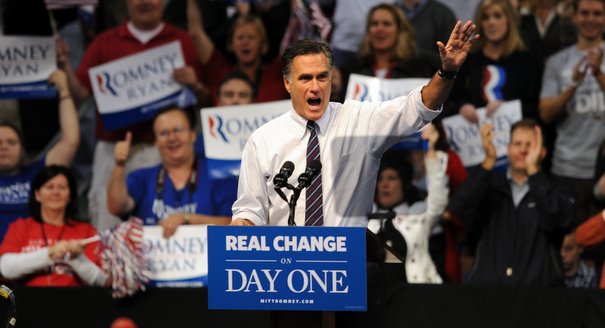
Romney's inconsistent positions on foreign policy, coupled with the prospect of appointing hawkish cabinet ministers, risks greater conflict in the Middle East.

Link Copied
By Paul Salem
Published on Nov 6, 2012

Source: National

Today is Election Day in the United States, and many people across the Middle East are contemplating what this region might expect from a second term for Barack Obama, or a first Romney administration.

The two candidates have profoundly different visions of domestic policy, but their positions on foreign policy are not as dramatically different.
Read Full Text

This article was originally published in the National.

About the Author

Paul Salem

Senior Fellow at the Middle East Institute

Paul Salem is a senior fellow at the Middle East Institute.

    Recent Work

  • Paper
    Iraq’s Tangled Foreign Interests and Relations

      Paul Salem

  • Article
    Bracing for Impact in Syria

      Paul Salem

Paul Salem
Senior Fellow at the Middle East Institute
Paul Salem
Political ReformEgyptGulfLevantMaghrebSyria

Carnegie does not take institutional positions on public policy issues; the views represented herein are those of the author(s) and do not necessarily reflect the views of Carnegie, its staff, or its trustees.

More Work from Carnegie Endowment for International Peace

  • Commentary
    Strategic Europe
    Taking the Pulse: Is European Diplomacy on Iran Outdated?

    When the U.S.-Iran memorandum of understanding was announced, the UK, France, Germany, and Italy declared their readiness to help demine the Strait of Hormuz and lift nuclear sanctions on Tehran. But does Europe need new tools to recover a diplomatic role?

      • Rym Momtaz

      Rym Momtaz, ed.

  • Commentary
    Diwan
    Lebanon Should Try to Place Hezbollah on the U.S.-Iran Table

    As talks begin between Washington and Tehran, Beirut has an opening to advance a regional plan for the party’s disarmament.

      Michael Young

  • Paper
    Loyal but Powerless: The Downgrading of Russia’s Elite

    The ruling elites in contemporary Russia are not a political class, but a community of managers who are not subject to competition or public accountability. The state is becoming an operating apparatus without any internal autonomy.

      Alexandra Prokopenko

  • Commentary
    Carnegie Politika
    What Does Pashinyan’s Parliamentary Victory Mean for Armenia’s Future?

    Pashinyan’s pro-European party has been re-elected with a decisive victory. But the pro-Russian opposition could still slow Armenia’s progress toward peace with Azerbaijan and rapprochement with Europe.

      Mikayel Zolyan

  • Book
    From Sovereigns to Servants. How the War Against Ukraine Reshaped Russia’s Elite

    How did Putin co-opt Russia’s political and economic elites, ensuring no more than fitful resistance to the regime’s war on Ukraine?

      Alexandra Prokopenko

Get more news and analysis from
Carnegie Endowment for International Peace
Carnegie global logo, stacked
1779 Massachusetts Avenue NWWashington, DC, 20036-2103Phone: 202 483 7600
  • Research
  • Emissary
  • About
  • Experts
  • Donate
  • Programs
  • Events
  • Blogs
  • Podcasts
  • Contact
  • Annual Reports
  • Careers
  • Privacy
  • For Media
  • Government Resources
Get more news and analysis from
Carnegie Endowment for International Peace
© 2026 Carnegie Endowment for International Peace. All rights reserved.