• Research
  • Emissary
  • About
  • Experts
Carnegie Global logoCarnegie lettermark logo
DemocracyIran
  • Donate
{
  "authors": [
    "Matthew Rojansky"
  ],
  "type": "legacyinthemedia",
  "centerAffiliationAll": "dc",
  "centers": [
    "Carnegie Endowment for International Peace"
  ],
  "collections": [
    "Arab Awakening"
  ],
  "englishNewsletterAll": "ctw",
  "nonEnglishNewsletterAll": "",
  "primaryCenter": "Carnegie Endowment for International Peace",
  "programAffiliation": "russia",
  "programs": [
    "Russia and Eurasia"
  ],
  "projects": [],
  "regions": [
    "United States",
    "Caucasus",
    "Russia"
  ],
  "topics": [
    "Foreign Policy"
  ]
}
Source: Getty

In The Media

Russia and World Politics

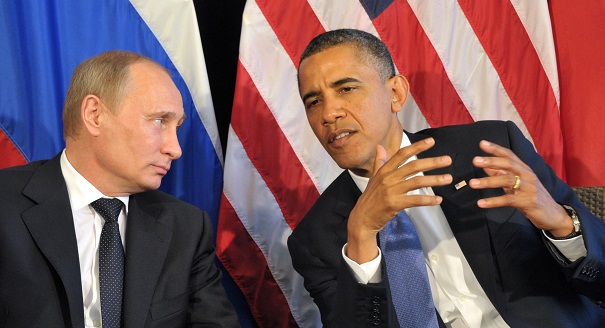
While President Putin may be in a fight for legitimacy at home, Russian foreign policy still benefits from a large consensus.

Link Copied
By Matthew Rojansky
Published on Nov 16, 2012
Program mobile hero image

Program

Russia and Eurasia

The Russia and Eurasia Program continues Carnegie’s long tradition of independent research on major political, societal, and security trends in and U.S. policy toward a region that has been upended by Russia’s war against Ukraine.  Leaders regularly turn to our work for clear-eyed, relevant analyses on the region to inform their policy decisions.

Learn More

Source: FM4 ORF Austrian Radio

Carnegie’s Matthew Rojansky sat down with ORF FM4's Reality Check to discuss the role Russia might play in the global issues facing President Obama during his second presidential term.

Although divided on domestic issues, Russia nonetheless expects to be heard internationally, and it should be, Rojansky stated. He argued that the appearance of a strong opposition during the electoral season that brought Vladimir Putin back to the presidency has created a permanent political season, which he characterized as a permanent fight for the soul and spirit of Russia. The Kremlin has yet to find an effective answer to this. However, Rojansky added, there is still a consensus shared by Kremlin insiders and opposition sympathizers that Russia is too often disregarded in the international arena.

Russia has a starkly different reading of recent developments in the Middle East, Rojansky said. This reading is in many ways a result of skepticism tempered by Russia’s experience in their own North Caucasus. Russians across the political spectrum agree that their knowledge of Islamic fundamentalism, terrorism, and separatism should be valued, Rojansky continued. Russia’s position creates a challenge for the United States, since Moscow still has significant capabilities for conflict resolution. If relations with Russia are neglected, Rojansky warned that the United States may find itself missing a valuable partner for the resolution of global problems.
About the Author

Matthew Rojansky

Former Deputy Director, Russia and Eurasia Program

Rojansky, formerly executive director of the Partnership for a Secure America, is an expert on U.S. and Russian national security and nuclear-weapon policies.

    Recent Work

  • Paper
    An Opportunity for Ambition: Ukraine’s OSCE Chairmanship

      Matthew Rojansky

  • In The Media
    Presiding Over the OSCE: Challenges and Opportunities

      Matthew Rojansky

Matthew Rojansky
Former Deputy Director, Russia and Eurasia Program
Matthew Rojansky
Foreign PolicyUnited StatesCaucasusRussia

Carnegie does not take institutional positions on public policy issues; the views represented herein are those of the author(s) and do not necessarily reflect the views of Carnegie, its staff, or its trustees.

More Work from Carnegie Endowment for International Peace

  • Commentary
    Carnegie Politika
    Russian Indoctrination in Occupied Ukrainian Schools Is a Sham

    Despite a new textbook, an influx of Russian teachers and managers, and an end to the teaching of Ukrainian, the Kremlin is unlikely to have “reprogrammed” locals.

      Konstantin Skorkin

  • Commentary
    Carnegie Politika
    Who Is Funding Russia’s War in the 2027 Budget?

    For every ruble allocated to social policy, health, and education in 2027, double that amount is earmarked for the army, the police, and the security services.

      Alexandra Prokopenko

  • Satellite in space
    Commentary
    Emissary
    The U.S. Has Weapons in Space. Now What?

    The acknowledgment has sparked fears of a new arms race with China and Russia.

      • Chris  O'Meara ​​​​

      Chris O’Meara

  • Blue Water Bridge with Flags of USA and Canada
    Paper
    What Canada Knows About American Power

    Smaller powers cannot go it alone, but Canadian history shows that integration with the United States will not always be benign.

      Paul Samson

  • Commentary
    Strategic Europe
    Taking the Pulse: Can the EU Stare Down China on Trade?

    The European Commissioner for Trade is headed to China. But after President Xi’s bridge-building visit to Washington, can a more isolated EU overcome Beijing’s stranglehold on critical raw materials? Who will blink first?

      • Rym Momtaz

      Rym Momtaz, ed.

Get more news and analysis from
Carnegie Endowment for International Peace
Carnegie global logo, stacked
1779 Massachusetts Avenue NWWashington, DC, 20036-2103Phone: 202 483 7600
  • Research
  • Emissary
  • About
  • Experts
  • Donate
  • Programs
  • Events
  • Blogs
  • Podcasts
  • Contact
  • Annual Reports
  • Careers
  • Privacy
  • For Media
  • Government Resources
Get more news and analysis from
Carnegie Endowment for International Peace
© 2026 Carnegie Endowment for International Peace. All rights reserved.