

Commentary
Nathalie Tocci, Jan Techau
{
  "authors": [
    "Jan Techau"
  ],
  "type": "other",
  "centerAffiliationAll": "",
  "centers": [
    "Carnegie Endowment for International Peace",
    "Carnegie Europe"
  ],
  "collections": [],
  "englishNewsletterAll": "",
  "nonEnglishNewsletterAll": "",
  "primaryCenter": "Carnegie Europe",
  "programAffiliation": "",
  "programs": [],
  "projects": [],
  "regions": [
    "Europe",
    "Eastern Europe",
    "Western Europe"
  ],
  "topics": [
    "Foreign Policy",
    "Security"
  ]
}
Source: Getty
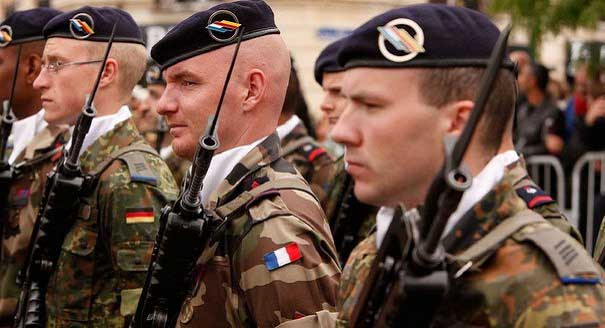
If member states want EU foreign policy to become more relevant, they cannot continue to dismiss hard power as a tool for the EU.
Source: Policy Paper
Europeans are not per se unwilling to use force to achieve political goals. They only seem to be unwilling to do so in the framework of the EU. The perceived absence of a shared threat, the differences in strategic culture, the institutional weaknesses, the lack of resources, the lack of ambition and trust, and the fact that, with NATO, a better alternative is at hand for the management of Europe’s hard power concerns, make it unlikely that the EU will become a relevant military operator any time soon. The structural, political impediments to more cohesive defense cooperation go so deep that economic pressure alone will not be enough of an incentive to unite their military activities within CSDP.
But if Member States want EU foreign policy to become more relevant, they can’t forever dismiss hard power as a tool for the EU. A serious conversation is needed at the highest level about shared threats, interests, goals and means.
This piece originally appeared in Notre Europe's Policy Paper, No. 65.

Director, Europe Team, Eurasia Group
Techau is director with Eurasia Group's Europe team, covering Germany and European security from Berlin. Previously, he was director of Carnegie Europe.
Recent Work

Nathalie Tocci, Jan Techau
Jan Techau
Carnegie does not take institutional positions on public policy issues; the views represented herein are those of the author(s) and do not necessarily reflect the views of Carnegie, its staff, or its trustees.
The acknowledgment has sparked fears of a new arms race with China and Russia.

Chris O’Meara
Smaller powers cannot go it alone, but Canadian history shows that integration with the United States will not always be benign.
Paul Samson

The European Commissioner for Trade is headed to China. But after President Xi’s bridge-building visit to Washington, can a more isolated EU overcome Beijing’s stranglehold on critical raw materials? Who will blink first?

Rym Momtaz, ed.
The summit may be remembered as a fatal blunder, when Washington, Beijing, and the AI industry collectively chose ceremony over action.
Jeffrey Prescott

European NATO countries are wrestling with the possibility of U.S. disengagement from the alliance. With the continent’s security increasingly uncertain, governments must restore the credibility of their collective defense.



Hans-Dieter Lucas, Adam Thomson, Pierre Vimont