

Research
- +10
Rosa Balfour, Frances Z. Brown, Yasmine Farouk, …
{
  "authors": [
    "Moisés Naím"
  ],
  "type": "legacyinthemedia",
  "centerAffiliationAll": "",
  "centers": [
    "Carnegie Endowment for International Peace"
  ],
  "collections": [],
  "englishNewsletterAll": "",
  "nonEnglishNewsletterAll": "",
  "primaryCenter": "Carnegie Endowment for International Peace",
  "programAffiliation": "",
  "programs": [],
  "projects": [],
  "regions": [
    "North America",
    "South America"
  ],
  "topics": [
    "Political Reform",
    "Economy"
  ]
}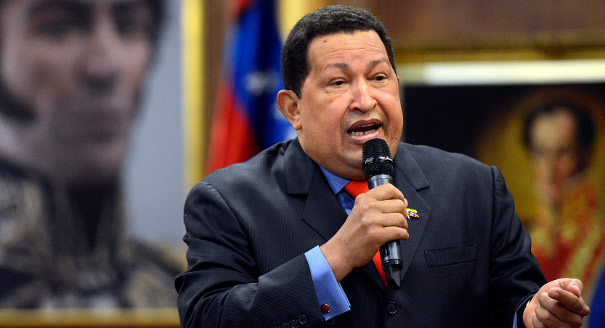
Source: Getty
President Hugo Chavez leaves behind a country in dire economic straits.
Source: Brian Lehrer Show
Speaking on the Brian Lehrer Show, Carnegie's Moisés Naím discussed the tragic legacy of Hugo Chavez's use of polarization to garner support for his government and ideals. For fourteen years, Chavez had a windfall of money and freedom at his disposal, but even so, he was unable to benefit or promote the success of Venezuela, Naím contended. His mismanaged and unsustainable system has left the country in dire straits, including the highest inflation rate and highest murder rate in the world, concluded Naím.

Distinguished Fellow
Moisés Naím is a distinguished fellow at the Carnegie Endowment for International Peace, a best-selling author, and an internationally syndicated columnist.
Recent Work



Rosa Balfour, Frances Z. Brown, Yasmine Farouk, …
Moisés Naím
Carnegie does not take institutional positions on public policy issues; the views represented herein are those of the author(s) and do not necessarily reflect the views of Carnegie, its staff, or its trustees.
Washington needs to recognize that influence in the Western Hemisphere comes from presence, delivery, and reliability. It also must recognize that while the United States remains the key external actor, it no longer operates in a permissive environment and cannot presume deference from regional players who have other options, namely China.
Juan S. Gonzalez

A summer of escalation in the Black Sea has hurt Ukraine economically and is exacerbating world food security. A truce is needed—as is a broader reframing of Europe’s Ukraine strategy.

Thomas de Waal

If the Russian-speaking community in Latvia cannot articulate their interests without being seen as disloyal, they could end up embracing a pro-Kremlin agenda.

Sergejs Potapkins

Russia’s ruling party would have benefited from Putin appearing as its distant patron, but as an active frontman imposing his views on the public, he has done nothing but harm both the party’s election campaign and the ruling system overall.

Andrey Pertsev

The Bureau of Industry and Security needs to adjust its focus and practices to maintain its position as the U.S. government’s primary champion of international technological competition.

Geoffrey Irving