The cracks between Trump and Netanyahu have become more pronounced, particularly over energy and leadership targets.
Eric Lob
{
"authors": [],
"type": "legacyinthemedia",
"centerAffiliationAll": "",
"centers": [
"Carnegie Endowment for International Peace",
"Carnegie Europe"
],
"collections": [
"Transatlantic Cooperation",
"Brexit and UK Politics"
],
"englishNewsletterAll": "",
"nonEnglishNewsletterAll": "",
"primaryCenter": "Carnegie Endowment for International Peace",
"programAffiliation": "",
"programs": [],
"projects": [],
"regions": [
"North America",
"United States",
"Western Europe",
"United Kingdom",
"France",
"Germany",
"Europe"
],
"topics": [
"Foreign Policy",
"Security"
]
}Source: Getty
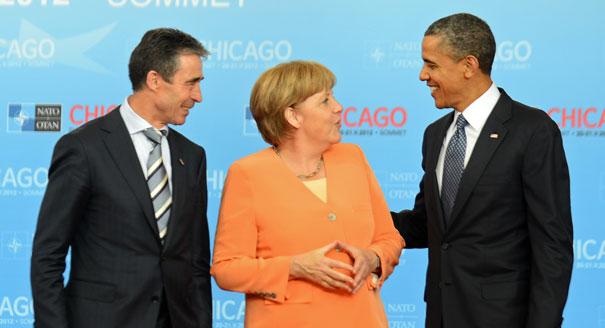
While Europeans still support President Obama, they have lowered their expectations of what he will accomplish politically.
Source: HuffPost Live
Speaking on HuffPost Live, Carnegie’s Jan Techau discussed President Obama’s trip to Berlin and the changing dynamics in European support for the American leader. He explained that while Europeans still support Obama, they have lowered their expectations of what he will accomplish politically. With regard to Syria, Techau explained that Obama’s tactic of “leading from behind” has cost both him and the United States a lot of credibility and that Obama therefore has to make a move in Syria. However, he added, since Obama does not want to get deeply involved in Syria, he will do something small. Techau concluded by saying, “Don’t expect anything game-changing from the United States.”
Carnegie does not take institutional positions on public policy issues; the views represented herein are those of the author(s) and do not necessarily reflect the views of Carnegie, its staff, or its trustees.
The cracks between Trump and Netanyahu have become more pronounced, particularly over energy and leadership targets.
Eric Lob
The crisis is not just a story of energy vulnerability. It’s also a complex, high-stakes political challenge.
Darcie Draudt-Véjares
In an interview, Roger Diwan discusses where the global economy may be going in the third week of the U.S.-Israeli war with Iran.
Nur Arafeh
The war in Ukraine is costing Russia its leverage overseas. Across the South Caucasus and Middle East, this presents an opportunity for Europe to pick up the pieces and claim its own sphere of influence.
William Dixon, Maksym Beznosiuk
Backed by a new LDP supermajority, Prime Minister Takaichi aspires to revise Japan’s long-standing security doctrine. Ahead of her visit to Washington, she faces fiscal hurdles for her proposed defense spending while needing to navigate President Trump’s request for naval assets to the Strait of Hormuz.
Harukata Takenaka