

Paper
Christopher S. Chivvis, Rohan Mukherjee, Milan Vaishnav
{
  "authors": [
    "Milan Vaishnav"
  ],
  "type": "legacyinthemedia",
  "centerAffiliationAll": "dc",
  "centers": [
    "Carnegie Endowment for International Peace"
  ],
  "collections": [],
  "englishNewsletterAll": "ctw",
  "nonEnglishNewsletterAll": "",
  "primaryCenter": "Carnegie Endowment for International Peace",
  "programAffiliation": "SAP",
  "programs": [
    "South Asia"
  ],
  "projects": [
    "India Decides 2014"
  ],
  "regions": [
    "South Asia",
    "India"
  ],
  "topics": [
    "Political Reform",
    "Democracy"
  ]
}
Source: Getty
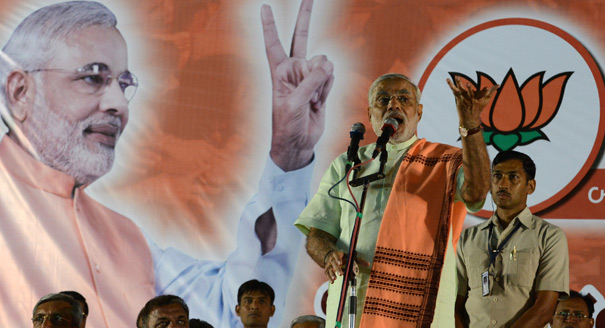
The rise of Narendra Modi gives the BJP an opportunity to reshape its narrative before India’s national elections next year. But the opposition party is still at a disadvantage.
Source: CNN
The Bharatiya Janata Party has announced that its controversial son, Narendra Modi, will lead the opposition party into India’s national election next year. Modi has led the BJP to three consecutive election victories in the western state of Gujarat, earning notoriety both for his efficient governance as well as his controversial role in the state’s 2002 Hindu-Muslim riots. The question now is whether he can revitalize the main opposition party’s fortunes.
Modi’s detractors believe that Modi either connived to incite the anti-Muslim pogrom that claimed hundreds of lives, or at the very least condoned the bloodshed (although to date he has not been directly implicated by a court). Either way, although the BJP’s move stops short of formally projecting Modi as the party’s prime ministerial candidate, it effectively cements his position as “first among equals” within the party.
So, what has prompted the BJP to pick such a controversial figure to lead them into battle against the ruling Congress-led coalition? For a start, Modi’s rise represents a generational shift within the party – at 62, he is considered a youngster in India’s geriatric politics. But the party is also making a strategic bet that Modi’s popularity among the rank-and-file, his economic record in Gujarat, and the country’s desire for change will outweigh his potential downsides.Less than 24 hours after the party’s announcement, Modi’s elevation claimed its first casualty: the resignation of party co-founder and its grand old man, Lal Krishna Advani, who led the party into defeat at the last general elections in 2009 (although by Tuesday, Advani had reversed course and withdrawn his resignation). But even with Advani back in the fold, concerns remain.
For a start, despite having toiled since 2001 in state politics, Modi is still largely untested outside of Gujarat. There are few successful examples of state leaders making the transition to prime minister in India, although as the country’s politics become more decentralized, such jumps will presumably become more common. Certainly, Modi’s model of “minimum government, maximum governance” has delighted supporters, including many among the middle classes, who lavish praise on the leader for his state’s impressive growth record. And the party’s rank-and-file smell an opportunity after a decade of Congress misrule.
But India’s national elections are increasingly fought at the state level, and here the BJP has a number of built-in disadvantages.
First, the Congress has a greater national footprint. In the 2009 elections, Congress was one of the top two finishers in 350 seats out of 543 (eventually bagging 206) while the BJP finished either first or second in only 226 seats (winning 116). The BJP’s base is in northern and western India, but it is a virtual no-show in the south of the country, having recently lost its lone southern stronghold of Karnataka.
Second, with the fragmentation of the Indian electoral system – 370 parties contested the last elections, with 38 gaining representation in parliament – a coalition government in Delhi is a near-certainty. Here, too, Congress has an advantage. By virtue of its “secular” credentials, Congress has a greater pool of potential allies and thus can more easily cobble together a government through alliances.
Third, a Modi-led BJP also complicates matters with the BJP’s existing partners in the National Democratic Alliance (NDA), some of whom worry about associating their brands with a polarizing Modi. Non-Hindu minorities account for 15 percent of India’s population and so represent an important swing constituency and social base for several regional parties. Compounding this problem for the BJP is that the fiery Modi is not particularly good at making new friends (the BJP has been able to rule comfortably on its own in Gujarat).
Modi’s first real test will be a set of regional elections at the end of this year in four key states that together account for 72 seats in next year’s parliamentary elections. Yet perhaps the biggest indicator of Modi’s potential will come in how he steers the party in the electorally crucial north Indian state of Uttar Pradesh, home to 200 million Indians and 80 parliamentary seats (of which the BJP currently retains a paltry 10). It is difficult to see how the BJP can get the numbers to add up nationally without a significant improvement in UP.
None of this is to suggest that the BJP cause is hopeless – there was, for example, a BJP wave in Uttar Pradesh in the 1990s, when the party took as many as 57 seats on the back of a divisive strategy of pro-Hindu mobilization. Yet there are few signs that the ground is fertile for such nationalism to sweep across the Hindi heartland this time around.
During its time in the opposition, the BJP has struggled with internal ideological battles, petty rivalries and managing a fractious set of regional leaders. This has led many observers to retool the BJP slogan of being the “party with a difference” as the “party with differences.” The rise of Narendra Modi, and the growing marginalization of the older generation, provides the party with an opportunity to establish a new narrative. Pitching a new storyline, however, will be the easy part.

Director and Senior Fellow, South Asia Program
Milan Vaishnav is a senior fellow and director of the South Asia Program and the host of the Grand Tamasha podcast at the Carnegie Endowment for International Peace. His primary research focus is the political economy of India, and he examines issues such as corruption and governance, state capacity, federalism, and electoral behavior. He also conducts research on the Indian diaspora.
Recent Work

Christopher S. Chivvis, Rohan Mukherjee, Milan Vaishnav


Sophia Besch, Eric Ciaramella, Steve Feldstein, …
Carnegie does not take institutional positions on public policy issues; the views represented herein are those of the author(s) and do not necessarily reflect the views of Carnegie, its staff, or its trustees.
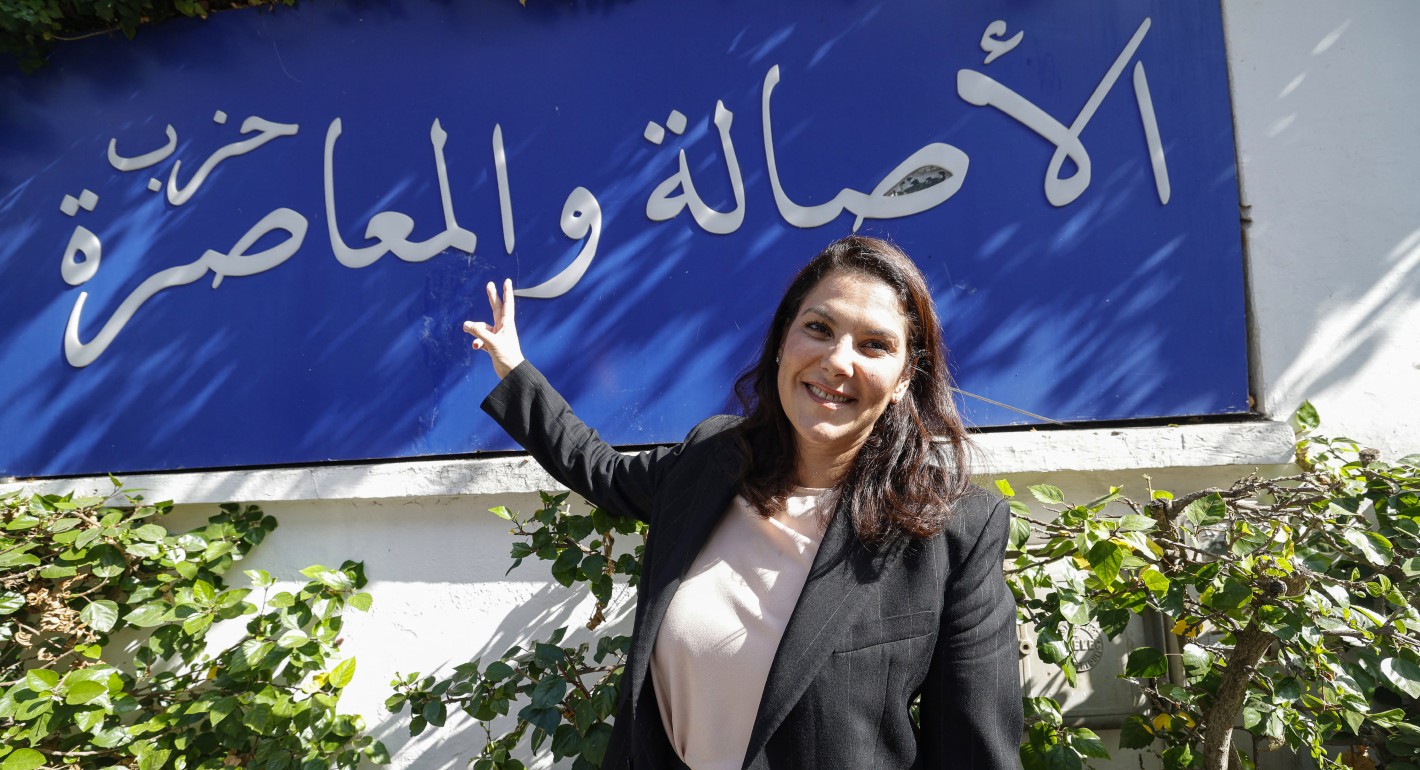
Fatima El Mansouri is the country’s first female prime minister. She’s also a privileged insider in a largely ceremonial position.

Sarah Yerkes

The domestic impacts of how long it is taking to end the war in Ukraine have pushed the French electorate to the political extremes and compromised the country’s diplomatic capacity.

Rym Momtaz

A deep dive into the policy ecosystems behind battery development in China, South Korea, Japan, the European Union (including some of its member states), the United States, Canada, and India.



Milo McBride, Herbert Crowther, Darcie Draudt-Véjares, …

Sergei Kiriyenko used Russia’s parliamentary vote to further hone his strategy of corporate mobilization that is designed to maximize votes for United Russia.

Andrey Pertsev

Before the next wave of EU enlargement takes place, the union needs to grapple with thorny questions of how power is distributed among its members.


Emil Sondaj Hansen, Ditte Brasso Sørensen