• Research
  • Emissary
  • About
  • Experts
Carnegie Global logoCarnegie lettermark logo
DemocracyIran
  • Donate
{
  "authors": [
    "Stephen Tankel"
  ],
  "type": "other",
  "centerAffiliationAll": "dc",
  "centers": [
    "Carnegie Endowment for International Peace"
  ],
  "collections": [],
  "englishNewsletterAll": "ctw",
  "nonEnglishNewsletterAll": "",
  "primaryCenter": "Carnegie Endowment for International Peace",
  "programAffiliation": "SAP",
  "programs": [
    "South Asia"
  ],
  "projects": [],
  "regions": [
    "South Asia",
    "Pakistan"
  ],
  "topics": [
    "Security",
    "Military",
    "Foreign Policy"
  ]
}
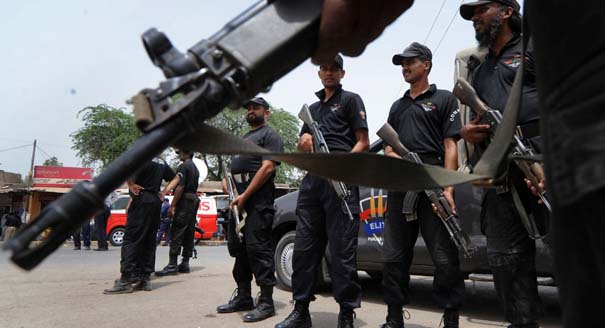
Source: Getty

Other

Domestic Barriers to Dismantling the Militant Infrastructure in Pakistan

Pakistan will continue to find it difficult to counter militancy more vigorously in its territory, and U.S. officials urging the country to make greater efforts should fully understand the obstacles.

Link Copied
By Stephen Tankel
Published on Sep 9, 2013
Program mobile hero image

Program

South Asia

The South Asia Program informs policy debates relating to the region’s security, economy, and political development. From strategic competition in the Indo-Pacific to India’s internal dynamics and U.S. engagement with the region, the program offers in-depth, rigorous research and analysis on South Asia’s most critical challenges.

Learn More

Source: United States Institute of Peace

Pakistan will continue to find it difficult to counter militancy more vigorously in its territory, and U.S. officials urging the country to make greater efforts should fully understand the obstacles. One is the Pakistan security establishment’s penchant for supporting militant groups it believes might have strategic uses while ignoring those it believes have no strategic value. But there are other obstacles, including lack of funding, bureaucratic barriers, and public opinion.

Summary

  • Pakistani concerns about threats to the state from a subset of its Islamist militants have been building for several years, but the military remains preoccupied with using jihadist proxies to achieve geopolitical aims. Many other barriers reinforce the status quo as well.
     
  • Perceptions about the U.S. role in the insurgency, the belief that foreign powers support anti-state militants, that some militants will not attack if not provoked, and that others have domestic as well as geopolitical utility collectively inform the security establishment’s strategic calculus for how it engages with militants in Pakistan.
     
  • Even sincere counterterrorism efforts are hampered by capacity shortfalls and systemic infirmities.
     
  • Political will is also lacking. Elites remain preoccupied with power and their collective interests.
     
  • Pakistan needs a national strategy to counter militancy, a legislative overhaul, improved coordination among counterterrorism agencies, and a coherent narrative against extremism. The recently elected civilian leadership must build its own intellectual capacity on security matters and find the political will to act.
     
  • The election of a new civilian government in Pakistan, growing concerns about the jihadist threat to the state, and the planned NATO drawdown in Afghanistan mean the United States will need to reformulate aspects of its engagement.
     
  • The overall U.S. approach should be geared toward maintaining influence to maximize convergence on narrow security issues and exploit opportunities to reinforce positive structural change within Pakistan.
     
  • Specifically, the United States should revise its South Asian counterterrorism architecture, maintain a transactional military-to-military relationship focused on convergent interests, boost the capabilities and confidence of the new civilian government, modify security sector assistance, and devise more realistic metrics to assess progress.

This report, sponsored by the U.S. Institute of Peace, examines several underexplored barriers to dismantling Pakistan’s miltant infrastructure as a way to inform the understandable, but thus far ineffectual, calls for the country to do more against militancy. It is based on interviews conducted in Pakistan and Washington, DC, as well as on primary and secondary source material collected via field and desk-based research.

The full text of this report is available at the United States Institute of Peace.
About the Author

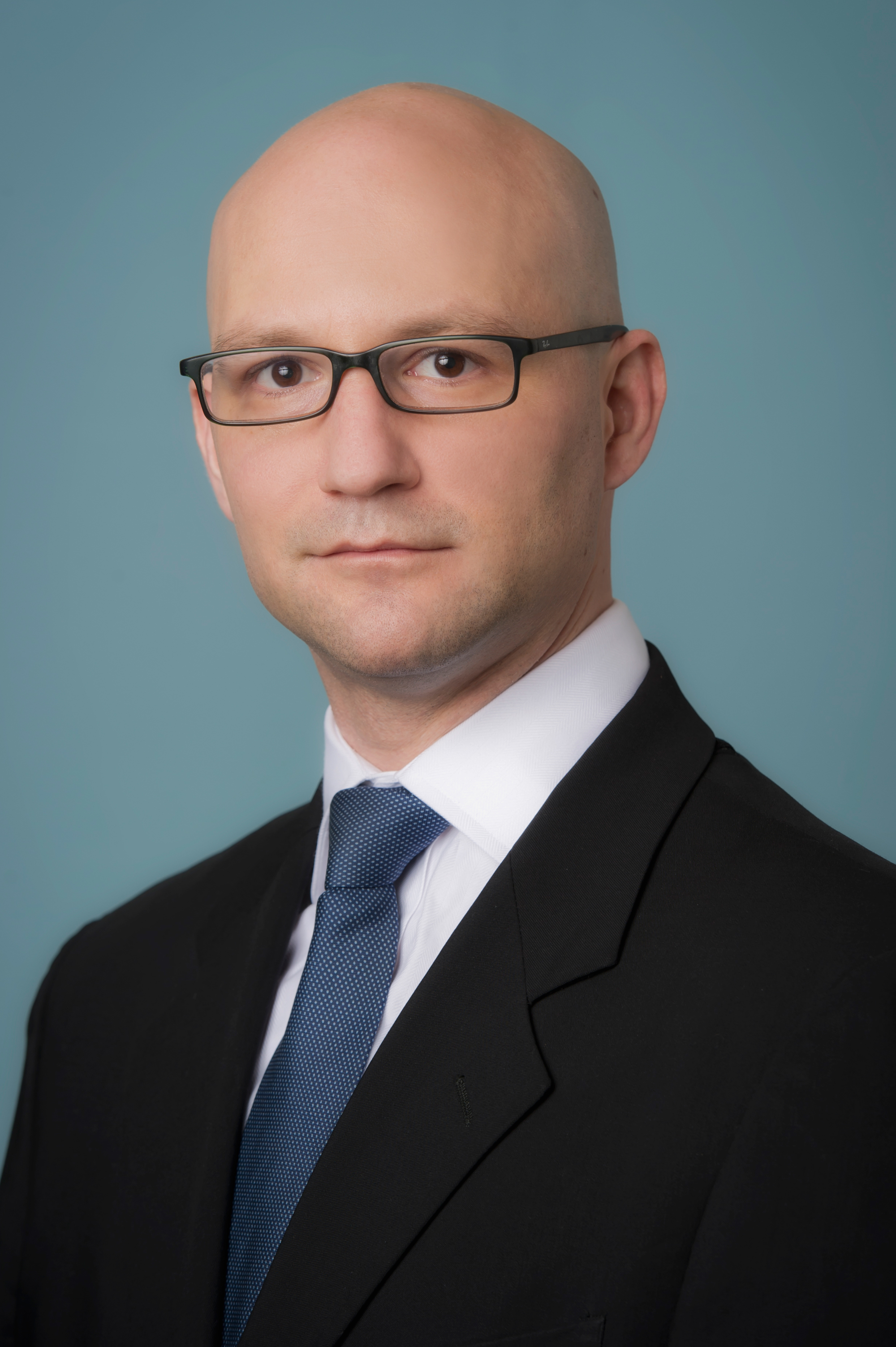
Stephen Tankel

Former Nonresident Scholar, South Asia Program

Tankel was a nonresident scholar at the Carnegie Endowment, where his research focuses on insurgency, terrorism, and the evolution of nonstate armed groups.

    Recent Work

  • Q&A
    Restoring Trust: U.S.-Pakistan Relations

      Stephen Tankel

  • Q&A
    LeT’s Global Rise

      Stephen Tankel

Stephen Tankel
Former Nonresident Scholar, South Asia Program
Stephen Tankel
SecurityMilitaryForeign PolicySouth AsiaPakistan

Carnegie does not take institutional positions on public policy issues; the views represented herein are those of the author(s) and do not necessarily reflect the views of Carnegie, its staff, or its trustees.
More Work from Carnegie Endowment for International Peace

  • Commentary
    Carnegie Politika
    Parliamentary Elections in Occupied Ukraine Risk Backfiring for the Kremlin

    Despite unhappiness on the ground, Moscow is determined to use both carrot and stick to ensure there is record support for United Russia in occupied Ukraine.

      Konstantin Skorkin

  • Paper
    Egypt’s Military Landlord Economy and its Limitations

    The armed forces champion a form of capitalism that is generating revenue, but its reliance on rent faces diminishing returns, leaving the country with massive sunk costs and deferred returns, deepening dependency on external borrowing.

      Yezid Sayigh

  • Commentary
    Emissary
    Nolan’s "The Odyssey" Has a Colonialism Problem

    Despite Morocco’s hopes that its film industry would reap rewards, the blockbuster’s success will be tainted by controversy surrounding filming in occupied Western Sahara.

      • Sarah Yerkes

      Sarah Yerkes

  • Paper
    Securing America’s Near Abroad: Recalibrating U.S. Policy Toward Haiti

    Helping to stabilize Haiti is in the United States’ national interest and can be done by making wise use of various foreign policy tools in addition to supporting international security forces.

      Christopher Shell

  • Aerial view of Washington DC
    Paper
    Network and Structural Power: The Four Trend Lines Weakening U.S. Leverage

    Networks—from international payments platforms to key economic sectors—underlie many aspects of U.S. power. But they are suffering under an extractive approach to foreign policy.

      Daniel W. Drezner

Get more news and analysis from
Carnegie Endowment for International Peace
Carnegie global logo, stacked
1779 Massachusetts Avenue NWWashington, DC, 20036-2103Phone: 202 483 7600
  • Research
  • Emissary
  • About
  • Experts
  • Donate
  • Programs
  • Events
  • Blogs
  • Podcasts
  • Contact
  • Annual Reports
  • Careers
  • Privacy
  • For Media
  • Government Resources
Get more news and analysis from
Carnegie Endowment for International Peace
© 2026 Carnegie Endowment for International Peace. All rights reserved.