

Commentary
Alexey Malashenko
{
  "authors": [
    "Alexey Malashenko"
  ],
  "type": "commentary",
  "centerAffiliationAll": "",
  "centers": [
    "Carnegie Endowment for International Peace",
    "Carnegie Russia Eurasia Center"
  ],
  "collections": [],
  "englishNewsletterAll": "",
  "nonEnglishNewsletterAll": "",
  "primaryCenter": "Carnegie Russia Eurasia Center",
  "programAffiliation": "",
  "programs": [],
  "projects": [],
  "regions": [
    "Russia"
  ],
  "topics": [
    "Political Reform"
  ]
}
Source: Getty
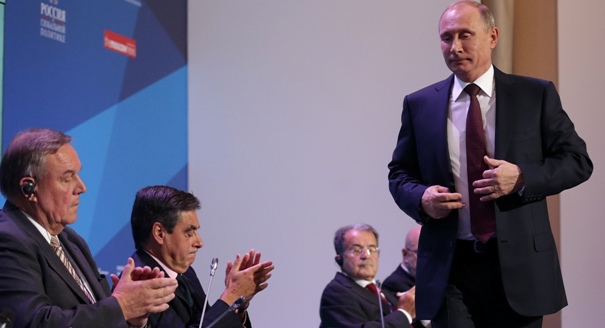
The tenth-anniversary Valdai Club meeting was named “Russia’s diversity for the Modern World.” Nevertheless, the issue of diversity was put to the side by other hot current issues: the recent Russian elections, corruption, and Syria.
The tenth-anniversary Valdai Club meeting was named “Russia’s diversity for the Modern World.” Frankly speaking, in Russian the name sounded like an English translation, but everyone understood what it was about anyway. Nevertheless, the issue of diversity was put to the side by other hot current issues. There were actually three of them: the recent Russian elections, corruption, and Syria.
The country’s leadership, which descended on Valdai in their helicopters, was well represented at the summit. Apart from President Putin, the guests were addressed by the newly-elected Moscow Mayor Sergey Sobyanin, the Head of Presidential Administration Sergey Ivanov, the Deputy Head of Administration Vyacheslav Volodin, the Foreign Minister Sergey Lavrov, and the Defense Minister Sergey Shoigu. Previously, leaders of such stature had only met with the foreign Club members. This September, they also met with their fellow countrymen. At the meeting, the members of the establishment exuded confidence, even complacency; they were showing that they were not particularly preoccupied with the opinion of those who were gallantly referred to as the “world intellectual elite.”
The questions on corruption that came from the audience were essentially left unanswered. The same fate befell the questions on the numerous cases of electoral fraud at the recent regional elections. When Sergey Ivanov was speaking, one would sometimes get a feeling that corruption is actually an inevitable component of Russian identity, which makes struggle against it all but meaningless. Sneering looks on Valdai members’ faces pointed to their skepticism about the Kremlin’s anti-corruption battle. They were especially amused by a reminder that corruption exists even in Finland.
As for the elections, the Russian politicians stressed in every possible way the system’s democratization, citing the examples of the victory by the opposition candidate Yevgeny Roizman in Yekaterinburg and of Alexey Navalny’s success in Moscow. (Incidentally, in his Internet posts, Navalny called Valdai participants “tourists”—which practically not a single of the participants reacted to.) The opposition members, for their part, cited the information according to which overall in Russia there were more cases of electoral fraud in these elections than in the previous ones. Vladimir Ryzhkov was especially active in advancing this case. However, even without these efforts, all the forum participants understood that both Ivanov and Volodin were well aware of how the elections had been carried out, in Tuva, Hakassia, and in the Moscow Region, which were alluded to as negative examples.
It is worth noting that there were no servile questions—the charge that one of the forum participants subsequently leveled against the opposition in his blog.
The issue of Syria was the subject of a special session that ended at 11 p.m. and was mentioned numerous times in connection with other problems. Syria got most mentions in Lavrov’s and Shoigu’s speeches. There were no spirited discussions of this issue; on the contrary, one got the feeling that the hardest part of the Syrian conflict had already been put behind, and Russia had all but saved the world from World War III. The Middle East experts were of a different opinion, though, believing that the resolution in the Syrian conflict is still a heck of a distance away.
Naturally, President Putin’s speech was supposed to become the pinnacle of the 10th Valdai meeting. Someone was quick to characterize it as a “triumphant benefit performance,” but it did not seem like one. The relaxed Putin positioned himself as a crowd-favorite and resembled an experienced master of ceremony a priori confident about his success.
A well-known idea about Russia’s special path of development was at the core of his eclectic speech. Its basic premise is “We are not the West” and “we know better ourselves.” The level of belligerence was comparatively moderate. The audience, a bit fatigued and disappointed with the speeches by his associates, greeted the national leader loyally, or one might even say indifferently. They expected nothing new of the president. In this respect, Putin’s performance completely lived up to their expectations. Even the dropped hint that he is ready to run for another term did not receive the required dose of amazement. Especially in light of Sergey Ivanov’s earlier statement, after a pause, that “one does not change horses in midstream.” I will point out, however, that the seasoned Valdai analysts did not rush to accept this “throw in” at face value. Speaking fluent Russian, a certain foreign professor even referred to it as “deza” which is the Russian slang term for “deliberate misinformation.”
Former Scholar in Residence, Religion, Society, and Security Program
Malashenko is a former chair of the Carnegie Moscow Center’s Religion, Society, and Security Program.
Recent Work
Alexey Malashenko
Alexey Malashenko
Carnegie does not take institutional positions on public policy issues; the views represented herein are those of the author(s) and do not necessarily reflect the views of Carnegie, its staff, or its trustees.
Blurring the line between humans and animals is a long-standing tradition in social utopian prose. In his latest novel, Leonid Bershidsky reminds us that in social experiments, people are often treated no differently than animals.

Alexander Baunov

In the tenth year of his presidency, President Mirziyoyev’s system is becoming even more personalized than that of his predecessor Karimov.

Galiya Ibragimova
While France and Australia are seeking to establish the legal obligations of messaging apps like Telegram, Russia wants total subordination.

Maria Kolomychenko
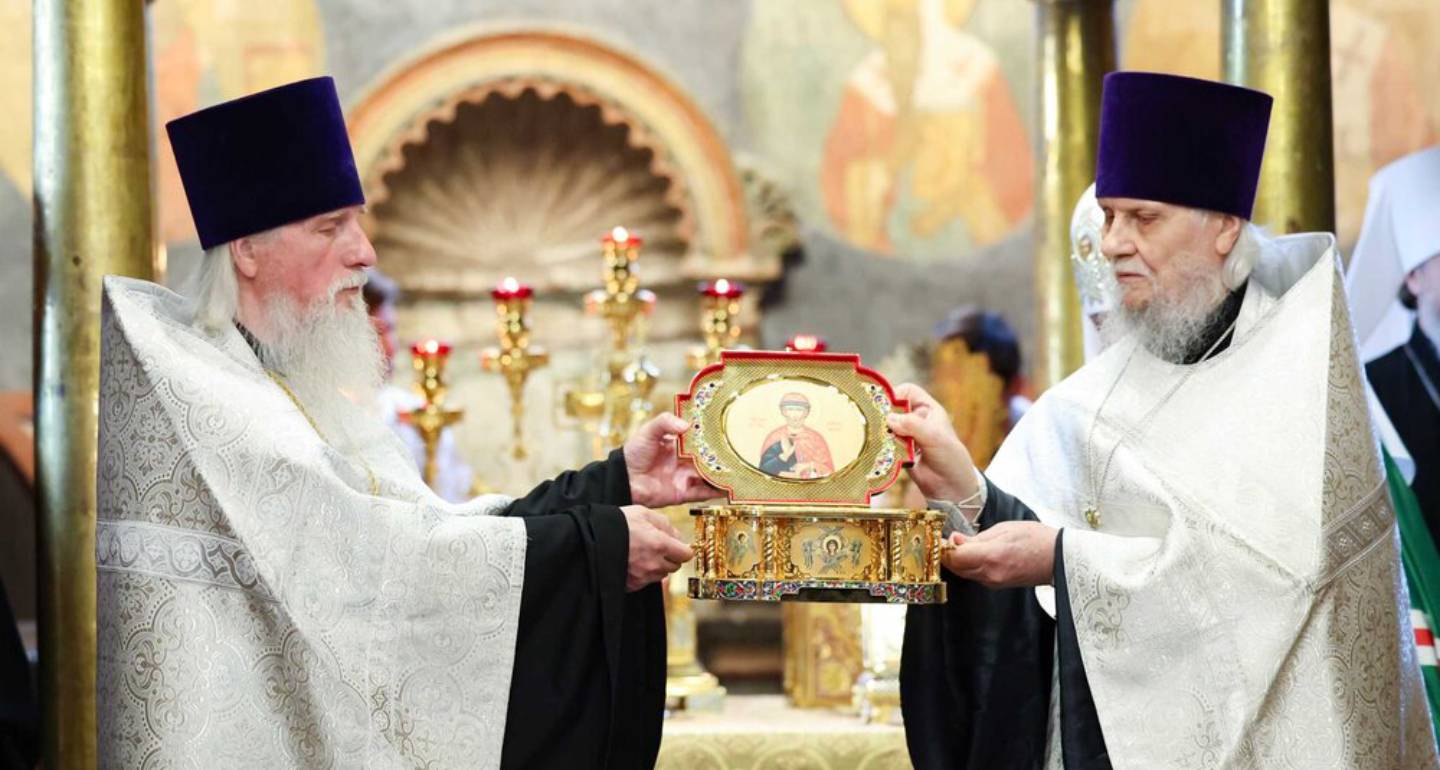
The recent uncovering of Dmitry Donskoy’s relics in the Cathedral of the Archangel is yet another attempt by the Russian Orthodox Church to help the state solve its problems. However, parroting the state’s version of Russian history leaves the Church with no message except “patriotism.”
Alexander Zanemonets

With the growth in points of friction between the great powers, organizations like the SCO will continue to play a role in the strategic adaptation of the smaller powers caught between them.

Temur Umarov