

Research
- +5
Alper Coşkun, Fatih Ceylan, Tacan İldem, …
{
  "authors": [
    "Sinan Ülgen"
  ],
  "type": "legacyinthemedia",
  "centerAffiliationAll": "",
  "centers": [
    "Carnegie Endowment for International Peace",
    "Carnegie Europe",
    "Malcolm H. Kerr Carnegie Middle East Center",
    "Carnegie Russia Eurasia Center"
  ],
  "collections": [
    "Turkey’s Transformation"
  ],
  "englishNewsletterAll": "",
  "nonEnglishNewsletterAll": "",
  "primaryCenter": "Carnegie Europe",
  "programAffiliation": "",
  "programs": [],
  "projects": [
    "Eurasia in Transition"
  ],
  "regions": [
    "Middle East",
    "Europe",
    "Türkiye"
  ],
  "topics": [
    "Democracy",
    "Civil Society",
    "Religion"
  ]
}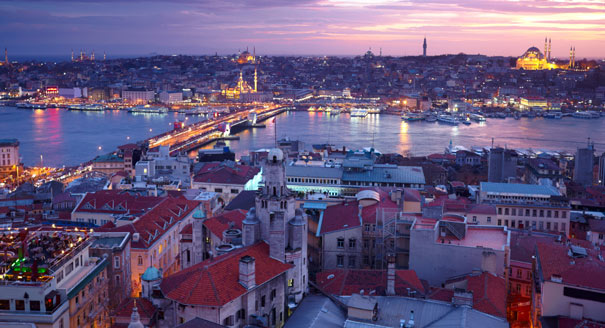
Source: Getty
The question of whether a government can and should enforce rules about personal morality is at the center of current political arguments in Turkey and the outcome of this dispute will determine the future direction of the country.
Source: Financial Times
It should not be an issue of debate in a well-functioning liberal democracy. But the question of whether a government can and should enforce rules about personal morality is at the centre of current political arguments in Turkey. The outcome of this dispute will determine the future direction of a country that has long aspired to demonstrate how Islam, democracy and modernity can be compatible.
It all started last month when Recep Tayyip Erdogan, the country’s prime minister, stated his opposition to mixed-sex student accommodation in off-campus flats. He said that no one knows what goes on in these places – and therefore it is incumbent on the state to take action.It was not the first time that he has framed his policy initiatives with an appeal to personal morality. The leader of the conservative AK party had previously defended a recent law limiting the retailing of alcoholic drinks by recalling that Islam had banned the use of alcohol.
Politics in general cannot be disassociated from moral values. Political contest can be as much about moral values as the credibility of economic platforms or foreign policy narratives. In the US, for instance, the outcome of political competition can often be determined by an individual politician’s position on the right to abortion.
Similarly, it is normal to expect a Christian democrat party in Europe to put emphasis on pro-family policies whereas a social democratic party may decide to spend the same tax dollars on furthering educational opportunities. There is nothing intrinsically wrong – or unusual – in moral values being part of the political ethos of democratic nations.
Furthermore, Turkey is arguably one of the most advanced democracies in the Muslim world. It is often branded as a model for the newly democratising nations of the Middle East. Mr Erdogan and his party have played a valuable role in upgrading Turkey’s democratic standards over the past decade. They were, for example, instrumental in achieving a critical leap in the quality of the Turkish democracy by eliminating the undue political influence of the military. His party also delivered on their promise of opening accession talks with the EU.
They are, however, now faced with a different but equally important challenge of building a genuinely liberal democracy. But liberal democracies function on the basis of the relativity of moral values. This means that governments cannot seek to impose their moral values by force on the rest of society. They can pass laws or design policies such as tax breaks to boost fertility rates to encourage behaviour that better reflects their moral views. But they ought not seek to criminalise or punish what they perceive to be personal immorality or weakness that does no harm to anyone else. One must live and let live.
The latest debate demonstrates that Turkish policy makers have yet to espouse this fundamental feature of genuine democracies. It is perhaps surprising that despite the existence of the principle of secularism in its constitutional order since 1937, Turkey continues to struggle with the right balance between a religion-induced morality and policy. A core reason for this summer’s nationwide protests was the reaction to the government’s stifling social conservatism.
Yet, in the wake of the Arab revolts, not only Turkey but the whole region is in dire need of a model of sound democratic governance that can ensure the cohesion of multi-ethnic and multi-confessional societies. Turkey’s ability to inspire and lead this turbulent region will therefore depend on it strengthening its credibility as a polity of sustainable social peace.
This in turn will depend on whether present and future governments can be agnostic in relation to the different sets of moral and religious beliefs held within their societies. That is why the outcome of the current debate is of such importance. It will indeed determine whether Turkey will be a democracy that punishes sins – or a democracy that champions liberal freedoms.

Senior Fellow, Carnegie Europe
Sinan Ülgen is a senior fellow at Carnegie Europe in Brussels, where his research focuses on Turkish foreign policy, transatlantic relations, international trade, economic security, and digital policy.
Recent Work

Alper Coşkun, Fatih Ceylan, Tacan İldem, …
Carnegie does not take institutional positions on public policy issues; the views represented herein are those of the author(s) and do not necessarily reflect the views of Carnegie, its staff, or its trustees.

If the Russian-speaking community in Latvia cannot articulate their interests without being seen as disloyal, they could end up embracing a pro-Kremlin agenda.

Sergejs Potapkins

Are Germany’s economic, industrial, and political struggles becoming a liability for the EU’s ability to rise to the geopolitical moment?

Rym Momtaz, ed.
Despite myriad challenges and occasional stumbles, the new Hungarian government is moving ahead with energy and conviction to uproot years of illiberalism and corruption and rebuild Hungarian democracy.

Thomas Carothers

European Commission President Ursula von der Leyen is about to give her annual address on the state of the EU. Here’s what she won’t—but should—say.
Rym Momtaz

Understanding the climatic pain points is necessary for policymakers hoping to minimize the war’s negative environmental consequences.



Alejandro Martin Rodriguez, Joy Arkeh, Sarah Yerkes