

Paper
There is a transnational far-right populist movement that links middle powers in a global movement that extends well beyond Trump.
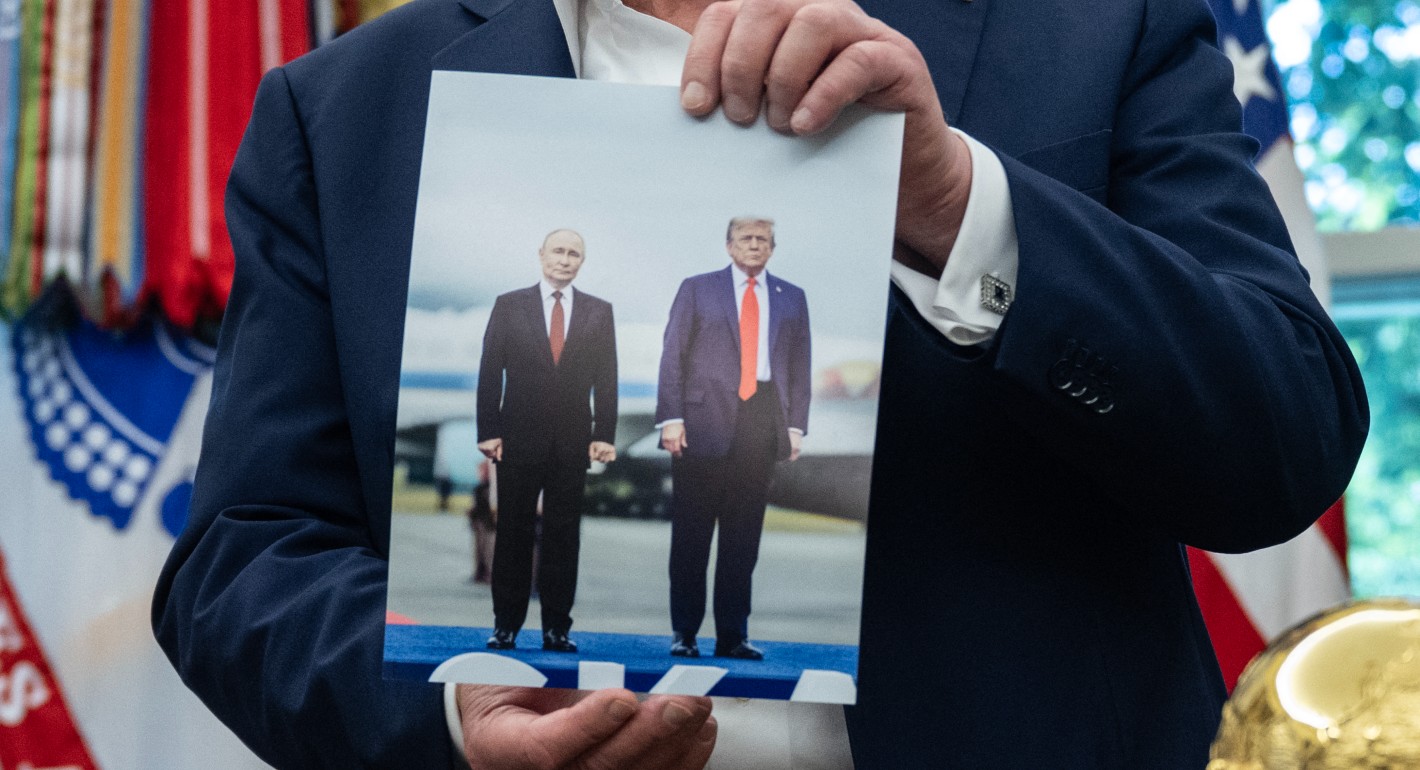
U.S. President Donald Trump holds a photograph of him with Russian President Vladimir Putin. (Photo by ANDREW CABALLERO-REYNOLDS/AFP via Getty Images)
Individual leaders and public attitudes—especially in democracies—matter for credibility.
Media accounts suggest that nuclear bluster is more common than ever. Russian leaders have frequently voiced a range of nuclear threats and signals as the war in Ukraine has dragged on, while U.S. President Donald Trump has used apocalyptic language toward Iran that some observers considered an implicit nuclear threat. While much of this nuclear rhetoric may be little more than bluster, it is accompanied by real—and dangerous—changes in the nuclear environment. China’s nuclear arsenal is growing rapidly, and the Chinese nuclear enterprise appears to be playing a more central role in shaping doctrine and posture. Strategic arms control has faded as a tool for managing arms racing and crisis escalation concerns. Perennial tensions between India and Pakistan have exploded, subsided, and resumed.
But nuclear deterrence teaches that nuclear signals only work for deterrence if they are believed. If an adversary views them as little more than empty bluster, they lose their efficacy to either deter or coerce. Typically, the credibility of nuclear deterrence is judged on two factors. The first is capability: the weapons, delivery systems, and accoutrement of a nuclear arsenal necessary to deliver on a nuclear threat. The second is resolve: a leader’s willingness to actually make good on the threat. Both capability and resolve are necessary to produce deterrence.
Of these factors, resolve is the less examined. Traditionally, the nuclear deterrence literature treats resolve as material, observable only when states have infrastructure in place that conveys and cements sufficient strategic interests. For example, has a state placed tripwire troops to reinforce its involvement if a conflict emerges? Do formal commitments, such as mutual defense pacts, obligate a state to action?
What this material perspective misses, however, is that the decision at the core of nuclear deterrence and coercion—the decision to use a nuclear weapon—is profoundly political. The decision would be made by a head of state, a politician subject to their own individual psychology and accountable to a vulnerable public. Thus, looking inside the state making the nuclear threats will help to more accurately and fully assess the state’s resolve, as well as the broader relationship between resolve and deterrence credibility.
Understanding the role that domestic politics—including the personalities of leaders and the ways in which they are or are not accountable to their publics—plays in nuclear politics is important. For example, the U.S. intelligence community expended considerable effort on Kremlinology during the Cold War for this reason. With nuclear weapons again growing in salience, global political trends—such as the increasing prevalence of personalistic leaders, populist parties, and partisan divides—may further complicate the politics of deterrence in the coming years.
To explore these dynamics, we recently fielded an experimental survey to evaluate how public opinion impacts a state’s perceived nuclear credibility. Our findings show public opinion meaningfully shapes the interpretation of nuclear signals, particularly in democracies. We also find the public puts significant importance on the psychology and ideology of leaders when evaluating nuclear signaling. The effectiveness of nuclear signals, in other words, hinges not only on a state’s hardware but also on the attitudes of its leader and population. Effective nuclear signaling, particularly in polarized political periods like the present, must engage with public opinion. Absent broad political support, material capabilities and their credibility may be discounted by those they are meant to influence.
The effectiveness of nuclear signals hinges not only on a state’s hardware but also on the attitudes of its leader and population.
As world leaders invoke nuclear bluster more regularly, it has become more difficult to identify the presence and intent of nuclear threats, much less adjudicate their credibility. Bluster risks misperception, and as a result, leaders in nuclear countries have contributed to their own waning nuclear credibility. Putin is the boy who cried wolf. North Korea makes dozens of nuclear threats every month. At the same time, Trump has undermined extended deterrence by frequently raising doubts about the durability of American commitments to allies.
In Britain, inconsistency in the government’s commitment to the nuclear enterprise raises questions about the viability of its deterrent. For example, Jeremy Corbyn, the opposition leader from 2015 to 2020, repeatedly expressed support for unilateral nuclear disarmament and stated that, if he became prime minister, he would not authorize the use of nuclear weapons. Subsequent governments have reaffirmed the UK’s commitment to nuclear deterrence, but doubts remain. Recently, a political scandal over defense funding marked the turnover from Keir Starmer’s to Andy Burnham’s prime ministerships, raising questions about the UK’s real interest in defense.
Similar uncertainty exists about French commitments to the nuclear defense of Europe. In March, French President Emmanuel Macron signaled a stronger French role in European defense by introducing the concept of “forward deterrence” and calling for greater European nuclear cooperation. However, these new arrangements are vulnerable to reversal in the 2027 French election, especially given the strong position currently held by the far right in polls. A move toward more isolationist far right parties could be a challenge for security-minded leadership elsewhere in Europe as well. In Germany and beyond, far-right victories—or the possibility of them—could further reshape security policy.
Governments in nuclear-armed states also increasingly strive to shape their publics’ views on nuclear deterrence. In China, the government has engaged in a public media campaign to emphasize the Two Bombs, One Satellite program that delivered China’s fission and fusion warheads and first satellite launch in the 1960s and 1970s. By promoting these historical achievements, the government is aiming to, according to one observer, elevate “the national, social, and political value of China’s nuclear weapons” in the public imagination. In a similar effort to shape public views on deterrence, Russian media sources have attempted to acculturate the Russian public to the impending possibility of nuclear use. At the same time, NATO countries have committed to a campaign known as “raising the nuclear IQ,” which strives to cement civil resilience by engaging with publics on issues of nuclear deterrence. And, many of Trump’s threats against Iran—such as those on his primary social media platform, Truth Social—purport to speak directly to his supporters.
What all of these efforts have in common—although they take different approaches and convey different messages, with differing degrees of success—is a tacit recognition that the public is an important actor in the nuclear domain, and that public views are worth trying to shape in ways favorable to that state’s leader.
Significant survey-based work has investigated public sentiments on nuclear weapons and the degree to which publics in the United States and abroad would support nuclear use across a range of potential scenarios. But less attention has been paid to how these public preferences might affect others’ perceptions of the credibility of nuclear signals. To assess how much the public actually matters in shaping the perceived credibility of a state’s nuclear threats, we fielded an experimental survey that asked 7,959 respondents to evaluate a nuclear deterrence signal made in the context of the Russia-Ukraine war. The goal was to answer two questions. First, do a public’s views on nuclear weapons matter in evaluations of its state’s nuclear credibility? Second, how much do the personalities and predilections of individual leaders affect perceptions of credibility?
Survey participants were told that events in Ukraine had developed to the point where the United States or UK stated that it would use nuclear weapons “to retaliate against any Russian nuclear use in Ukraine or against a NATO member state,” or where Russia stated it would use nuclear weapons “if the United States or its allies send military forces to Ukraine.” We varied whether survey-takers read the U.S., UK, or Russian statement.
In addition, respondents were given different assessments about public sentiments in these countries. Some were told that the public strongly supported nuclear use, some were told that the population was ambivalent (meaning some members of the public supported nuclear use, while others opposed), and other respondents were told that the public in question strongly opposed nuclear use. By randomly assigning respondents to these various treatment conditions, we were able to evaluate whether public sentiments about nuclear weapons influenced assessments of nuclear threat credibility. We could also test whether these effects were equally strong in the case of autocratic Russia as in democratic Britain and America.
We evaluated the perceptions of the U.S. population as well as those of a variety of U.S. allies and partners, including a nuclear-armed ally (the UK), a nuclear-armed partner (India), and a non-nuclear ally (Australia). This variation allowed us to explore how interpretations of nuclear signaling might vary with both alignment and nuclear status. For example, populations in nuclear weapons states may hold different beliefs, and citizens of U.S. allies may perceive the stakes of American nuclear threats as higher or more nationally significant. Australians may have less at stake in the case of Ukraine, for instance, but they would likely be highly invested were a similar scenario to develop around Taiwan.
Our study results were clear: When a democracy threatened nuclear use in our hypothetical scenario, public preferences mattered in perceptions of credibility. A public supportive of nuclear use led survey-takers to assess the nuclear threat as more credible, while an opposed public led them to discount the threat. In other words, outsiders looked inside the democratic state and drew conclusions about whether its leader possessed sufficient resolve to follow through on a nuclear threat by evaluating whether they would be rewarded or punished by their domestic audience.
This pattern was much weaker and far less consistent, though not entirely absent, in the case of threats issued by Russia. In other words, Russian domestic politics did not seem to affect how external audiences assessed the credibility of a hypothetical nuclear threat by Putin. This was likely because in autocratic states there are fewer means for the population to impose its preferences on political leaders, leading observers to broadly discount the importance of public opinion.
When a democracy threatened nuclear use in our hypothetical scenario, public preferences mattered in perceptions of credibility.
Although our research focused on how outside publics evaluated the domestic politics of nuclear credibility, the findings are consistent with an earlier study of attitudes among American and British political elites, including UK parliamentarians. That study demonstrated that political elites make similar judgements, viewing public attitudes about nuclear use in democracies as a critical determinant of the credibility of nuclear threats.
Political scientists have long debated whether democratic institutions make threats more believable. Free and fair elections, along with a free press, enable voters to impose costs on democratic leaders who bluff and then retreat. Moreover, the comparatively open political and media environments in democracies make it easier for outside observers to assess a democratic leader’s resolve. If opposition parties support the government and media outlets across the political spectrum adopt similar positions, observers can infer that there exists broad support for a foreign policy action. The bipartisan blank check for the George W. Bush administration’s actions after September 11, 2001, illustrates this point—though rising polarization may make such a unifying moment less likely today.
Those same institutions, however, also create political constraints. If everyone can see that voters firmly oppose nuclear use, adversaries have good reason to believe that a democratically elected leader has less room to maneuver. In this case, they may further assess that a democracy’s nuclear commitments are less than credible. For example, during the First Taiwan Strait Crisis in 1955, then secretary of state John Foster Dulles fretted that “we might wake up one day and discover that we were inhibited in the use of these [nuclear] weapons by a negative public opinion.”
Notwithstanding the potential conditions that democratic institutions might place on a leader’s willingness to make nuclear threats, a substantial body of research shows that the American and British publics, at least, can be quite supportive of nuclear use. (Whether this research accurately gauges and engages public understanding of the potential consequences of nuclear use is debated.) In Trump’s case, for example, while Democrats were aghast at some of the most extreme threats directed at Iran, Republicans were far more supportive. One opinion survey showed that 55 percent of Republicans approved of his April 2026 warning that “a whole civilization will die tonight,” compared with just 3 percent of Democrats.
Politics are increasingly wrapped up in the personalities of leaders. This is most immediately apparent in the case of populist figures, but the resurgence of populism internationally, including in states living under the U.S. nuclear umbrella, suggests this may be a long-lived trend.
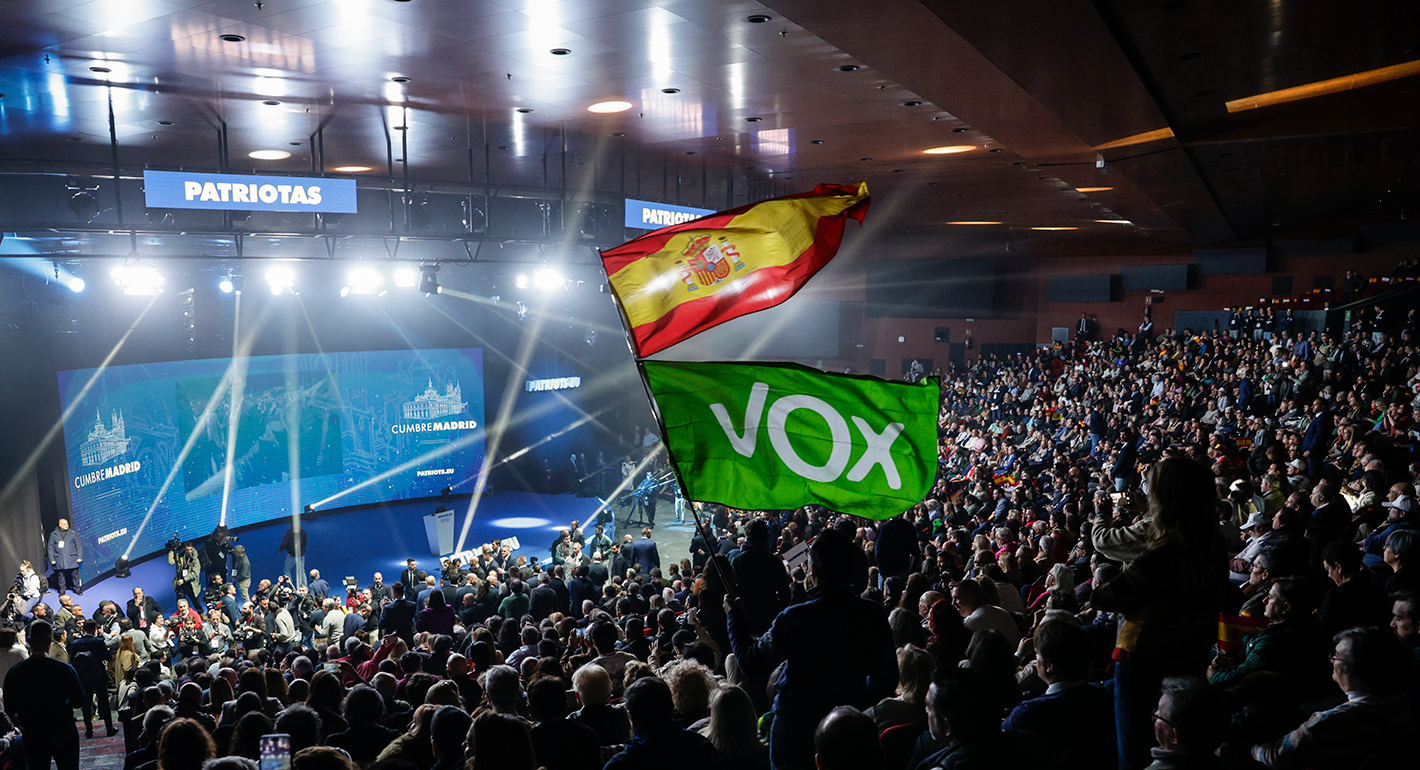
There is a transnational far-right populist movement that links middle powers in a global movement that extends well beyond Trump.
In this regard, our research also shows how leader identity is increasingly entangled with nuclear credibility. The survey asked respondents to rank the factors they considered most important when deciding whether to believe a nuclear threat. For threats made by both democracies and autocracies, the personality of the leader and the leader’s political ideology were consistently among the most important considerations.
The importance of leader attributes was especially pronounced in the Russian nuclear threat scenarios, where 31 percent of respondents who read about Russia making a nuclear threat ranked a leader’s personality as the single most important factor affecting nuclear credibility. By comparison, this number sat at 19 percent among those evaluating equivalent American or British threats. In short, leaders’ personalities matter. But they especially matter in autocracies, where institutions are less likely to constrain a leader and where the leader’s ideology and idiosyncrasies can more directly affect political outcomes.
Leaders’ personalities matter. But they especially matter in autocracies.
Moreover, our results show that capabilities and resolve, indicated by material factors such as the size of a nuclear arsenal or the presence of tripwire troops, are actually less important to public perceptions of nuclear credibility. In our survey, a mere 10 percent of respondents ranked tripwire troops among the most important contributors to nuclear threat credibility, despite those forces traditionally being viewed as an especially important tool for signaling resolve. In contrast, 17 percent of respondents placed public opinion among their top three considerations for nuclear credibility, and another 60 percent ranked it in the middle group of considerations. To fully understand the mechanics of nuclear deterrence and coercion, then, it will be necessary to reconsider the influence of the domestic political environment on nuclear credibility.
Our research points to two implications about the field of nuclear credibility in practice. First, nuclear deterrence cannot be understood independently of the leaders who would have to execute it. For the United States, for example, one consequence is this: Certain perceived personality traits of the sitting president—such as his quickness to anger, propensity to bluff or back out, black-and-white thinking, and reluctance to engage seriously with diverse viewpoints or nuanced information—pose serious nuclear risks.
Nuclear deterrence cannot be understood independently of the leaders who would have to execute it.
Second, at least in democracies, the public has agency in the nuclear domain. If public attitudes are one signal of whether nuclear threats will be carried out, then domestic understandings of nuclear policy have international consequences. But the balance is difficult to strike. For example, an American public unwilling to risk nuclear war to defend stalwart U.S. allies undermines extended deterrence; a trigger-happy one risks miscalculation. So, any group seeking to drive nuclear policy will need to engage and consult with the relevant electorates.
Ultimately, our research indicates the need to rethink the determinants of not only nuclear credibility but also nuclear policy more broadly. Gone should be the days of treating nuclear weapons policy as purely the preserve of small communities of officials and specialists. Individual leaders and public attitudes—especially in democracies—matter. It is time to look beyond the nuclear priesthood toward the views of their parishioners and popes.

Nonresident Scholar, Nuclear Policy Program
Lauren Sukin a nonresident scholar at the Carnegie Endowment for International Peace and associate professor at the University of Oxford.

Samuel Seitz
Lecturer (Assistant Professor), University of Reading
Samuel Seitz is a lecturer (assistant professor) at the University of Reading and an associate member at Nuffield College, University of Oxford, as well as a Deterrence Futures fellow at the Royal United Services Institute (RUSI). His research focuses on nuclear strategy, alliance politics, and the role of status seeking in military procurement.
Carnegie does not take institutional positions on public policy issues; the views represented herein are those of the author(s) and do not necessarily reflect the views of Carnegie, its staff, or its trustees.

The European Commission is preparing the EU for its next enlargement. But member states need to make it a project that European citizens can understand, shape, and support.

Iliriana Gjoni
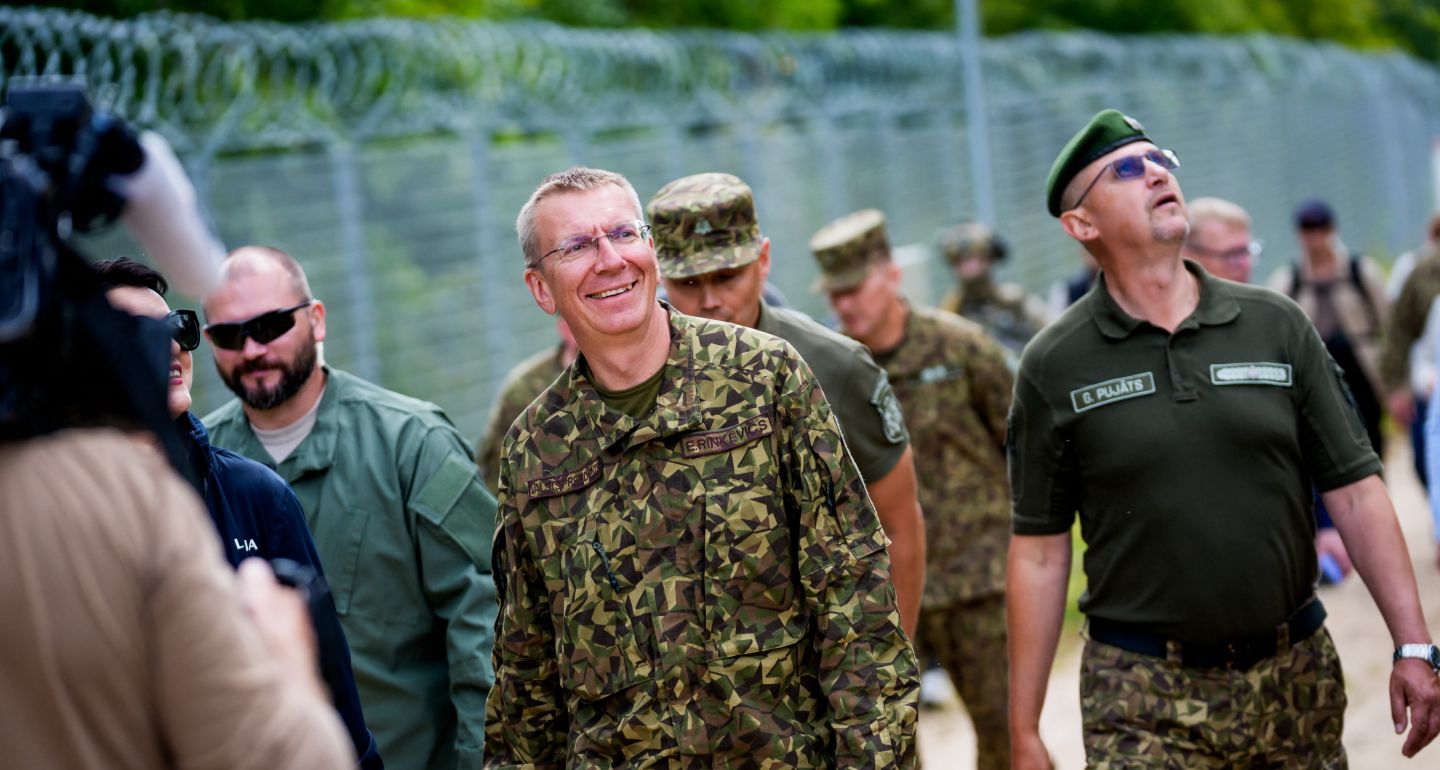
Latvia and Lithuania have been considering whether they could temporarily host NATO nuclear weapons in the event of war or a similar crisis.

Sergejs Potapkins

The 2024 Republican gains among this important constituency have not held.



Sumitra Badrinathan, Devesh Kapur, Annabel Miller, …
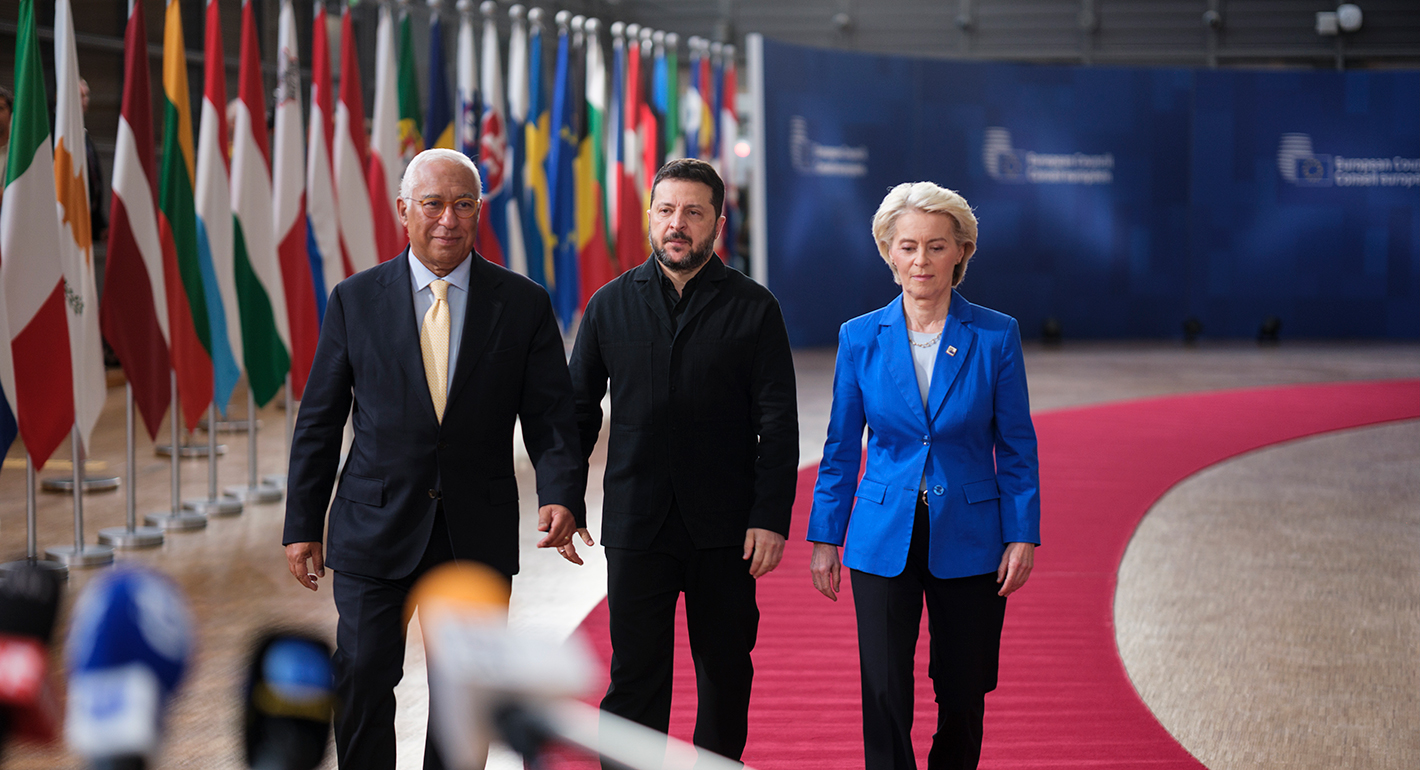
EU and member-state leaders will need to show the political will and flexibility to adjust to Ukraine’s changing needs and to find compromises that will put support on a sustainable, long-term footing.
Phyllis Berry

Geoengineering is becoming a geopolitical question as much as a climate one. The way states and the private sector pursue these technologies, assess risks, and drive research increasingly appears focused on gaining a strategic edge. In a field where governance in lagging behind, Europe should keep track of the geopolitical implications if it is to develop effective regulatory frameworks.

Olivia Lazard, ed.