

Commentary
The European far right might fail to steer EU policy in the direction Russia wants, but they will create enough chaos inside Europe to benefit the Kremlin.
Dimitar Bechev
{
  "authors": [
    "Milan Vaishnav",
    "Devesh Kapur",
    "Neelanjan Sircar"
  ],
  "type": "legacyinthemedia",
  "centerAffiliationAll": "dc",
  "centers": [
    "Carnegie Endowment for International Peace"
  ],
  "collections": [],
  "englishNewsletterAll": "ctw",
  "nonEnglishNewsletterAll": "",
  "primaryCenter": "Carnegie Endowment for International Peace",
  "programAffiliation": "SAP",
  "programs": [
    "South Asia"
  ],
  "projects": [
    "India Decides 2014"
  ],
  "regions": [
    "South Asia",
    "India"
  ],
  "topics": [
    "Political Reform",
    "Democracy"
  ]
}
Source: Getty
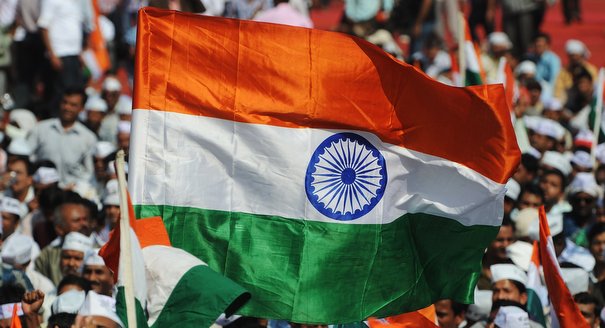
The hundreds of millions of voters whose collective actions will determine the course of India’s 16th general elections represent an electorate that is changing in many complex ways.
Source: Times of India
The hundreds of millions of voters whose collective actions will determine the course of India's 16th general elections represent an electorate that is changing in many complex ways which we are only beginning to understand.
To better understand these changes, the Center for the Advanced Study of India (CASI) at the University of Pennsylvania, in conjunction with the Carnegie Endowment, partnered with the Lok Foundation to conduct a survey of a cross-section of the population. CMIE, on behalf of the Lok Foundation, conducted face-to-face interviews of 68,500 randomly selected Indians across 24 states and union territories between September and December 2013.
The "Lok Surveys" aim to track the attitudes of individuals from these households over the next several years, as part of a new effort to understand the social and political reconfigurations taking place across India today. Because the majority of our sample is urban, we use 2011 Census data to reweight our sample to ensure representativeness of various social groups.The Lok Survey was conducted in the final quarter of 2013, and things have obviously evolved since then. Last September, when it was launched, AAP was still a curiosity and Telangana had not yet become a reality.
While our aim is to understand the deeper trends that will shape the forthcoming polls, we cannot ignore the big questions around partisan performance.
Turning to the electoral horse race, we focus our attention on 15 large states comprising roughly 51,000 respondents (accounting for 87% of LS seats). Our data found the BJP-led NDA occupying a much-improved position.
Our analyses suggest that, as of the start of 2014, the NDA was poised to capture nearly 31% of the all-India vote. This is a significant improvement upon the alliance's 21.5% vote share from the 2009 elections and considerably greater than the BJP's own best performance in 1996 when it garnered 25.6% of the vote. The ruling Congress-led UPA, on the other hand, was set to win 23% of the vote—a sharp fall from its 31.5% vote share in 2009.
Our numbers for the NDA are broadly in line with other leading surveys. The Centre for the Study of Developing Societies (CSDS) estimated vote shares of 29 and 36% for the NDA in their July 2013 and January 2014 tracker polls, respectively. Given the timing of our survey, our estimate is squarely in line with these projections. Our estimate for the UPA is somewhat lower than CSDS' but virtually identical to the January 2014 ABP-Nielsen survey.
The data suggests NDA has gained significant ground in West and North India—places where it has already had a presence (below). In Bihar, we estimate that the BJP's vote share shot up by as much as 23 percentage points by end 2013. In UP, the BJP has the most support with 29% vote share, five and nine percentage points over the Bahujan Samaj Party and Samajwadi Party, respectively. In other regions, the BJP has made impressive strides although usually from a relatively low base. Without prepoll alliances, these gains may not translate into a large share of seats.
The BJP has made a strategic bet that Modi would energize three key demographics: youth, urban dwellers, and individuals belonging to the Other Backward Classes (OBCs)—a group to which Modi belongs. Our data suggest the BJP has not only succeeded in mobilizing these groups but has gone beyond. The NDA holds a lead over the UPA in cities and towns (30 to 24%) as well as in rural areas (31 to 23%). The gains to the NDA appear to be driven largely by the better off: while the NDA is leading UPA among literate voters in both urban and rural areas, the race is much closer among illiterates (chart on top).
And what about the vaunted youth vote? Young voters between 18 and 34 years favor the NDA over the UPA but not significantly more than older voters. In the Hindi heartland states where the BJP vote swing is the most pronounced, the party has succeeded in bringing voters across all age groups into its net.
In terms of social groupings, the NDA continues to struggle attracting support from Muslims, who prefer the UPA by a margin of nearly 3 to 1. UPA retains its traditional lead over the NDA when it comes to Scheduled Tribes (31 to 23%) but trails the NDA when it comes to Dalits (21 to 25%) (chart on top). When it comes to the pivotal OBC category, however, the NDA lead widens; it is polling nearly 15 percentage points above the UPA (35 to 21%). The support of the Upper Castes remains solidly with the NDA: 42% versus just 19% for the UPA.
Even if the BJP does as well as this and other surveys are predicting, getting the coalition math right remains a challenge. The BJP will have to win over at least a few of the most significant regional players, several of whom have opened up commanding leads in their strongholds. These include Mamata Banerjee's Trinamool Congress, which is dominating the Left Front (41 to 25%) in West Bengal and Jayalalaitha's AIADMK in Tamil Nadu, which is leading the opposition DMK 27 to 20%.
The groundswell of support for the BJP and the corresponding weakening of the Congress are two unmistakable trends emanating from our data. This change in the overall balance of power begs the question why Indian voters are reassessing their loyalties in such a stark manner. This is the subject of our next piece.
Kapur and Sircar are with CASI at the University of Pennsylvania. Vaishnav is with the Carnegie Endowment for International Peace.
This article was originally published in the Times of India. It is the first of a four-part series.

Director and Senior Fellow, South Asia Program
Milan Vaishnav is a senior fellow and director of the South Asia Program and the host of the Grand Tamasha podcast at the Carnegie Endowment for International Peace. His primary research focus is the political economy of India, and he examines issues such as corruption and governance, state capacity, federalism, and electoral behavior. He also conducts research on the Indian diaspora.
Devesh Kapur
Starr Foundation Professor, Johns Hopkins (SAIS)
Devesh Kapur is the Starr Foundation Professor of South Asian studies at the Johns Hopkins School of Advanced International Studies (SAIS). He is the author of three books on migration, including The Other One Percent: Indians in America (with Sanjoy Chakravorty and Nirvikar Singh).
Neelanjan Sircar
Associate Professor, Ahmedabad University
Neelanjan Sircar is an associate professor at Ahmedabad University and one of the country’s leading scholars of Indian politics. He has spent years studying party organizations, welfare politics, and electoral change across states—including West Bengal and Assam.
Carnegie does not take institutional positions on public policy issues; the views represented herein are those of the author(s) and do not necessarily reflect the views of Carnegie, its staff, or its trustees.

The European far right might fail to steer EU policy in the direction Russia wants, but they will create enough chaos inside Europe to benefit the Kremlin.

Dimitar Bechev

If the Russian-speaking community in Latvia cannot articulate their interests without being seen as disloyal, they could end up embracing a pro-Kremlin agenda.

Sergejs Potapkins

Russia’s ruling party would have benefited from Putin appearing as its distant patron, but as an active frontman imposing his views on the public, he has done nothing but harm both the party’s election campaign and the ruling system overall.

Andrey Pertsev
Despite myriad challenges and occasional stumbles, the new Hungarian government is moving ahead with energy and conviction to uproot years of illiberalism and corruption and rebuild Hungarian democracy.

Thomas Carothers

Radical-right parties are expected to do well in upcoming elections in four of the EU's biggest member states. If successful, they could prevent the union from addressing key challenges ahead.

Stefan Lehne