

Podcast Episode
Tom Carothers, a top democracy scholar with deep ties in Hungary, joins Jon Bateman on a special episode of The World Unpacked.
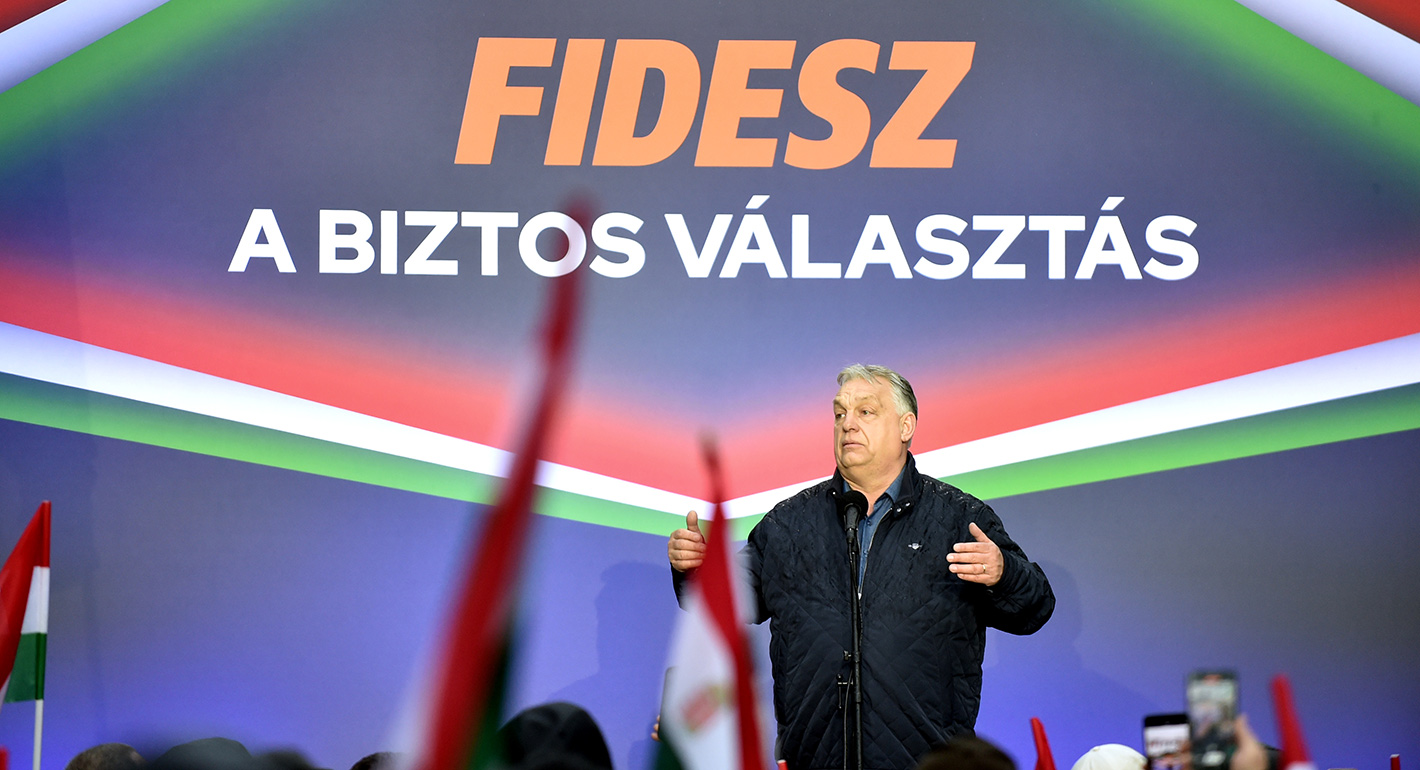
Source: Getty
Hungary under Viktor Orbán deployed right-wing populism as a foreign policy strategy, embedding the country in a web of illiberal transnational networks whose legacy will endure even after his April 2026 electoral defeat.
This paper is part of “The Populist Turn in Middle Power Diplomacy,” a Carnegie series on the international impacts of right-wing populism. Focusing on middle powers, the series explores how populist leaders reshape foreign policy, build transnational networks, and advance shared agendas across borders.
Over the past decade and a half, Hungary has become one of the most instructive cases of how right-wing populism can transform not only a country’s domestic politics but also its place in the international system. Under the long rule of former prime minister Viktor Orbán and the Fidesz–Hungarian Civic Alliance party (Fidesz) between 2010 and 2026, the country has moved from a postcommunist democratization success story and committed member of the Euro-Atlantic community to an electoral autocracy with deepening ties to autocratic regimes and far-right allies across Europe and beyond.
Hungary’s case is notable not only for the depth and speed of this transformation but also for the deliberate strategy with which Fidesz has pursued it. As a middle power—a state with meaningful regional influence and selective global reach, but without the material resources or structural weight of great powers—Hungary possesses limited conventional diplomatic leverage. Yet under Orbán, the country has capitalized on key characteristics of right-wing populism in its foreign policy, using conflict, personal ties, political alliance-building, and the cultivation of transnational networks to punch well above its weight internationally. Hungary thus offers an unusually clear illustration of how populism can function not merely as a governing style but as a foreign policy strategy middle powers employ to address constraints and opportunities in a fragmenting international order.
Populism can function as a foreign policy strategy middle powers employ to address constraints and opportunities in a fragmenting international order.
This paper examines how Fidesz’s rise and consolidation of its power reshaped Hungary’s foreign policy and external alignments, how these foreign policy choices feed into a broader transnational project, and the extent to which these linkages have produced genuine convergence around shared policy agendas.
The paper first traces the emergence and consolidation of Fidesz as a right-wing populist party, highlighting the Manichaean worldview and personalization of political authority that define its political project. It then explores how right-wing populism has led to the politicization and deprofessionalization of the Ministry of Foreign Affairs (MFA) and the diplomatic service. It examines how Hungarian foreign policy embraced conflict and adopted an approach to international organizations that combines confrontation and instrumental engagement. The analysis then maps the dense network of transnational linkages Fidesz has built—spanning personalist ties with authoritarian leaders, party-to-party alliances, transnational movement infrastructures, and shared narratives—and identifies anti-immigration, a postliberal culture war, and Euroskepticism that aims to transform the European Union (EU) as the shared agenda points these connections gave rise to.
Following Fidesz’s April 2026 electoral defeat, Péter Magyar’s government is expected to re-professionalize Hungary’s foreign policy, reorient toward Euro-Atlanticism, and adopt a more consensus-driven approach within the EU. Yet the legacy of the Orbán era will endure through Fidesz’s continued presence in transnational illiberal networks.
The rise of right-wing populism in Hungary is tied to the long-term transformation of Fidesz, the party that has dominated Hungarian politics since 2010. Founded in 1988 as a liberal, anticommunist youth movement, Fidesz initially championed democratic change and Hungary’s Euro-Atlantic integration. Its evolution into a right-wing populist party was gradual and strongly shaped by electoral competition. By the mid-1990s, the party had shifted toward the center-right, developing a nationalist-conservative profile during its first term in office (1998–2002). After eight years in opposition, it returned to power in 2010 with a landslide victory that secured a two-thirds supermajority in Parliament, enabling it not only to pass constitutional amendments but to reshape Hungary’s entire legal and institutional architecture.
Fidesz’s populist project is rooted in a Manichaean worldview that divides the political universe into two irreconcilable camps: the “real Hungarian people,” whose authentic interests and identity Fidesz claims exclusively to represent, and a rotating cast of “enemies” said to threaten the “real Hungarians” both from within Hungary and beyond its borders. These enemies have included domestic left-wing and liberal political elites, bureaucrats in Brussels, financier and philanthropist George Soros, nongovernmental organizations (NGOs), independent media outlets, migrants, and LGBTQ communities. Fidesz’s us-versus-them logic frames politics as an existential struggle in which Orbán—the charismatic leader of the party—is portrayed as the protector of the nation. The personalization of power around Orbán is a defining feature of Hungarian populism: He is the party’s ideological engine and chief decisionmaker.
Fidesz divides the political universe into two irreconcilable camps: the “real Hungarian people” and a rotating cast of “enemies.”
This populist logic accelerated after 2010. Facing electoral competition from the radical-right Jobbik party, Fidesz progressively absorbed nationalist, Euroskeptic, and nativist positions—particularly on ethnic Hungarians abroad, the Roma minority, and immigration—effectively outflanking its rival and cementing its dominance on the right.1 This ideological radicalization unfolded in tandem with the governing party’s capture of the state: The adoption of a new constitution and electoral code, the subjugation of public media, and the erosion of judicial independence transformed Hungary from a consolidated democracy into an electoral autocracy.2 Independent media outlets and NGOs that resisted were systematically pressured and intimidated through populist rhetoric and restrictive legislation.
By the mid-2010s, Fidesz’s growing conflict with EU institutions over the erosion of the rule of law accelerated its repositioning within Europe. Launched in 2018, the Article 7 procedure—the EU’s formal sanction mechanism for serious breaches of its core values—against Hungary produced no tangible results but deepened the government’s anti-Brussels posture.3 Fidesz’s ultimate departure from the center-right European People’s Party (EPP) in 2021 marked its open alignment with the European populist radical right, a repositioning that culminated in the establishment of the Patriots for Europe group in the European Parliament after the 2024 European parliamentary elections.
Under Fidesz, the centralization of foreign policymaking, the politicization of diplomacy, an emphasis on leader-to-leader ties, and a combative, conflictual rhetoric have become characteristic features of Hungarian foreign policy. These reflect not only changes in policy priorities but also a deeper transformation in how foreign policy is organized and conducted.
The Hungarian case sheds light on how right-wing populism can centralize and politicize foreign policy. The party captured the MFA, sidelined career diplomats, and concentrated decisions in a small loyalist circle around the prime minister and the foreign minister. Before 2010, Hungary was regarded as a model case of Europeanization: The MFA and its expert staff served as the center of EU affairs coordination, and Hungarian diplomats were considered to be the elite of the civil service. During Fidesz’s first term, as the party focused primarily on consolidating its domestic grip on power, Hungary’s foreign policy retained continuity with past priorities such as support for the Euro-Atlantic alliance, good neighborly relations in Central Europe, and support for Hungarian minorities abroad.
An ideological and organizational shift unfolded gradually from 2012 onward as then state secretary Péter Szijjártó, who had previously led Fidesz’s youth wing and served as a government spokesman, acquired stature in the Prime Minister’s Office (PMO). He championed the “Eastern Opening” policy, which aimed to expand economic ties with Russia and China.4 Between 2012 and 2014, he concentrated power on these dossiers in the PMO in ways that challenged the MFA’s authority.
Szijjártó’s appointment as minister of foreign affairs and trade in 2014 led to a fundamental overhaul of the MFA. Approximately 70 percent of the ministry’s staff was gradually replaced, with most senior positions awarded to people from Szijjártó’s personal circle who lacked relevant professional experience. Career diplomats were reduced to implementing decisions from above, with little transparency about their origins.5 The result was a foreign policy apparatus in which professional expertise was systematically sidelined, loyalty to the leader was rewarded, and strategic decisions were concentrated in a small circle around the minister.
Szijjártó’s appointment also marked an ideological shift. Expanding on the Eastern Opening policy, the pursuit of Hungary’s economic interests—with any and all partners—became the explicit guiding principle of the country’s foreign policy. Orbán openly dismissed “ideology-driven foreign policy” that he associated with the Euro-Atlantic alliance and the idea that values should figure into foreign policy decisions.6 Instead, the Hungarian government pursued a policy it termed connectivity and economic neutrality that sought to maintain channels with all major powers.7 It argued that being confined to one bloc—such as the Euro-Atlantic alliance—was detrimental to Hungarian interests, and that the country must remain free to pursue economic ties with any partner.
This shift in organizational logic was matched by an increasingly explicit embrace of conflict as a foreign policy instrument. The confrontational posture of Fidesz’s foreign policy is not simply a byproduct of ideology but, as Orbán himself articulated, a conscious strategy.8 Because Hungary has limited conventional leverage, the government relies on the forceful assertion of national positions to generate visibility, coalition-building opportunities, and bargaining power—tools largely unavailable through consensus-seeking diplomacy but often used by smaller powers.
This logic also translated into Fidesz’s approach to international institutions. Where international institutions challenged Fidesz’s hold on power or imposed external accountability, the party responded with confrontation, enemy-making, and delegitimization. Where international institutions followed an intergovernmental logic or offered platforms for coalition-building or tangible benefits without threatening executive autonomy, Fidesz engaged with them instrumentally.
Where international institutions challenged Fidesz’s hold on power or imposed external accountability, the party responded with confrontation, enemy-making, and delegitimization.
As the following sections show, this logic produced two distinct modes of engagement: outright confrontation with institutions that threatened executive autonomy, and instrumental participation in institutions that offered leverage or legitimacy without imposing accountability.
The EU has been the primary target of Fidesz’s confrontational posture. From the early 2010s, EU institutions were portrayed as an imperial center covertly expanding their powers at member states’ expense, and “Brussels bureaucrats” were cast as enemies of national sovereignty. As EU institutions became more vocal about democratic backsliding, the rhetoric escalated from criticism to outright hostility. Individuals—particularly European Commission presidents Jean-Claude Juncker and Ursula von der Leyen, and EPP President Manfred Weber—were characterized as embodiments of an incompetent and illegitimate liberal elite challenging the elected representatives of the Hungarian nation.
The initiation of the Article 7 procedure against Hungary in 2018 deepened this dynamic: Rather than moderating the government’s behavior, external pressure became further ammunition for the narrative of a nation under siege. The Council of Europe’s Venice Commission—whose mandate focuses on precisely the constitutional and democratic standards Fidesz dismantled—was treated with a similar hostility but, given its limited domestic visibility, was often ignored rather than actively demonized.
Orbán’s populism also affected Hungary’s approach toward multilateral organizations such as the North Atlantic Treaty Organization (NATO) and the United Nations (UN). Because NATO operates on a consensus basis, Hungary holds more leverage over NATO policy than it does within the EU. The Hungarian government under Orbán maintained formal alliance commitments and operational contributions, including, for example, to the Kosovo Force, but diverged from the alliance positions on Russia, Ukraine, and the matter of NATO enlargement. When Finland and Sweden applied to join NATO following Russia’s full-scale invasion of Ukraine in 2022, Hungary delayed ratification alongside Türkiye.9 Hungary eventually ratified both countries’ accession, but only after months of delays and a defense procurement deal with Sweden.10 Hungary also spent years blocking ministerial-level meetings of the NATO-Ukraine Commission over Ukraine’s language law affecting the ethnic Hungarian minority in Transcarpathia—a clear example of how Orbán’s use and instrumentalization of nationalism shaped Hungary’s foreign policy.11
The UN, meanwhile, offered Hungary what the EU could not: a stage on which Hungary could appear as a cooperative, even leading, international player while simultaneously building ties—in the spirit of connectivity—with partners beyond the Euro-Atlantic framework it increasingly contested. Between 2014 and 2026, Hungary diverged from common EU positions, especially on human rights and democracy.12 It also sought to use activism in the UN—for example, co-chairing the UN General Assembly’s Open Working Group that produced the 2030 Agenda for Sustainable Development—to brand Hungary as a capable multilateral actor in water diplomacy, which also happened to be a profitable business sector where Hungary had expertise.13
Expanding Hungary’s international partnerships beyond its Euro-Atlantic allies was central to Fidesz’s foreign policy. The transnational linkages Fidesz has built over the past decade and a half are diverse in nature—spanning personalist ties with authoritarian leaders, party-to-party alliances across the European right, and a dense network of think tanks and civil society organizations—but they share a common logic: securing Hungary’s (particularly the Hungarian government’s) economic and political position while embedding Fidesz in a broader illiberal international project.
Hungary’s deepening of ties with Russia and China exemplified the centralization and personalization that often characterize populist foreign policy globally, as well as the opportunistic alignment with authoritarian and revisionist powers it can produce. In both cases, however, leader-to-leader ties were at odds with Fidesz’s own sovereigntist rhetoric, as they created lasting dependencies on external authoritarian actors.
Hungary’s deepening of ties with Russia and China exemplified the centralization and personalization that often characterize populist foreign policy globally.
Over the past decade, the Hungarian government has deepened its—already substantial—reliance on Russian energy with no apparent intention to decouple. Hungary is also dependent on Russian nuclear fuel for its Paks power plant, which supplies around half of the country’s electricity. Moreover, it is currently building two new reactors in cooperation with Rosatom using a Russian loan.14 Even the 2022 revelation that Russia had hacked into the Hungarian foreign ministry’s IT systems did not cool relations between the two countries.15 Under Orbán, Hungary regularly slowed and watered down EU sanctions against Russia and acted as a disruptor of EU support for Ukraine while Szijjártó maintained a hotline to coordinate with his Russian counterpart, Sergei Lavrov, on these matters.16
Relations with China also deepened under Fidesz, demonstrating the extent to which Orbán was prepared to diverge from many other European countries. The construction of the Budapest-Belgrade railway, a flagship project under China’s Belt and Road Initiative, is financed by a Chinese loan of $917 million.17 Like the Paks deal, this railway deal was highly opaque. In 2024, Hungary also received a €1 billion ($1.16 billion) loan from China—its largest current credit exposure—earmarked for infrastructure and energy investment. By the 2020s, China had become Hungary’s largest source of foreign direct investment.18 A 2024 agreement between the Hungarian and Chinese interior ministries meanwhile facilitated law enforcement cooperation, including joint police patrols on Hungarian territory and knowledge-sharing.19
These ties were maintained through intensive personal diplomacy. Orbán and Szijjártó maintained close relations with both Russia and China, cultivating frequent contacts. Orbán met Putin annually until Russia’s full-scale invasion of Ukraine in 2022 and resumed meetings in 2024.20 Szijjártó held frequent meetings with his Russian counterpart, whom he hosted at his private residence and from whom he received the Russian Order of Friendship in 2021.21 High-level contacts with Chinese government officials took place regularly too, with Szijjártó even attending the Eightieth Beijing Victory Day parade in 2025 as the only senior officeholder from an EU and NATO member state apart from Slovak Prime Minister Robert Fico.22 This personalist style, where key relationships are cultivated by a small circle around the prime minister, rather than through institutionalized diplomatic channels, allowed for the subjugation of Hungarian national interests to regime interests.
Orbán also cultivated close personal ties to U.S. President Donald Trump, who granted Hungary a one-year exemption from U.S. sanctions on Russian energy after Orbán argued that cutting off Russian fossil fuel supplies would tank Hungary’s economy.23 Trump’s willingness to grant the exemption in November 2025 was a clear vote of his support for Orbán ahead of the Hungarian parliamentary elections in April 2026—a vote backed up by public endorsements on multiple occasions.24 This active intervention by a sitting U.S. president in the domestic affairs of an EU and NATO ally underscores that the Orbán-Trump relationship moved beyond conventional bilateral diplomacy into the territory of transnational populist solidarity.
Fidesz also intensified its ideology-driven alliance-building following its departure from the EPP in 2021. As a long-term governing party with substantial resources, Fidesz sought not merely to join the European populist radical right but also to shape and lead it. It courted parties in the European Conservatives and Reformists and Identity and Democracy groups in the European Parliament as it searched for a new political home. Uniting these groups under one umbrella failed over their divisions regarding Russia, but Fidesz played a crucial role in the establishment of the Patriots for Europe group, which absorbed the Identity and Democracy group after the 2024 European Parliament elections. Fidesz’s brokering allowed the Patriots for Europe to become the third-largest group in the European Parliament and broadened their appeal to populist Euroskeptic forces not firmly on the far right. Long-term Fidesz Member of the European Parliament (MEP) Kinga Gál now serves as first vice president of the Patriots for Europe and vice president of the affiliated Patriots.eu European party.
Fidesz sought not merely to join the European populist radical right but also to shape and lead it.
Ideological alliance-building and party coordination were reinforced by financial commitment. For example, Hungary’s MKB Bank provided a €10.6 million ($12.33 million) loan for French politician Marine Le Pen’s April 2022 presidential campaign;25 its successor, MBH Bank, lent €9.2 million ($10.7 million) to the Spanish radical-right party Vox for its local and general election campaigns in 2023.26 The bank’s largest shareholder, Lőrinc Mészáros, is a longtime ally of Orbán, and the Hungarian state owns 30.35 percent of the bank.27 While the Hungarian government denied any role in orchestrating the loans, the pattern of providing financing to allied radical-right parties through a partially state-owned bank linked to a key Orbán ally suggests a deliberate strategy.28
A similar pattern was visible in the Western Balkans, where the Hungarian government provided loans to Milorad Dodik’s government in Republika Srpska and to the government led by the Internal Macedonian Revolutionary Organization–Democratic Party for Macedonian National Unity (VMRO-DPMNE) in North Macedonia—both longtime Fidesz allies.29 These moves reflect a deliberate strategy in which alliance-building is viewed as a long-term political investment, with financial support deployed to strengthen partners’ electoral prospects.
Beyond party channels, Fidesz has built a network of ideologically aligned organizations—including the Centre for Fundamental Rights, the Danube Institute, and the Mathias Corvinus Collegium (MCC). These organizations function as an extended soft-power arm of the party and as connective tissue that links it to think tanks, civil society groups, intellectual networks, and media circles in Europe and the United States.
The Centre for Fundamental Rights and the Danube Institute, which were both financed primarily through the nominally public but government-controlled Batthyány Lajos Foundation, were instrumental in cultivating ties with the Make America Great Again (MAGA) movement.30 Since 2022, the Centre for Fundamental Rights has co-organized the first European spin-off of the Conservative Political Action Conference (CPAC) with its American counterpart, the American Conservative Union. The Danube Institute established a strategic partnership with the Heritage Foundation—the publisher of Project 2025—with which it co-hosts an annual geopolitics conference in Budapest.31 After Fidesz’s election defeat in April 2026, the financing of these organizations via the state budget is expected to come to an end.
The MCC occupies a distinct role in this ecosystem. Through a transfer of state-owned shares in Hungary’s two biggest companies worth approximately $1.7 billion, the MCC acquired an endowment of unprecedented size not only in Hungary but the wider region.32 It functions as Fidesz’s elite youth pipeline, cultivating the next generation through training, educational programs, and scholarships across Hungary and neighboring countries. Its Brussels branch provides a platform for voices challenging the European status quo. The future of this endowment is also in question as the new government seeks to re-nationalize the transferred assets.
Fellowship schemes run by the three organizations have brought like-minded intellectuals and media personalities to Hungary, building intellectual bridges between Fidesz’s circles and the international right and facilitating the expansion of Hungary’s footprint, especially across Europe and in the United States. These links ultimately have resulted in a direct channel between Balázs Orbán (no relation to the prime minister), who has headed the MCC’s board since 2020 and between 2021 and 2026 served as the prime minister’s political director, and U.S. Vice President JD Vance. Together, these organizations allowed Hungary to punch above its weight internationally, shaping the transnational discourse and agendas of illiberal actors with resources and reach unprecedented for a country of Hungary’s size.
Underlying these institutional and financial linkages is a convergence of political language and interpretive framing that both reflects and reinforces Fidesz’s transnational alliances. Fidesz has actively adopted and exported the rhetoric of the international populist right, which focuses on defending national sovereignty against supranational encroachment, portraying immigration as a civilizational threat, and waging a culture war against “wokeism” that pits social conservatism against a liberal elite. The adoption of the slogan “Make Europe Great Again” for Hungary’s 2024 presidency of the Council of the European Union was a deliberate signal of ideological alignment with the MAGA movement and illustrates how shared narratives travel across contexts and reinforce transnational solidarity.33 This discursive convergence goes beyond symbolism, creating a common vocabulary for mobilization and making it easier for Fidesz and its partners to coordinate around common causes. It is also the foundation on which shared policy agendas are increasingly built.
The adoption of the slogan “Make Europe Great Again” for Hungary’s 2024 presidency of the Council of the European Union was a deliberate signal of ideological alignment with the MAGA movement.
Tom Carothers, a top democracy scholar with deep ties in Hungary, joins Jon Bateman on a special episode of The World Unpacked.
The transnational linkages Fidesz has built—through party alliances, think tank networks, and leader-level cooperation—have created opportunities to deepen ideological convergence, but significant misalignments remain. At present, these actors are united more by what they oppose than by a shared positive program. Yet the potential disruptiveness of these alliances should not be dismissed.
Immigration has been the most powerful rallying issue for the European far right. At the 2015–2016 peak of the refugee and migration crisis, Hungary under Fidesz was at the forefront of assembling a transnational coalition against immigration, focusing initially on its Central European partners. In the mid-2010s, Hungary adopted some of Europe’s most restrictive asylum and border policies, defying EU regulations and framing its actions—erecting border fences, detaining and pushing back asylum seekers, and rejecting relocation quotas—not as technical policy responses but as existential measures to protect Hungary and Christian Europe.34 This ideological positioning paved the way for Fidesz’s alliance-building with radical-right parties across Europe, culminating in the establishment of the Patriots for Europe.
The formalization of cooperation under the Patriots for Europe carries significance beyond symbolism. The political group allows for the professionalization and shared political socialization of MEPs through coordination on the European Parliament’s agenda, while the European party, Patriots.eu, provides a platform for regular strategic exchanges among members. The group’s core priorities—national sovereignty, opposition to further centralization in EU institutions, and stricter border control—represent areas of genuine convergence, even if MEPs retain formal freedom to vote according to their conscience.
On the question of Europe’s institutional future, there is no unified vision among these parties. Rather, there is only general agreement to push for weaker supranational institutions and stronger nation-states. Fidesz voices are among the loudest, calling for transformation rather than reform of the EU. They advocate doing away with the supranational powers of the European Commission and the Court of Justice altogether, as laid out in “The Great Reset: Restoring Member State Sovereignty in the European Union,” a study published jointly by the MCC and the Polish Ordo Iuris Institute for Legal Culture.35 Presented in Warsaw, Budapest, Brussels, and Washington, the publication is more a discussion starter than a road map, but it illustrates that illiberal think tank networks are actively developing an intellectual agenda for a postliberal European order. The Patriots for Europe are not currently in a position to push through institutional changes, but Fidesz’s sustained cultivation of ties with rising radical-right actors reflects a long-term investment in shaping the agenda around which the European far right can coalesce if the political opportunity arises.
Beyond the EU, Fidesz also moved to contest institutions of the broader liberal international order. Hungary’s announcement of its withdrawal from the International Criminal Court (ICC) on the grounds that the organization had become politicized—a decision the new government has indicated it will reverse—served a dual purpose: It signaled solidarity with political allies facing ICC arrest warrants, including Putin and Israeli Prime Minister Benjamin Netanyahu, effectively granting them a free pass to enter Hungary, and it demonstrated a willingness to abandon multilateral commitments for purely ideological reasons.36 The move reflected the same logic as another practice associated with Fidesz: granting political asylum to prosecuted partners. Both send the message that international institutions and legal norms are seen as legitimate only if they do not constrain the governing party or its allies.
Fidesz’s aim of turning Hungary into a hub for critics of the liberal order is perhaps the clearest expression of its aspirations to shape a shared right-populist agenda. Convenings such as CPAC Hungary, the Geopolitical Summit (co-organized by the Danube Institute and the Heritage Foundation), and the Budapest Global Dialogue (co-organized with India’s Observer Research Foundation) bring together politicians and thinkers from across the world who are critical of the EU and the liberal international order. These are not merely networking events—they are deliberate attempts to facilitate the emergence of new coalitions and to shape the discourse about what comes after the liberal order. Although this incipient coalition remains only loosely unified and is yet to converge on a specific program, Fidesz is among the most active and, while it was in power, was one of the best-resourced architects of the infrastructure through which a more powerful coalition could emerge.
Fidesz’s aim of turning Hungary into a hub for critics of the liberal order is perhaps the clearest expression of its aspirations to shape a shared right-populist agenda.
Hungary under Fidesz illustrates how right-wing populism can transform not only a country’s domestic politics but also its foreign policy and its role in the international system—and how these transformations reinforce each other. The us-versus-them logic, personalization of power, and contempt for institutional constraints that defined Fidesz’s domestic governance systematically extended into the foreign policy domain. This happened through the hollowing out of professional diplomatic structures, the recasting of international institutions as either instruments or enemies, and the embedding of the party in a dense web of transnational illiberal alliances.
The durability of these networks after Fidesz’s defeat in the April 2026 election remains an open question, however. A new government in Budapest will have to contend with a foreign policy apparatus that has been deliberately deprofessionalized and reoriented. It will need to navigate bilateral ties with—often authoritarian—great powers that cultivated personalistic relationships with Fidesz. At the same time, state funding for Fidesz-affiliated organizations that are central to the party’s transnational network-building will cease, which could weaken though not necessarily dismantle Fidesz’s standing among the global far right. How easily and how quickly these structures may be dismantled or could be reformed will ultimately reveal the durability of the foreign policy legacy that right-wing populism has built in Hungary.
Since the mid-2010s, populism has reemerged as a major focus of research in international relations and political science. Yet relatively little scholarship has examined how populist movements, and the connections they maintain across borders, are tangibly reshaping foreign policy and international politics.
Are populist leaders advancing new ideological framings of foreign policy? Are they forging transnational linkages with like-minded movements abroad? And are these connections producing greater alignment around shared policy agendas?
This Carnegie series explores the populist turn in middle power diplomacy. Focusing on states with regional influence and global reach, it brings together leading scholars to examine how the rise of right-wing populism is reshaping foreign policy decisionmaking, cross-border political networks, and relations among states.
Zsuzsanna Végh
Program Officer, German Marshall Fund of the United States
Zsuzsanna Végh is a program officer at the German Marshall Fund of the United States.
Carnegie does not take institutional positions on public policy issues; the views represented herein are those of the author(s) and do not necessarily reflect the views of Carnegie, its staff, or its trustees.
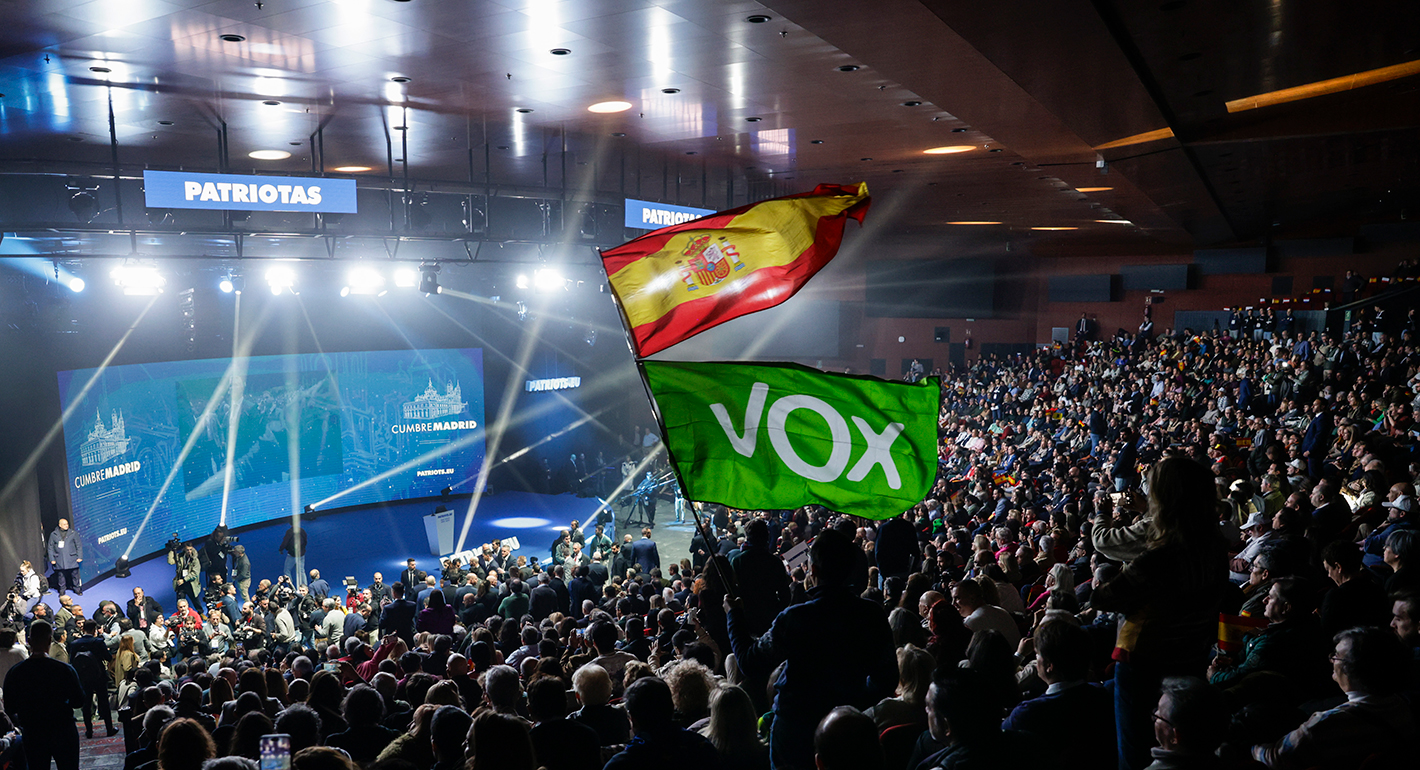
There is a transnational far-right populist movement that links middle powers in a global movement that extends well beyond Trump.



Christopher S. Chivvis, Rohan Mukherjee, Milan Vaishnav
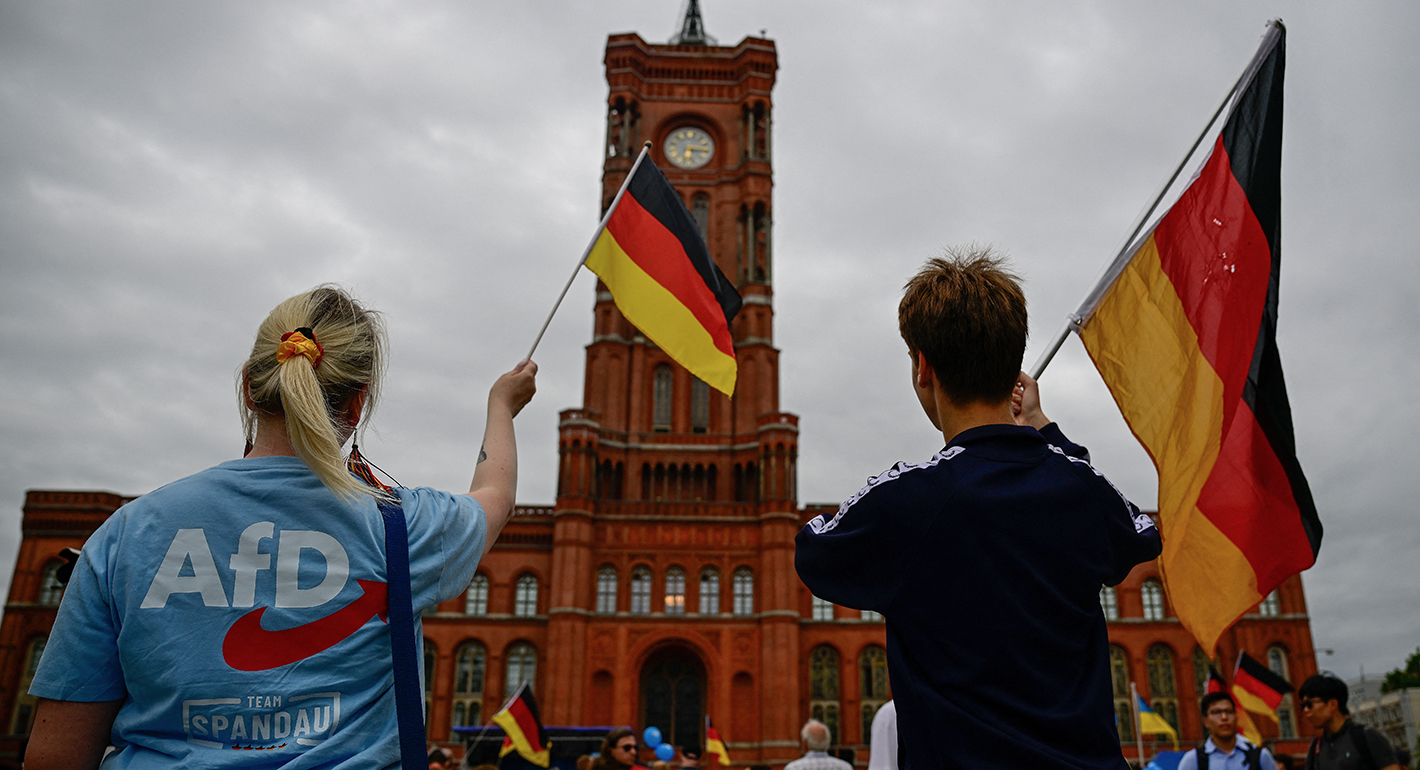
Unresolved tensions within the AfD may ultimately constrain the its potential as a leader among European and global populist forces.
Jeremy Cliffe
Turkish right-wing populists have been trying to advance the country’s middle-power goals based on perceptions of what the public wants, but they have been doing so in ways that reinforce their project of autocratic political consolidation.

Murat Somer
The National Rally’s electoral strength, coupled with its internal fragility at a crucial political juncture, contributes to foreign policy vagueness.

Catherine Fieschi
In the Philippines, Duterte-era discourse emphasizing sovereignty, anti-Western skepticism, and strongman diplomacy mirrors tenets of populist foreign policy around the world.

Aries A. Arugay