

Commentary
Much has been said of the changes Brussels is trying to make to the EU enlargement process. Here’s why gradual integration might—or might not—be the answer.
Dimitar Bechev
{
  "authors": [
    "Bruno Coppieters"
  ],
  "type": "commentary",
  "centerAffiliationAll": "",
  "centers": [
    "Carnegie Endowment for International Peace",
    "Carnegie Russia Eurasia Center"
  ],
  "collections": [],
  "englishNewsletterAll": "",
  "nonEnglishNewsletterAll": "",
  "primaryCenter": "Carnegie Endowment for International Peace",
  "programAffiliation": "",
  "programs": [],
  "projects": [],
  "regions": [
    "Russia",
    "Eastern Europe",
    "Ukraine",
    "Western Europe",
    "United Kingdom"
  ],
  "topics": [
    "Political Reform",
    "Foreign Policy"
  ]
}
Source: Getty
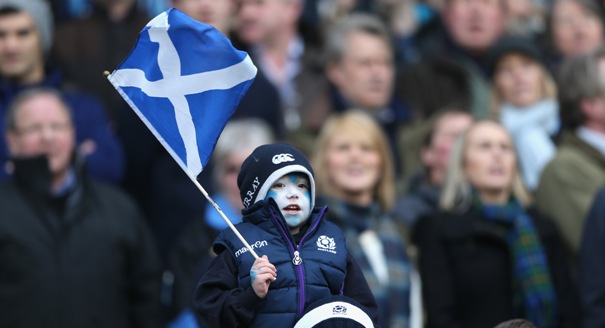
The secession of Scotland would alter the balance of power between the main member states of the European Union, while the secession of Crimea would have the same effect at the global level.
What can be learned from comparing Scotland and Crimea? The secession of Scotland would alter the balance of power between the main member states of the European Union, and the secession of Crimea would have the same effect at the global level. The secession of either of these entities would deeply affect security relations, although far more dramatically in the case of Crimea than in that of Scotland. A few weeks ago George Robertson, former NATO secretary-general, argued that the loss of one-third of the territory of the United Kingdom, and five million of its population, would inevitably diminish its global standing. It would set a secessionist precedent for other nationalist movements, paving the way for “the re-Balkanization of Europe.” European Commission President José Manuel Barroso even believes that it would be “extremely difficult, if not impossible” for a country such as Spain to accept Scotland as a new EU member state. Fragmentation is also at stake in Crimea. According to Dmitri Trenin, the secession of Crimea would leave the issue of Russia's integration within the Euro-Atlantic community unresolved.
Security is a concern shared by all actors with a stake in the future status of Scotland and Crimea. In the first case, however, we are dealing with a commonly agreed framework for deciding on Scotland’s future status, while in the second, that framework does not exist. The secessionist crisis in Crimea is the outcome of a legitimacy crisis of the Ukrainian regime which went so deep that none of the parties—including external parties claiming a mediatory role—refrained from taking unilateral steps, in the deluded expectation that the opponents would have to comply. By contrast, it was astonishing to see how quickly the British and Scottish governments were able to agree, in October 2012, on a future referendum on the independence of Scotland. They then entered immediately into a debate on the respective costs and benefits of each of the options—a debate that was often impassioned, but which remains the most rational way to approach such an issue. It was frightening to see how conflict escalation in Ukraine—first in Kyiv, then in Crimea—led to a radicalization so rapid that the conflicting parties were unable to state clearly what costs or benefits they expected to result from their policies. It even became impossible to say whether, in the case of sanctions, the interests of the party adopting them would not be more negatively affected than those of the party targeted.
For making decisions on the future status of Crimea, it is crucial to revert to a political framework that is acceptable to all parties. The constitutional framework destroyed in recent weeks will have to be replaced by a diplomatic one—this is the basic precondition for any rational discussion on proportionality when addressing the question of secession. There needs to be a discussion on the costs and benefits of secession and those stemming from the other options open to the various ethnic communities in Crimea, to the Ukrainian and Russian nations, and to the international community. This debate will, of necessity, be a long-lasting and heated one. Which is in any case preferable to a new frozen conflict in the region.
Bruno Coppieters is professor of political science at the Vrije Universiteit Brussel (Free University of Brussels). His published works deal mainly with federalism, the ethics of war and secession, and conflicts on sovereignty in the Caucasus and the Balkans.
Bruno Coppieters
Carnegie does not take institutional positions on public policy issues; the views represented herein are those of the author(s) and do not necessarily reflect the views of Carnegie, its staff, or its trustees.

Much has been said of the changes Brussels is trying to make to the EU enlargement process. Here’s why gradual integration might—or might not—be the answer.

Dimitar Bechev
Economic recovery has brought Sri Lanka a modicum of stability, but domestic strains and great-power rivalry could test how long it lasts.

Avinash Paliwal

Despite a new textbook, an influx of Russian teachers and managers, and an end to the teaching of Ukrainian, the Kremlin is unlikely to have “reprogrammed” locals.

Konstantin Skorkin

For every ruble allocated to social policy, health, and education in 2027, double that amount is earmarked for the army, the police, and the security services.

Alexandra Prokopenko

The acknowledgment has sparked fears of a new arms race with China and Russia.

Chris O’Meara