

Commentary
Two divergent trends—Putin’s hardline vision of how to prosecute the war in Ukraine, and a growing desire for change in Russia—could tear the regime apart.
Tatiana Stanovaya
{
  "authors": [
    "Frederic Grare",
    "William Maley",
    "Amitabh Mattoo"
  ],
  "type": "other",
  "centerAffiliationAll": "dc",
  "centers": [
    "Carnegie Endowment for International Peace"
  ],
  "collections": [],
  "englishNewsletterAll": "ctw",
  "nonEnglishNewsletterAll": "",
  "primaryCenter": "Carnegie Endowment for International Peace",
  "programAffiliation": "SAP",
  "programs": [
    "South Asia"
  ],
  "projects": [],
  "regions": [
    "South Asia",
    "Afghanistan"
  ],
  "topics": [
    "Security",
    "Military",
    "Foreign Policy"
  ]
}
Source: Getty
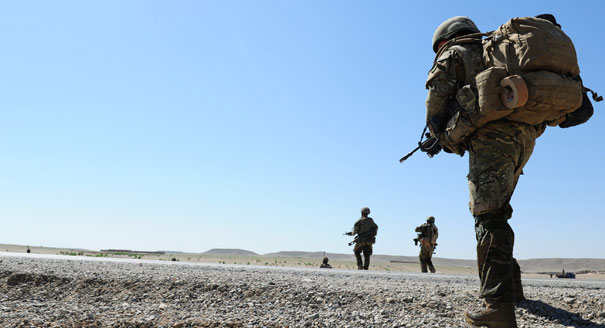
Twelve years of war and billions of dollars spent in Afghanistan have neither eliminated the country’s insurgency nor dealt effectively with any of the regional irritants that have historically motivated Afghanistan’s neighbors to lend their support to various actors in the conflict.
Source: Australia India Institute
As the end of the drawdown of international forces approaches in Afghanistan, concerns are mounting about its potential impact on regional stability. By the end of 2014, all Western combat forces will have left the country. Yet despite official rhetoric, twelve years of war and billions of dollars spent in Afghanistan have neither eliminated the country’s insurgency nor dealt effectively with any of the regional irritants that have historically motivated Afghanistan’s neighbors to lend their support to various actors in the conflict.
Regional involvement in Afghanistan has been pervasive since the end of the 1970s and the Soviet invasion of the country. For more than 30 years, India and Pakistan, in different ways, have projected their fierce rivalry into Afghanistan; Pakistan and Iran have done the same. China, Russia, and a number of states in Central Asia observe the evolution of the US presence in the country and the resurgence of the insurgency with equal anxiety.The nature of these rivalries is essentially political and geostrategic. India and Pakistan are not competing in Afghanistan over the country’s resources, but to prevent each other from using Afghanistan as a tool in their respective grand strategies, although there is, of course, a significant difference in the way India and Pakistan have projected these strategies in the last few years. Similarly, although Iran has undoubtedly developed an economic sphere of influence in Afghanistan’s west, it primarily aims at preventing Afghan soil from becoming a launchpad for anti-Iranian attacks. Despite the much-publicised investment of China in the Aynak copper deposit, Beijing’s main motivation seems to be to insulate its Xinjiang province from an Islamist contagion from Afghanistan.
Yet, despite—or because of—the scale of the regional involvement in Afghanistan, the conflict is unlikely to be resolved through a regional approach alone. Neither bilateral negotiations between the actors involved nor any regional cooperation mechanism will end regional interference in Afghanistan. The Istanbul Process on Regional Security and Cooperation for a Secure and Stable Afghanistan, launched in November 2011, or the New Silk Road initiative, can be effective and useful means of promoting cooperation on a wide range of technical and economic issues, but they are unlikely to result in a political settlement in Afghanistan or beyond.
The level of mistrust between the regional actors is so great that it is impossible to expect them suddenly to abandon their respective games in Afghanistan unless they have striking new incentives to do so of a kind that are not currently on the horizon; such an expectation would be akin to asking them for a conversion to non-interference. Indeed, all past attempts to solve Afghanistan’s problems from the outside have failed. Any future policy based on a regional approach is likely to encounter the same fate unless the Afghan state is strong enough to impose a minimal degree of respect for its sovereignty.
This paper argues, therefore, that the political consolidation of Afghanistan is the only way to avoid a return to the proxy wars of the 1990s and to preserve regional stability. Only the creation of a sustainable political system capable of resisting outside political interference and pressures can mitigate the risk for the region. Given the current configuration of the regional system and the domestic evolution of the security situation of most regional actors, such political consolidation is a prerequisite to resisting outside interference.
The paper also argues that a sovereign and relatively stable and potentially neutral Afghanistan, is essential to mitigate the consequences of all pending regional issues. Its alternative—chaos—would deprive regional actors of the possibility of capitalising politically on their eventual gains and would therefore defeat their very purpose.
As a consequence, a broadly-inclusive Afghan political process is not only acceptable but desirable for all regional actors, without exception. Such a process would include representatives from the government, but also from the opposition operating within the constitution, from civil society, and eventually from the insurgency. It would focus mainly on the definition of a political system better equipped to secure support from a wide range of Afghans than the post-2001 neo-patrimonial system has proved to be.
This process should be disconnected from regional issues, which should be left to bilateral negotiations between the concerned parties or the existing regional forums. No regional solution, whatever the status of the future Afghanistan and no matter how desirable, will ever be implementable without an Afghan government capable of ensuring respect for its own sovereignty. At the same time, the injection in the Afghan political process of regional issues which are only indirectly linked to Afghanistan would unnecessarily complicate the negotiations and lead to a failure. It is inevitable that Afghanistan, even after the withdrawal is complete this year, and a new president has been elected, will remain an issue will remain an issue for regional security. Equally inevitable is the decline, already perceptible, in international interest in the issue. In these conditions, the United Nations could play a facilitating role. Finally the authors believe that such a process should start immediately after the election to delink it from any immediate electoral stake.
The paper is divided into three parts. The first examines the likely consequences of the Western withdrawal from Afghanistan and identifies potential scenarios. The second analyses the interests and priorities of the regional actors in post-2014 Afghanistan and the consequences of the latter’s developing objectives and policies. In its final section, the paper proposes a mechanism to avoid the chaos likely to prevail in Afghanistan should events continue on their current trajectory. It advocates a standing ‘inclusive national conference,’ organised under the auspices of the United Nations, and examines its potential roles.
This paper was originally published by the Australia India Institute.

Former Nonresident Senior Fellow, South Asia Program
Frédéric Grare was a nonresident senior fellow at the Carnegie Endowment for International Peace, where his research focuses on Indo-Pacific dynamics, the search for a security architecture, and South Asia Security issues.
William Maley
Amitabh Mattoo
Carnegie does not take institutional positions on public policy issues; the views represented herein are those of the author(s) and do not necessarily reflect the views of Carnegie, its staff, or its trustees.

Two divergent trends—Putin’s hardline vision of how to prosecute the war in Ukraine, and a growing desire for change in Russia—could tear the regime apart.

Tatiana Stanovaya
Despite the agreement’s uncertainty, it’s still a significant development in regional and nuclear policy.


Andrew Leber, Jane Darby Menton
“AI safety in parallel” is modest and pragmatic but vital.

Matt Sheehan

Trump is distracted and Ukraine wants Europe to step up. The continent’s leaders must find their voice and assert it in talks with Russia.

Alissa de Carbonnel
Unresolved tensions within the AfD may ultimately constrain the its potential as a leader among European and global populist forces.
Jeremy Cliffe