

In The Media
Lilia Shevtsova
{
  "authors": [
    "Lilia Shevtsova"
  ],
  "type": "commentary",
  "centerAffiliationAll": "",
  "centers": [
    "Carnegie Endowment for International Peace",
    "Carnegie Russia Eurasia Center"
  ],
  "collections": [],
  "englishNewsletterAll": "",
  "nonEnglishNewsletterAll": "",
  "primaryCenter": "Carnegie Russia Eurasia Center",
  "programAffiliation": "",
  "programs": [],
  "projects": [],
  "regions": [
    "Russia"
  ],
  "topics": [
    "Political Reform"
  ]
}
Source: Getty
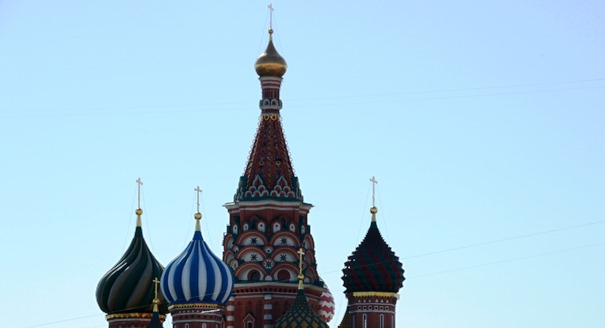
On June 12, Russia is celebrating its national day, but the date continues to confuse Russians. It is on this day that Russia tries to celebrate its sovereignty without raising the uncomfortable question: sovereignty from whom?
On June 12, Russia is celebrating its national day. Originally it was known as Russia Independence Day. The date itself continues to confuse Russians. About 50 percent of the Russian respondents don’t even know what June 12 commemorates. Nearly half of the population has a vague idea of what the day means. True, over the past decade Russians have begun to approve of Russian independence. That means that they closed the chapter on the Soviet Union and have started to view the new Russia as their state. In 1998, only 28 percent of respondents considered the “independence” of Russia as a “positive” achievement, whereas 57 percent viewed it as negative. In 2013, we see the opposite trend: 53 percent look at Russian independence as a positive, and only 22 percent as a negative. But this doesn’t mean that Russian society has begun to understand its recent past and the origins of their state. On the contrary! Today the collapse of the Soviet Union and what happened aftermath due to the recent attempt of the Kremlin to find legitimacy and justification for its policy in the past only adds to the confusion.
This is why it’s so strange that on June 12 Russia tries to celebrate its sovereignty without raising the uncomfortable question: sovereignty from whom, the Soviet Union, its former colonies (the Baltics, Central Asia, the South Caucasus states, and Ukraine)? But the Soviet Union was Russia, albeit under a different name. The oddity with this anniversary in Russia is that, despite its celebrating Russian independence from the rest of the Soviet Union, the Kremlin today is trying to reembrace the “leftovers.” The very idea of the “Eurasian Union” is an attempt at such “reembracing”. This makes the Russian Independence celebration a truly singular event.
Indeed, there are hundreds of historical paradoxes, inconsistencies, and historical myths. But the problem with Russia’s Independence Day celebration is that it has become the first link in a chain of mystifications that have tied up Russia in one big Gordian knot! Let me mention only a few of these chain links.
Russia’s declaration of independence and the dissolution of the Soviet Union, in reality, helped the Russian system of personalized power to survive in a new incarnation, with Boris Yeltsin as its embodiment. Usually, the collapse of an old state aids in the process of establishing both a new regime and a new rule. In the Russian case, it went the other way. As for the declaration of sovereignty, that was mainly intended by the Russian political elite as a means of getting rid of Mikhail Gorbachev and taking over control of the Soviet resources and instruments of power.
Here’s another link in the chain: Russian independence helped to freeze the leftovers of the Soviet empire into the new form of the Russian Federation. The current Russian state is not a nation state, nor is it a true empire. Rather it is something vague and amorphous—a swamp of old habits, obsolete moods, and a mentality stuck in an interstitial civilizational space. This ungainly construct can only survive by constantly returning to the past. This is what Putin is now doing by cracking down on civil society in order to prolong the Russian Matrix—that is, personalized power, a mix of power with property, and superpower ambition. Indeed, I wouldn’t put all responsibility for this on Putin; he, too, is a hostage of the system that he created.
Disguising the continuity between the Soviet past and the new regime as a revolution gave birth to the treacherous “new” Russia—a place where liberals serve the personalized ruler, where “reforms” help to monopolize power and property, where “democracy” camouflages authoritarianism, and where cooperation with the West alternates with an anti-Western consolidation of the society, as circumstances dictate. The Post- Crimea Russia that has dismantled the post–Cold war settlement, returning back to the Soviet and pre-Soviet rules of the game, makes the Russian Independence Day a true historical paradox!
Former Senior Associate, Russian Domestic Politics and Political Institutions Program, Moscow Center
Shevtsova chaired the Russian Domestic Politics and Political Institutions Program at the Carnegie Moscow Center, dividing her time between Carnegie’s offices in Washington, DC, and Moscow. She had been with Carnegie since 1995.
Recent Work
Lilia Shevtsova
Lilia Shevtsova
Carnegie does not take institutional positions on public policy issues; the views represented herein are those of the author(s) and do not necessarily reflect the views of Carnegie, its staff, or its trustees.

Putin’s conservative staffing policies and search for ever greater control have cemented parliament’s transformation into a bureaucratic appendage of the executive branch.

Andrey Pertsev

Russia’s AI-driven propaganda campaigns operate in a fragmented, chaotic, and often illogical manner. That’s not necessarily a problem for the Kremlin, though: It’s much easier to mimic genuine public debate that way.

Ilya Klishin

Russian strikes are weakening the economy sustaining Ukraine’s war effort. Closing the growing funding gap will require more European support and politically contentious reforms in Kyiv.

Balázs Jarábik

Ex-president Gurbanguly Berdimuhamedov remains interested in politics, but his son Serdar, Turkmenistan’s current president, is becoming increasingly independent and willing to break with his father’s legacy. If their covert rivalry goes too far, both risk losing power.

Galiya Ibragimova

Europe is facing rising populism internally as well as external pressures from Russia, China, Turkey, and the United States.

Dimitar Bechev