

Commentary
Dmitri Trenin
{
  "authors": [
    "Dmitri Trenin"
  ],
  "type": "commentary",
  "centerAffiliationAll": "",
  "centers": [
    "Carnegie Endowment for International Peace",
    "Carnegie Russia Eurasia Center"
  ],
  "collections": [],
  "englishNewsletterAll": "",
  "nonEnglishNewsletterAll": "",
  "primaryCenter": "Carnegie Russia Eurasia Center",
  "programAffiliation": "",
  "programs": [],
  "projects": [],
  "regions": [
    "North America",
    "United States",
    "Russia",
    "Eastern Europe",
    "Ukraine",
    "Western Europe"
  ],
  "topics": [
    "Security",
    "Military",
    "Foreign Policy"
  ]
}
Source: Getty
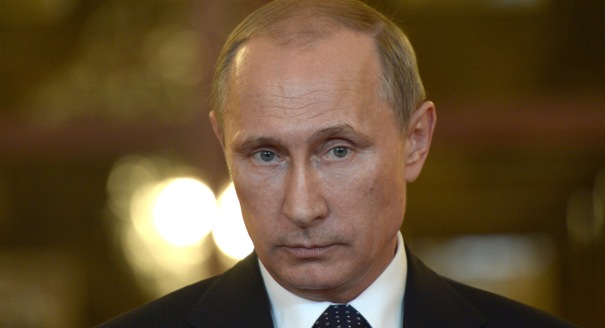
MH17 may well be a turning point in the Ukraine conflict, but President Putin remains unlikely to back down despite economic pressure from the West. Russians may look back to the summer of 2014 years from now as a game changer.
The international investigation into the cause of the MH17 crash has not yet properly begun, but the verdict has already fallen. Taking cue from U.S. President Barack Obama who spoke last Friday, Prime Ministers David Cameron of the United Kingdom, and Tony Abbott of Australia over the weekend have made Russia responsible for the firing of the missile which killed almost 300 innocent people. On Sunday, U.S. Secretary of State John Kerry said there was a "vast amount of evidence" to support the claim.
This may well be a turning point in the Ukraine conflict. The United States is using the threat of turning Russia into a pariah state to make Moscow end all support for the Donbass insurgents, so that Kiev can assume full control over the region. Some in the West even hope it might be the beginning of the end of "Putin's Russia." With so many European lives lost, the EU is likely now to impose new sanctions on Russia. In Asia, Russia will be equally put beyond the pale.
Those banking on this scenario will probably be disappointed. Putin is unlikely to stand down, or to back off. He will continue to insist on a full investigation into the plane crash, even as it looks less and less relevant for those who already know the answer. Moscow will seek an end to fighting in Eastern Ukraine, but the crisis within and over Ukraine will continue, even as a vast majority of the Russian people will continue to support President Putin, and will see the United States as an adversary, even an enemy of Russia.
The summer of 2014 may be the point in time when the few surviving elements of Russia's partnership with the United States and its most loyal allies will be finally forsaken, and the unalloyed competitive posture will set in. The 'correlation of forces' is so much against Russia that it will seek to avoid a head-on collision, like in the case of an invasion of Ukraine. Rather, Russia may use the growing isolation from the West as a stimulus to address its glaring weaknesses, starting with education, science and technology. If it manages to survive the isolation, stand its ground and improve its ways, it will gain enough self-confidence to back up its great-power ambitions.
Still, in the 21st century world, Russia will not be a major player. It will largely watch as the new centers of power and influence in Asia and elsewhere rise and mature, chipping away at the U.S. global hegemony. Years from now, the Russians might look at two things which happened during the midsummer week of 2014 as game-changers: the U.S.-led pressure against them following the MH17 crash, and the summit of BRICS, which promised closer collaboration with the non-West. It was also the week when thousands of pilgrims converged on an ancient monastery near Moscow to celebrate the 700th birthday of St.Sergius of Radonezh, who, in a bleak period of Russian history, showed the path to national unity. Today, the task is no less difficult.
Former Director, Carnegie Moscow Center
Trenin was director of the Carnegie Moscow Center from 2008 to early 2022.
Recent Work
Dmitri Trenin
Dmitri Trenin
Carnegie does not take institutional positions on public policy issues; the views represented herein are those of the author(s) and do not necessarily reflect the views of Carnegie, its staff, or its trustees.

For every ruble allocated to social policy, health, and education in 2027, double that amount is earmarked for the army, the police, and the security services.

Alexandra Prokopenko

The acknowledgment has sparked fears of a new arms race with China and Russia.

Chris O’Meara
Smaller powers cannot go it alone, but Canadian history shows that integration with the United States will not always be benign.
Paul Samson

The European Commissioner for Trade is headed to China. But after President Xi’s bridge-building visit to Washington, can a more isolated EU overcome Beijing’s stranglehold on critical raw materials? Who will blink first?

Rym Momtaz, ed.

The summit may be remembered as a fatal blunder, when Washington, Beijing, and the AI industry collectively chose ceremony over action.

Jeffrey Prescott