

Q&A
Eugene Rumer
{
  "authors": [
    "Eugene Rumer"
  ],
  "type": "legacyinthemedia",
  "centerAffiliationAll": "dc",
  "centers": [
    "Carnegie Endowment for International Peace"
  ],
  "collections": [],
  "englishNewsletterAll": "ctw",
  "nonEnglishNewsletterAll": "",
  "primaryCenter": "Carnegie Endowment for International Peace",
  "programAffiliation": "russia",
  "programs": [
    "Russia and Eurasia"
  ],
  "projects": [],
  "regions": [
    "North America",
    "United States",
    "Russia",
    "Eastern Europe",
    "Ukraine"
  ],
  "topics": [
    "Foreign Policy"
  ]
}
Source: Getty
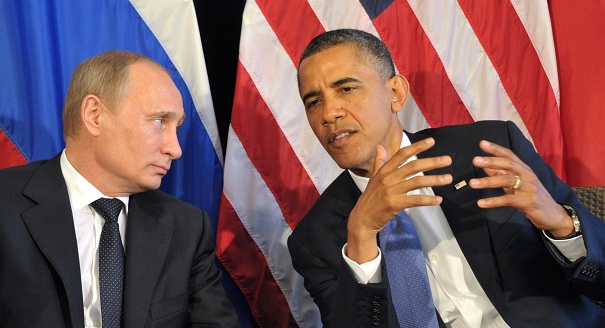
Neither sanctions against Russia nor military aid to Ukraine can resolve the current crisis. The best option for U.S. policymakers is to engage with Putin and his inner circle—if it’s not too late.
Source: Boston Review
More and more voices in this country are calling for more and tougher sanctions against Russia. The Malaysian airliner tragedy has added new urgency to demands to punish Russia for its assault on Ukraine and its support for the separatists in Eastern Ukraine. Indeed, the urge to do something now is great and understandable. The “don’t just stand there, bomb something” crowd (to use the words of Barry Posen), has renewed calls for military aid to Ukraine, for sectoral sanctions on Russia, for getting Europe off the Russian gas needle, or, rather, gas pipe now. Amid these urgent calls, there is little discussion of how feasible such actions might be, whether they will accomplish anything at all, or whether they will violate the first rule of foreign policy—do no harm. Diplomacy, it seems, has been lost and forgotten.
For a long time now, several U.S. administrations have tried to develop a solid, sustainable partnership with Russia. The logic driving this pursuit was that even if Russia was not as strong as the Soviet Union once had been, a partnership with Russia could help the United States address many problems from energy security to Iran’s nuclear weapons to transit to Afghanistan to dealing with China. Conversely, an adversarial relationship with Russia would make many of these problems that much more difficult to handle. As ties with Russia suffered as a result of disagreements about democratic governance, charges of neo-imperialism, NATO enlargement, Iraq, etc., the idea that robust trade would help steady the relationship by creating interdependence with Russia, as it does with China, took hold. The George W. Bush Administration tried it, the Obama Administration tried it.And even though at some $40 billion a year, U.S. trade with Russia is a fraction of the European Union’s $400 billion, they succeeded. Trade with Russia has emerged as a heavy ballast on the United States’, to say nothing of Europe’s relations with Russia. With its $2+ trillion dollar economy, isolating Russia from the rest of the world is no easy task. It is a member of the G20. It accounts for over 10 percent of global oil production. It accounts for nearly a third of Europe’s gas consumption. It is the largest producer of titanium in the world. Think Boeing, which buys from Russia about one third of the titanium it uses in its jets. Think U.S. exports. Exxon is scheduled to drill its first well in the Kara Sea this summer—a $600 million project which could tap into as much as $900 billion worth of oil. As it turns out, shedding this ballast is not that easy.
But let’s assume that Europe and the United States can agree on a set of meaningful sanctions that will hurt Russia, and that they can agree to cope with the fallout from these sanctions for their own economies, what are the odds that Russia will change course and end its support for the separatists in Eastern Ukraine? These odds don’t look good—aiming to get Crimea back would be setting the bar too high. Putin made clear that he is prepared to hold on to Ukraine at any price, as an existential issue—first when he gave Yanukovych a $22 billion bribe for not signing the Association Agreement with the EU, and then when he annexed Crimea and violated the basic rules of the post-World War II order in Europe. With Russian public opinion overwhelmingly on his side, he will not be deterred by sanctions.
Another bright idea that has surfaced in recent months is to send [more] arms to help Ukraine defend itself. The problem in Ukraine is not that it does not have enough weapons, but that there are too many weapons. When the Soviet Union dissolved, Ukraine inherited the second largest defense-industrial complex of all ex-Soviet states after Russia. Small arms, air-defense systems, anti-tank weapons, ballistic missiles—Ukrainian factories have made them. Ukrainian defense industry exports some $1.3 billion worth of arms from the United States to Syria (both sides, reportedly).
But if imposing sanctions on Russia is unrealistic, and arming Ukraine is likely to do more harm than good, what can the United States do to resolve this crisis? First, we need to be honest and admit that we are a long way away from resolving it. The damage that has been done to Ukraine and to relations with Russia is deep and lasting. It will take years, if not decades, to repair.
Second, if there is one thing that we know for sure in this rapidly changing environment, it is that Vladimir Putin is the decider in this crisis. He has been driving it from the beginning, and by all accounts personally has taken charge of Russian policy. Amazing as it may sound, there has been little attempt by the United States to engage the Russian president directly about the crisis in Ukraine. The White House has reportedly tried to use a variety of intermediaries from German Chancellor Angela Merkel to Israeli Foreign Minister Avigdor Lieberman to persuade Putin to change course on Ukraine, but to no avail.
The Obama Administration is no stranger to direct engagement with Russian leaders. President Obama himself has held many face-to-face meetings with both Putin and Medvedev when the latter was in the Kremlin. The President’s then-National Security Advisor Tom Donilon has carried messages from his boss to Putin.
During the presidency of George W. Bush, telephone calls between then-Chairman of the Joint Chiefs of Staff Admiral Mike Mullen and his counterpart General Nikolay Makarov served as a key channel between the White House and the Kremlin at the height of the Russian-Georgian war. The two held face-to-face talks in Finland just three months after it was over. In 1999, during the Kosovo crisis, Strobe Talbott, then serving as Deputy Secretary of State, engaged in shuttle diplomacy with Moscow trying—successfully—to keep tensions from escalating further. But during the Ukraine crisis, the administration did nothing.
From the outset of this crisis, U.S. diplomacy appears to have focused on admonishing the Russians and threatening them with sanctions. There is no evidence that U.S. leaders have tried to engage Putin and his inner circle—and Foreign Minister Lavrov does not appear to be in it—to understand the Russian leader’s concerns, his demands, his ideas for possibly de-escalating the situation. From the beginning of the unrest in Kyiv, instead of calming the situation, U.S. officials openly sided with the protesters opposed to Yanukovych’s deal with Putin and refusal to sign the Association Agreement with the EU, and signaled the U.S. Government’s support for their cause. Moreover, U.S. sanctions targeted not just Russian officials involved in Ukraine policy, but Putin’s “cronies,” adding a personal twist intended apparently to humiliate the Russian leader and his associates. There was little pretense at de-escalating through quiet diplomacy or playing the part of an impartial mediator.
Is it too late now? It is late, but not too late. It is impossible to rewind this tape, but even at this late point in the crisis there is no substitute for talks and compromise. A military solution is out of the question. Putin has made it clear that he does not want to send his army into Ukraine. He has also made it clear that he can and fully intends to keep Kyiv from winning the war in Eastern Ukraine by sending more fighters and more weapons there. At this point freezing the conflict in place and then looking for a way out of it appears as the only possible option. But that requires talking by all parties to all parties without preconditions. Piling on sanctions and arming Ukraine will only prolong this crisis.
Director and Senior Fellow, Russia and Eurasia Program
Rumer, a former national intelligence officer for Russia and Eurasia at the U.S. National Intelligence Council, is a senior fellow and the director of Carnegie’s Russia and Eurasia Program.
Recent Work
Eugene Rumer
Eugene Rumer
Carnegie does not take institutional positions on public policy issues; the views represented herein are those of the author(s) and do not necessarily reflect the views of Carnegie, its staff, or its trustees.

China’s police training infrastructure construction projects provide benefits to recipient countries, promote China’s image as a major global security provider, and are likely to reinforce alignment between Beijing’s security priorities and those of countries in the Global South.


Cameron Waltz, Sheena Chestnut Greitens, Kim Nguyen, …
AI capabilities are moving fast. Most institutions—including governments—can’t keep up.


Anton Leicht, Scott Singer
The Bureau of Industry and Security needs to adjust its focus and practices to maintain its position as the U.S. government’s primary champion of international technological competition.
Geoffrey Irving
Despite myriad challenges and occasional stumbles, the new Hungarian government is moving ahead with energy and conviction to uproot years of illiberalism and corruption and rebuild Hungarian democracy.

Thomas Carothers

European Commission President Ursula von der Leyen is about to give her annual address on the state of the EU. Here’s what she won’t—but should—say.

Rym Momtaz