

Article
C. Raja Mohan, Darshana M. Baruah
{
  "authors": [
    "C. Raja Mohan"
  ],
  "type": "legacyinthemedia",
  "centerAffiliationAll": "dc",
  "centers": [
    "Carnegie Endowment for International Peace",
    "Carnegie India"
  ],
  "collections": [],
  "englishNewsletterAll": "ctw",
  "nonEnglishNewsletterAll": "",
  "primaryCenter": "Carnegie India",
  "programAffiliation": "SAP",
  "programs": [
    "South Asia"
  ],
  "projects": [],
  "regions": [
    "South Asia",
    "India"
  ],
  "topics": [
    "Foreign Policy"
  ]
}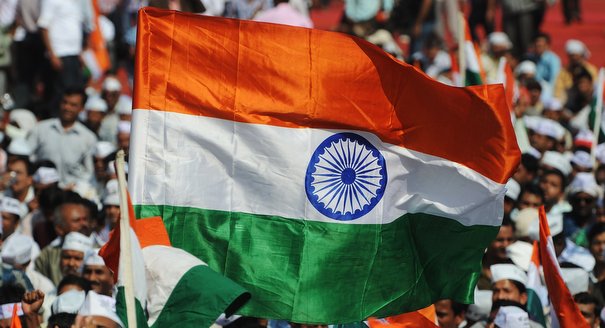
Source: Getty
It is one thing for Modi to say India needs to be more practical in dealing with the outside world. It is entirely another to get his ministerial colleagues and the bureaucracy to act on that basis in a sustained manner.
Source: Indian Express
When Narendra Modi was within striking distance of power in Delhi a few months ago, there was little expectation that a provincial leader would inject much new dynamism into Indian diplomacy. Nor did the BJP’s record on foreign policy issues, when it sat on opposition benches between 2004 and ’14, inspire confidence.
Yet after more than four months in power, Prime Minister Modi’s most impressive performance appears to be in the diplomatic realm. A change of government does not produce a change in foreign policy objectives for large countries like India. That happens only when the change is revolutionary. But new leaders have the freedom to bring fresh perspectives to foreign policy and organise new ways of doing business with the outside world.
The fact that he represents a government with a majority in the Lok Sabha, capable of taking difficult decisions, has given Modi an edge over his predecessors of the last three decades. Modi’s energy and vigour also stands in contrast to the dysfunction and lack of energy in the UPA government in its second term. Modi has brought at least five new emphases to the conduct of India’s external relations.For one, he has put domestic economic development at the top of India’s foreign policy goals. Contrary to the perception that Modi is spending too much time on foreign policy, the PM has viewed diplomacy as an integral part of his strategy to restore international confidence in India’s economic prospects and mobilise external resources for the modernisation and expansion of infrastructure and reviving the manufacturing sector.
Although the estimates of potential foreign investments — for example, more than $35 billion from Japan, $20 billion from China and $40 billion from US companies — should be taken with a pinch of salt, there is no denying the PM’s impressive effort to spread the message that India is now open for business. Few of his predecessors have spent as much time engaging the leaders of international business at home and abroad.
Second, Modi has recognised the urgency of revitalising India’s relations with its neighbours in the subcontinent. Whether it was the invitation to the leaders of the SAARC nations to attend his inauguration or the choice of Bhutan and Nepal as his first foreign destinations, the new emphasis was unmistakable.
In Nepal, the PM demonstrated the ability to understand Nepali grievances, connect with its political classes as well as its masses, and signal the will to redefine India’s regional strategy. If Modi’s instincts on Nepal turned out to be right, he has a much bigger challenge in implementing the agreements already signed with Bangladesh, persuading Sri Lanka to deliver on Tamil minority rights, cautioning the Maldives not to play the China card beyond a point and developing a sustainable strategy for Afghanistan amid the withdrawal of international forces.
Third, on India’s two most difficult relationships in the neighbourhood, Modi has unveiled a new combination of flexibility on economic engagement and firmness on confronting security challenges. If Modi’s positive start with Pakistan Prime Minister Nawaz Sharif surprised observers, his decision to suspend talks on the question of Islamabad’s Hurriyat contacts drew much criticism. That Sharif’s chief diplomat, Sartaj Aziz, acknowledged the inopportune timing of the contacts with the Hurriyat leaders seems to vindicate Modi’s approach.
If managing the relationship with Pakistan remains an enduring challenge, Modi has broken some new ground in India’s China policy. The PM has ended Delhi’s past reluctance to welcome Chinese investments into India as well as the defensiveness in its approach to the boundary dispute with Beijing. While extending much personal warmth to the Chinese leadership, Modi and his government have also been uninhibited in their public criticism of China’s “expansionism” or “vistaarvad”.
Fourth, Modi has understood the importance of engaging all major powers without any inhibition. Unlike the UPA government, which held back on ties with the US and Japan by citing the dangers of provoking China, Modi has been bold in affirming that India would pursue its relations with all the major powers, each on its own merit. This has significantly improved India’s leverage with the US, China, Japan, Russia and Europe. For Modi, the question is no longer about India being “non-aligned” between the major powers but about how Delhi can shape the regional and global balance of power to serve its own interests.
Fifth, Modi appears bolder than his predecessors in making the political case at home for economic globalisation and a confident engagement with the world on such controversial issues as intellectual property, trade and climate change. Moving away from Delhi’s traditional temptation to merely posture on these issues, he appears to be more open to finding practical solutions to the current deadlock in global governance.
Modi has scoffed at all those who have been demanding that he unveil a grand vision for India’s economic and foreign policies and insisted that his approach is based on common sense and clarity about India’s core interests. Notwithstanding his claims to modesty, the PM’s foreign policy framework can be summarised in the form of five principles, a new Panchsheel if you will.
These are: putting diplomacy in the service of domestic economic development, restoring India’s primacy in the subcontinent through a generous approach towards smaller neighbours, combining political firmness with economic flexibility in the management of the adversarial relations with Pakistan and China, moving from non-alignment among major powers to becoming part of the global great-power constellation and discarding the diffidence disguised as moralpolitik in the multilateral arena.
Though the pragmatism underlying the PM’s foreign policy is welcome, Modi is unlikely to go very far if his common sense does not percolate downwards in the government. It is one thing for the PM to say India needs to be more practical in dealing with the outside world. It is entirely another to get his ministerial colleagues and the bureaucracy to act on that basis in a sustained manner.
This article was originally published in the Indian Express.
Former Nonresident Senior Fellow, Carnegie India
A leading analyst of India’s foreign policy, Mohan is also an expert on South Asian security, great-power relations in Asia, and arms control.
Recent Work

C. Raja Mohan, Darshana M. Baruah


Alexander Gabuev, Paul Haenle, C. Raja Mohan, …
Carnegie does not take institutional positions on public policy issues; the views represented herein are those of the author(s) and do not necessarily reflect the views of Carnegie, its staff, or its trustees.
In Ukraine, Gaza, and Iran, AI warfare has come to dominate, with barely any oversight or accountability. Europe must lead the charge on the responsible use of new military technologies.

Raluca Csernatoni
Military rule is now a defining political factor in South Asia. Here’s how analysts can understand and account for it.

Paul Staniland
Orbán created an image for himself as virtually the only opponent of aid to Ukraine in the entire EU. But in reality, he was simply willing to use his veto to absorb all the backlash, allowing other opponents to remain in the shadows.
Maksim Samorukov
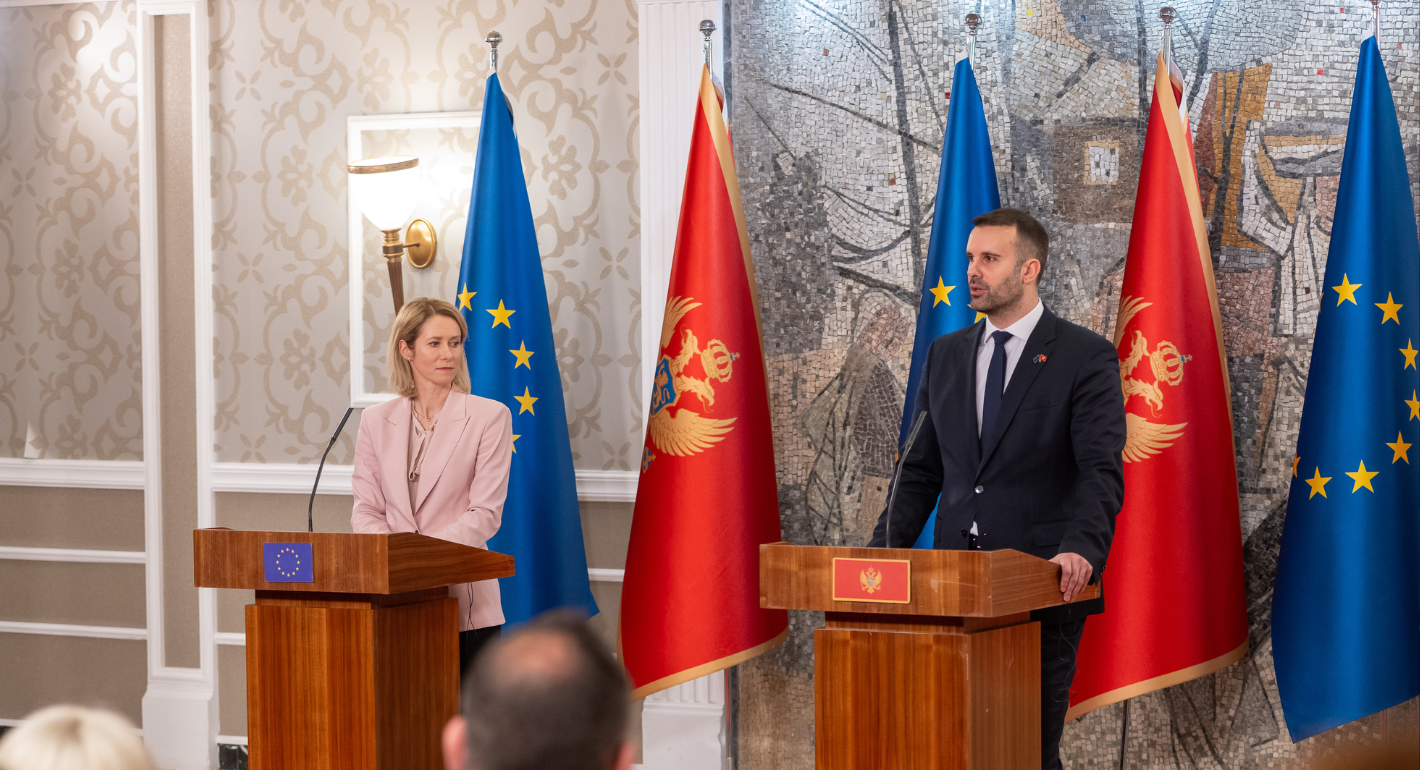
Montenegro and Albania are frontrunners for EU enlargement in the Western Balkans, but they can’t just sit back and wait. To meet their 2030 accession ambitions, they must make a strong positive case.


Dimitar Bechev, Iliriana Gjoni

This piece argues that the present Indian strategy, based on opportunistic diversification and utilization of limited strategic reserves, remains inadequate when confronting supply disruptions. It evaluates India’s options in the short, medium, and long terms.

Vrinda Sahai