

Report
- +3
James M. Acton, Alexey Arbatov, Vladimir Dvorkin, …
{
  "authors": [
    "Petr Topychkanov"
  ],
  "type": "commentary",
  "centerAffiliationAll": "",
  "centers": [
    "Carnegie Endowment for International Peace",
    "Carnegie Russia Eurasia Center"
  ],
  "collections": [
    "Iranian Proliferation"
  ],
  "englishNewsletterAll": "",
  "nonEnglishNewsletterAll": "",
  "primaryCenter": "Carnegie Russia Eurasia Center",
  "programAffiliation": "",
  "programs": [],
  "projects": [],
  "regions": [
    "Middle East",
    "Iran",
    "Russia"
  ],
  "topics": [
    "Foreign Policy",
    "Nuclear Policy"
  ]
}
Source: Getty
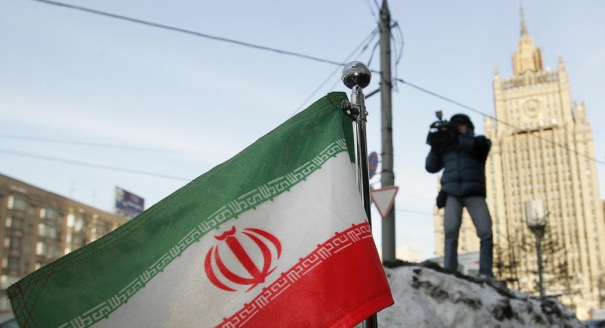
Russian participation in the nuclear talks has demonstrated that despite the depth of the Ukrainian crisis and all the existing conflicts between Russia and the West, there are no reasons to consider Russia a purely destructive force that is bent on harming the West.
A number of conflicting assessments regarding Russia’s role in the negotiations on the Iranian nuclear program have emerged in the last few days. Some experts say that Russia played a significant role, while others believe it was passive. Some claim that Russia is interested in protracting the negotiations, others argue that it actually wants them to be completed, while yet another group asserts that the Kremlin seeks to derail them. Such are the views expressed by Russian, Iranian, and Western analysts.
In short, Russia’s interests lie in strengthening the non-proliferation regime, promoting regional stability, and developing multi-faceted cooperation with Iran.
Various interest groups, including those representing the energy and military industrial sectors, impact Russia’s policy toward Iran. However, past experience suggests that while these groups may influence Moscow’s position on Iran, they do not determine it. Besides, Russia has to consider the interests of other regional players, primarily Israel, with which, as the Russian president put it, Russia is bound by “strong ties of friendship.”
Did the Ukraine-triggered crisis in Russia’s relations with the West affect the Kremlin’s position on Iran? It certainly did, but not to the extent feared by many. Russia did not shield Iran, nor did it act as a spoiler in the negotiations. This behavior explains Western satisfaction and Iran’s open dissatisfaction with the quality of Russian participation in the negotiations.
Russia has not abandoned its interests regarding Iran as a result of the current geopolitical crisis. But the crisis has become one of the two reasons for the development of both bilateral and multilateral cooperation initiatives with the Islamic republic.
The most hotly debated development in the bilateral relationship was the expansion of cooperation on the peaceful use of atomic energy. On November 11, Russia and Iran signed the Protocol to the 1992 Intergovernmental Agreement which includes cooperation in the construction of eight WWER-reactor nuclear power plants, as well as a contract to build the second stage of the Bushehr nuclear power plant with between two and four new reactors. Russia is also expanding its cooperation with Iran in other areas including trade, transportation, space exploration, and military technology.
The second reason for developing Russian-Iranian cooperation is the impending conclusion of the negotiations on the Iranian nuclear problem. Evidently, Moscow understands that the sanctions against Iran may be lifted in the foreseeable future. Russia is thus attempting to maximally strengthen its position in the Iranian market before new actors appear on the scene.
The current situation surrounding Iran resembles the situation around India several years ago. When, with help of the George W. Bush administration, India started to emerge from partial international isolation brought on by its 1998 nuclear weapon tests, Russia intensified its already active contacts with India. As a result, Russian companies were able to sign a number of contracts with India shortly after its 2008 agreement with the IAEA.
Russian participation in the nuclear talks has demonstrated that despite the depth of the Ukrainian crisis and all the existing conflicts between Russia and the West, there are no reasons to consider Russia a purely destructive force that is bent on harming the West. The current issues in global politics and economics have forced Russia to take a more pragmatic position, albeit concealed under the cloak of propaganda rhetoric. This position seeks to prevent a further escalation of disagreements into an even sharper confrontation with the West. As part of this strategy, Russia strives to develop large-scale cooperation with other global and regional powers, including Iran.
Former Fellow, Nonproliferation Program, Moscow Center
Topychkanov was a fellow in the Carnegie Moscow Center’s Nonproliferation Program.
Recent Work


James M. Acton, Alexey Arbatov, Vladimir Dvorkin, …
Petr Topychkanov
Carnegie does not take institutional positions on public policy issues; the views represented herein are those of the author(s) and do not necessarily reflect the views of Carnegie, its staff, or its trustees.
Media coverage suggests Kyiv’s fortunes have changed. That shift may be important, but it only goes so far.



Dara Massicot, Aaron David Miller, Andrew S. Weiss
Lee’s tour shows how Seoul is reorganizing its diplomacy away from Pyongyang and toward industrial networks and the geography of the compute economy.

Darcie Draudt-Véjares
Most migrants may have left Ceuta, but the effects may linger.


Alejandro Martin Rodriguez, Sarah Yerkes
There is a transnational far-right populist movement that links middle powers in a global movement that extends well beyond Trump.



Christopher S. Chivvis, Rohan Mukherjee, Milan Vaishnav

When faced with fuel shortages in the past, Central Asian governments could always count on additional supplies from Moscow. That safety net no longer exists.

Galiya Ibragimova