

Paper
James L. Schoff, Douglas E. Rake, Joshua Levy
{
  "authors": [
    "James L. Schoff"
  ],
  "type": "legacyinthemedia",
  "centerAffiliationAll": "dc",
  "centers": [
    "Carnegie Endowment for International Peace"
  ],
  "collections": [],
  "englishNewsletterAll": "asia",
  "nonEnglishNewsletterAll": "",
  "primaryCenter": "Carnegie Endowment for International Peace",
  "programAffiliation": "AP",
  "programs": [
    "Asia"
  ],
  "projects": [],
  "regions": [
    "North America",
    "United States",
    "East Asia",
    "Japan"
  ],
  "topics": [
    "Foreign Policy"
  ]
}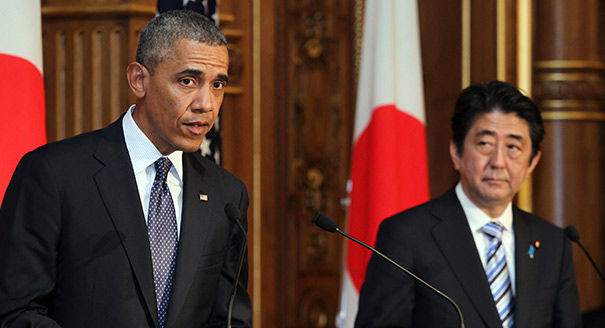
Source: Getty
To maintain the current strength of the U.S.-Japan alliance there is no substitute for continued leadership interaction, as well as public discussions about why this bilateral relationship is important and the positive benefits it offers to both countries.
Source: Yomiuri Shimbun
The first encouraging aspect of the survey is that high percentages of both Americans and Japanese continue to think the relationship is good, and a vast majority believes it will either stay that way or improve. Mutual trust remains relatively high, and a majority in each country thinks that the U.S. military presence in Japan should be maintained at its current level. Interestingly, this is the first year since the survey started over a decade ago that more than half the Japanese respondents felt this way.
Significant majorities in both countries also believe that their bilateral security treaty contributes to the security of the Asia-Pacific region, and they have felt this way consistently throughout the survey history. All of this creates a solid foundation for the alliance in the future. Another encouraging sign for the alliance is the fact that when a new security challenge in the world appears, such as the Islamic State terrorist group in Syria and Iraq, the U.S. and Japanese public react in a similar way.
The survey also reveals indications of different thinking in the alliance, however, which requires careful evaluation. In many cases divergent thinking in the two countries is natural and to be expected, but it can also show early signs of conflicting priorities or perception gaps of a problem that the alliance must address together. In these cases, active efforts to enhance mutual understanding and maybe even to narrow perception gaps could be critical to the smooth functioning and long-term health of the alliance. The most consistent challenge on this front appears to be each country’s view of China.The allies share similar concerns about China in the areas of intellectual property theft and cyber attacks, but Japan worries more about territorial disputes while Americans elevate human rights concerns.
Perhaps more significant is how the allies identify which country will be more important politically to them in the future, with Japanese increasingly choosing the United States in recent years (59 percent in 2014) and Americans picking Japan less often (at a twelve-year low of 34 percent in 2014). On the economic front, Americans are even less convinced of Japan’s long-term importance (22 percent). This reflects real economic trends in the region to an extent (and argues for certain reforms in Japan to strengthen its economy), but this also underappreciates some dynamic aspects of Japan’s economy and the importance of Japanese investment in the United States. On the trade front, it is interesting to note overall American optimism regarding the Trans-Pacific Partnership (TPP) trade agreement being negotiated.
More subtle changes can be detected within some of the positive alliance responses mentioned above. Notwithstanding mutual perceptions of good U.S.-Japan relations and trust overall, for example, this year’s response showed a slight drop compared to 2013. Prime Minister Abe’s visit to Yasukuni Shrine and continued strained relations with U.S. ally South Korea could be a factor on the U.S. side, and there might be some Japanese doubts about U.S. political stability and continual efforts by Washington to reach out to China.
All of this suggests to me that while the United States and Japan continue to share similar interests and concerns, their priorities could be shifting to a small degree as each nation focuses on issues close to home. A key challenge in this regard is that one of the biggest issues for Japan is China, which is something for which many Japanese believe the U.S.-Japan alliance is particularly relevant. Many Americans, however, are not eager to make U.S.-Japan relations “all about China,” although the survey does show general American sympathy regarding Japan’s worry about creeping Chinese expansionism in the region.
To maintain the current strength of the U.S.-Japan alliance there is no substitute for continued leadership interaction to clarify our views, as well as public discussions about why this bilateral relationship is important and the positive benefits it offers to both countries.
This article was originally published in the Yomiuri Shimbun.

Former Senior Fellow, Asia Program
James L. Schoff was a senior fellow in the Carnegie Asia Program. His research focuses on U.S.-Japan relations and regional engagement, Japanese technology innovation, and regional trade and security dynamics.
Recent Work
James L. Schoff, Douglas E. Rake, Joshua Levy
James L. Schoff
Carnegie does not take institutional positions on public policy issues; the views represented herein are those of the author(s) and do not necessarily reflect the views of Carnegie, its staff, or its trustees.

Montenegro and Albania are frontrunners for EU enlargement in the Western Balkans, but they can’t just sit back and wait. To meet their 2030 accession ambitions, they must make a strong positive case.


Dimitar Bechev, Iliriana Gjoni
By reorganizing federal disaster policy around the rights of displaced people, the United States could unlock additional federal resources, accelerate the rebuilding of lives and livelihoods, and reduce suffering and economic disruption.

Kayly Ober
Governments now deploy online platforms to shape public opinion and influence collective cognition. This is acutely apparent between China and Taiwan.
Frank Cheng-Shan Liu
Its reinstatement should be celebrated, but it retains some major shortcomings.

Leonardo Martinez-Diaz
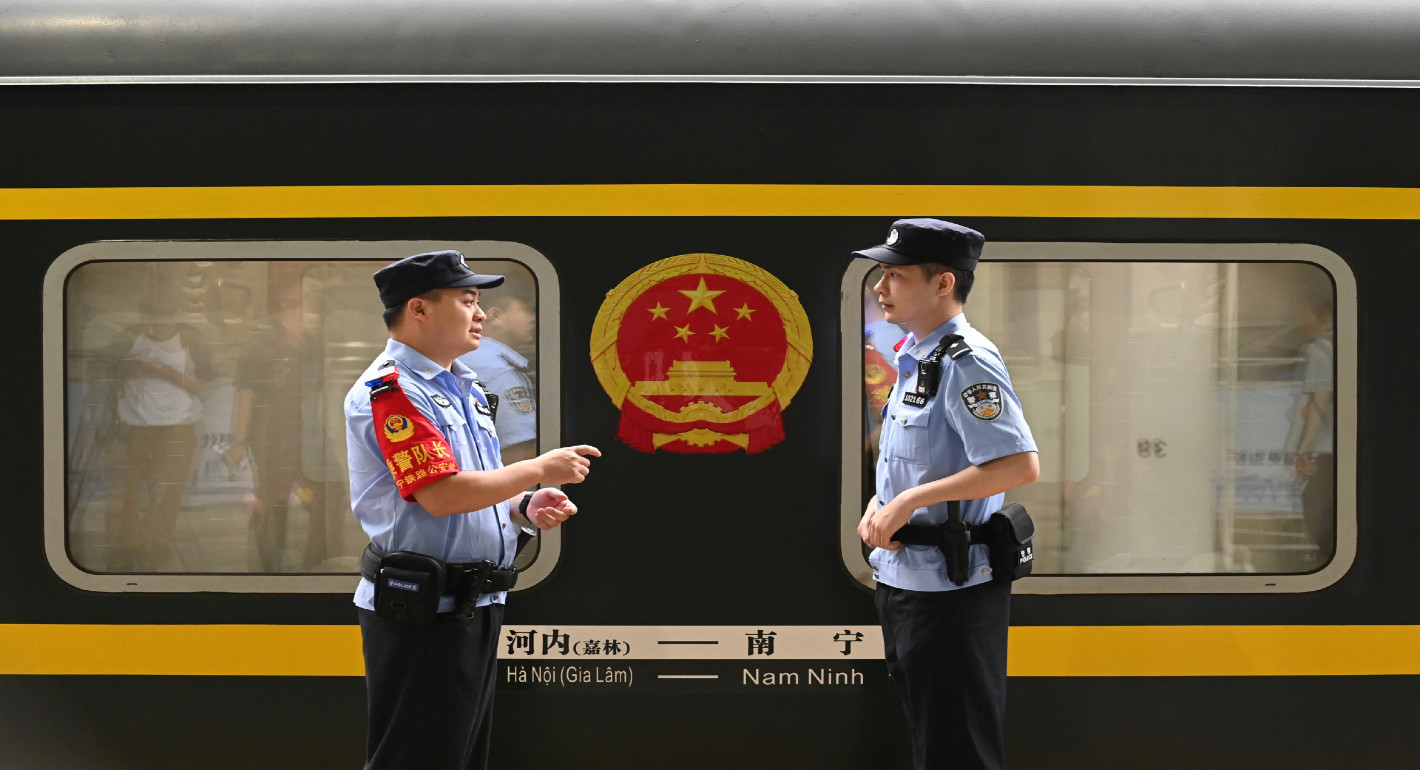
Despite long-standing differences, China and Vietnam are reinforcing common ground for collaboration, especially in public security. This internal security–centered diplomacy offers a strengthened road map for how China moves forward with Southeast Asia.
Sophie Zhuang