

Article
C. Raja Mohan, Darshana M. Baruah
{
  "authors": [
    "C. Raja Mohan"
  ],
  "type": "legacyinthemedia",
  "centerAffiliationAll": "dc",
  "centers": [
    "Carnegie Endowment for International Peace",
    "Carnegie India"
  ],
  "collections": [],
  "englishNewsletterAll": "ctw",
  "nonEnglishNewsletterAll": "",
  "primaryCenter": "Carnegie India",
  "programAffiliation": "SAP",
  "programs": [
    "South Asia"
  ],
  "projects": [],
  "regions": [
    "United States",
    "South Asia",
    "India",
    "North America"
  ],
  "topics": [
    "Foreign Policy"
  ]
}
Source: Getty
The upcoming summit could be the moment when India and the United States find the necessary political will to turn opportunities that have been at hand for years into tangible agreements.
Source: Indian Express
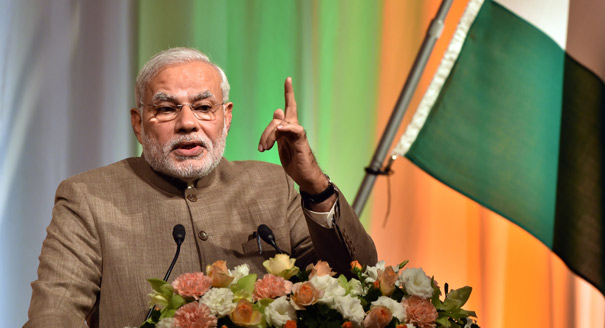
The second summit within four months between Prime Minister Narendra Modi and United States President Barack Obama this weekend could go down as the moment when India and the US found the necessary political will to turn opportunities that have been at hand for years into tangible agreements.
Modi and Obama have no reason to obsess about unveiling a grand design for the bilateral relationship. That has already been done by their predecessors over the last decade and more. There has been no shortage of good ideas on how to transform the India-US partnership. The enduring problem has been about their implementation.
Former US President George W. Bush had declared in early 2005 that the US would assist democratic India in its quest to become a great power. Going against the record of bilateral relations, Atal Bihari Vajpayee had declared that India and the US were “natural allies”.Manmohan Singh advanced Vajpayee’s American agenda when India signed the historic defence framework agreement and the civil nuclear initiative in the middle of 2005. Since then, though, India and the US have struggled to implement that agenda.
As Bush sought to transform US relations with India in his second term, then Senator Obama was not among the most enthusiastic. As president, Obama said all the right things about India but was unable to devote the kind of personal energy that Bush had brought to the relationship.
When the BJP sat on the opposition benches for a decade after 2004, its national leaders tended to limit rather than support Manmohan Singh’s efforts to push forward with the US. Then the chief minister of Gujarat, Modi was only a passive observer as the momentum in the India-US relationship stalled. To make matters worse, the Bush administration’s denial of a visa to Modi after the 2002 Gujarat riots created a special personal problem for the prospective prime minister with Washington.
The result of the general election of 2014, however, provided the moment for a substantive collaboration that Obama and Modi seized with both hands. Obama quickly set aside the visa issue and invited Modi for an early meeting at the White House. Modi, in turn, made it clear that he was not going to mix the personal with the political.
At the September summit in Washington, the two leaders had a chance to size up each other and agreed to arrest the recent drift in bilateral relations. Obama signalled much personal warmth towards Modi and reaffirmed the proposition that a strong India is in America’s interest. Modi, on his part, made it amply clear that the US is India’s special and privileged partner and Delhi’s days of ambivalence towards America are over.
That the two leaders could do business with each other was confirmed by their ability to negotiate a solution to their dispute at the WTO on trade facilitation and food security. More broadly, Modi’s readiness to move forward on long-overdue domestic economic reforms suggested that India was open again for business, especially with America. Modi also demonstrated that he is ready to travel farther with the US than any of his predecessors by inviting Obama to be chief guest at this year’s Republic Day celebrations.
As the first prime minister in three decades with full authority over his cabinet and the bureaucracy, Modi is in a good position to negotiate effectively with America. Obama, contrary to the perception that he is a lame-duck president, now has considerable freedom to pursue a more ambitious foreign policy agenda and an interest in leaving a lasting imprint on the India account.
The first order of business for Modi and Obama is to resolve the outstanding issues in the civil nuclear initiative. These include addressing the vexed issues of nuclear liability that have prevented American companies from participating in India’s atomic power programme, Delhi’s concerns about administrative arrangements for monitoring the sensitive parts of India’s civilian nuclear cycle and facilitating India’s early membership of global non-proliferation regimes such as the Nuclear Suppliers Group.
Two, Modi and Obama are expected to renew the defence framework agreement that expires this year. More important is the need to revive the spirit of the 2005 agreement, which was largely ignored during the second term of the UPA government, take some concrete steps to promote co-development and co-production of weapons systems, and generate better political understanding on how to coordinate their separate efforts to build a stable structure of peace and security in the vast Indo-Pacific region.
Three, Obama and Modi also have an opportunity to realise the full potential of their bilateral cooperation on combating terrorism.
Four, the two leaders must also find some common ground on climate change, which has become too important to be left to ideologues and multilateral warriors on both sides. Climate change has emerged as a key factor shaping relations among the world’s major powers since Washington and Beijing struck a deal on the subject a few weeks ago.
Modi and Obama need to focus less on India’s near-term carbon emissions and find ways to boost its use of renewable energy like solar and wind. Such an approach will address Delhi’s need to grow its economy and Washington’s desire to lessen the weight of coal in India’s energy mix.
For Modi and Obama, the challenge may be less about clarifying the meaning of their strategic partnership, more about exercising their full political authority to bring the intensive negotiations currently under way to a successful closure before they sit down at the Republic Day parade.
Definitive progress on the issues at hand is bound to inject some genuine substance into the strategic partnership that the two sides proclaimed nearly a decade ago but which was lost in translation amid political ambivalence and bureaucratic resistance in both capitals.
This article was originally published in the Indian Express.
Former Nonresident Senior Fellow, Carnegie India
A leading analyst of India’s foreign policy, Mohan is also an expert on South Asian security, great-power relations in Asia, and arms control.
Recent Work

C. Raja Mohan, Darshana M. Baruah


Alexander Gabuev, Paul Haenle, C. Raja Mohan, …
Carnegie does not take institutional positions on public policy issues; the views represented herein are those of the author(s) and do not necessarily reflect the views of Carnegie, its staff, or its trustees.
Over the past decade, China has moved from marginal player to major producer of all things batteries. The United States, Europe, and others are aiming to balance the market.

Milo McBride
The DFC should focus on advanced, low-carbon energy sources, prioritizing areas where the United States has comparative advantages.
Noah Gordon, Liana Schmitter-Emerson
Lee’s tour shows how Seoul is reorganizing its diplomacy away from Pyongyang and toward industrial networks and the geography of the compute economy.

Darcie Draudt-Véjares
The Pentagon is calling for a rapid AI transformation. Autonomous drones offer a case study in the eight bottlenecks the U.S. military must navigate to realize that vision.
Jake Steckler

Most migrants may have left Ceuta, but the effects may linger.


Alejandro Martin Rodriguez, Sarah Yerkes