

Commentary
Despite the agreement’s uncertainty, it’s still a significant development in regional and nuclear policy.
Andrew Leber, Jane Darby Menton
{
  "authors": [
    "Alexey Arbatov",
    "Andrei Kolesnikov"
  ],
  "type": "commentary",
  "centerAffiliationAll": "",
  "centers": [
    "Carnegie Endowment for International Peace",
    "Carnegie Russia Eurasia Center"
  ],
  "collections": [],
  "englishNewsletterAll": "",
  "nonEnglishNewsletterAll": "",
  "primaryCenter": "Carnegie Endowment for International Peace",
  "programAffiliation": "",
  "programs": [],
  "projects": [],
  "regions": [
    "Russia",
    "Western Europe"
  ],
  "topics": [
    "Foreign Policy"
  ]
}
Source: Getty
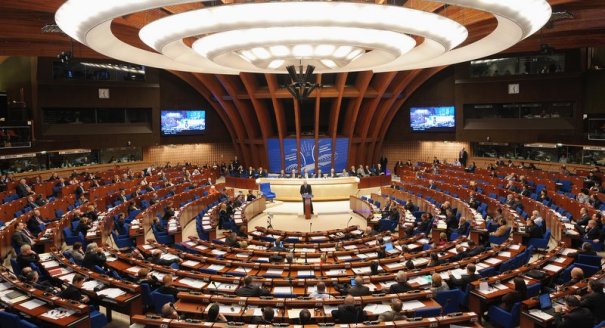
If Russia follows through with its threats to leave the Council, though, how will its place in the world be impacted? What would that decision's ramifications be for normal Russians? We asked Carnegie's experts to share their thoughts.
The statements by Duma members regarding PACE and the Council of Europe met the palate like sour grapes. The parliamentarians essentially implied that if they do not want us in PACE we do not really need to be there.
But we actually do need to be there. This was the only pan-European forum in which we enjoyed equal participation. Of course, PACE does not sign treaties or make administrative and practical imperative decisions; it is more of a platform for exchanging ideas and assessments, taking positions and initiatives that are important for Europe.
On the other hand, the assertions that Russia does not need PACE do, in fact, contain some truth.
In general, if the foreign PACE parliamentarians want to get Russia’s position and its justifications, they do not need PACE. They can contact the Russian Foreign Ministry directly. With the present composition of Russian parliamentarians, any other opinion will hardly be presented in PACE—in contrast to the pluralism of Western parliamentarians’ views.
Thus, PACE membership is presently more a matter of prestige for Russia. But for some reason, Russian parliamentarians constantly become offended and complain about unfair treatment. If one feels confident about one’s views, one should not be hurt by criticism.
I strongly believe that Russia must maintain its Council of Europe membership. This allows us to defend our interests as a great power—the status that we claim for ourselves. If we withdraw from every platform, then okay, no one will offend us and no one will remove us from anywhere. We have nuclear weapons; no one will molest or attack us. But then we will just remain within the confines of our borders, like North Korea.
If Russia decides to withdraw from the Council of Europe, Moscow will no longer be able to affect various important developments through the motions of such an authoritative pan-European institution. The numerous PACE resolutions on the violation of Russians’ human rights in the Baltic countries provide a perfect example. European pressure forced the Baltic States to fundamentally change their practices, and now Russian citizens readily purchase real estate, invest in business and move in large numbers to live in the Baltics.
“Without Russia’s participation, the Council of Europe will be meaningless,” says the Russian parliament’s speaker Sergei Naryshkin. But the problem is that without participating in the Council of Europe, Russia itself will become meaningless. Russia’s withdrawal from the Council of Europe will effectively mean the erection of a new Berlin Wall, albeit located much farther to the east of the German capital.
To borrow Vladimir Putin’s description of the Soviet collapse, it will be a “geopolitical catastrophe” for Russia comparable to the breakup of the Soviet Union.
It is a catastrophe not only because Russia will lose its place in the Western world and be deprived of political representation in it, and not only because it will become a pariah and failed state, but also because it will be an intellectual catastrophe for ordinary Russian citizens. Instead of sharing in European values—democracy, rule of law, and responsible government—they will end up on the side of the archaic values of paternalism, isolationism, nationalism and Russian Orthodox fundamentalism. No development is possible under such a framework.
Russian citizens will lose access to the Strasbourg Court, the last judicial resort that replaced the Central Committee of the Communist Party; the death penalty may be restored; human rights conventions will no longer apply to Russia—all these issues are important, and together they present an extremely depressing picture. Even assuming that the Council of Europe is a meaningless and tedious Strasbourg bureaucracy, withdrawal from it will signify—both symbolically and actually—a halt in progress toward joining the civilized world. Russia has in fact been moving in this direction for the last 25, if not 30, years—since the start of Gorbachev’s perestroika.
Withdrawal from PACE is another sign of degradation for Russia. For the West, it represents the emergence of a new world order, different from the one that existed before the fall of the Iron Curtain. This is a new and dangerous geopolitical reality.
Alexey Arbatov
Alexey Arbatov is the head of the Center for International Security at the Primakov National Research Institute of World Economy and International Relations.
Former Senior Fellow, Carnegie Russia Eurasia Center
Kolesnikov was a senior fellow at the Carnegie Russia Eurasia Center.
Carnegie does not take institutional positions on public policy issues; the views represented herein are those of the author(s) and do not necessarily reflect the views of Carnegie, its staff, or its trustees.
Despite the agreement’s uncertainty, it’s still a significant development in regional and nuclear policy.


Andrew Leber, Jane Darby Menton
“AI safety in parallel” is modest and pragmatic but vital.

Matt Sheehan

Trump is distracted and Ukraine wants Europe to step up. The continent’s leaders must find their voice and assert it in talks with Russia.

Alissa de Carbonnel
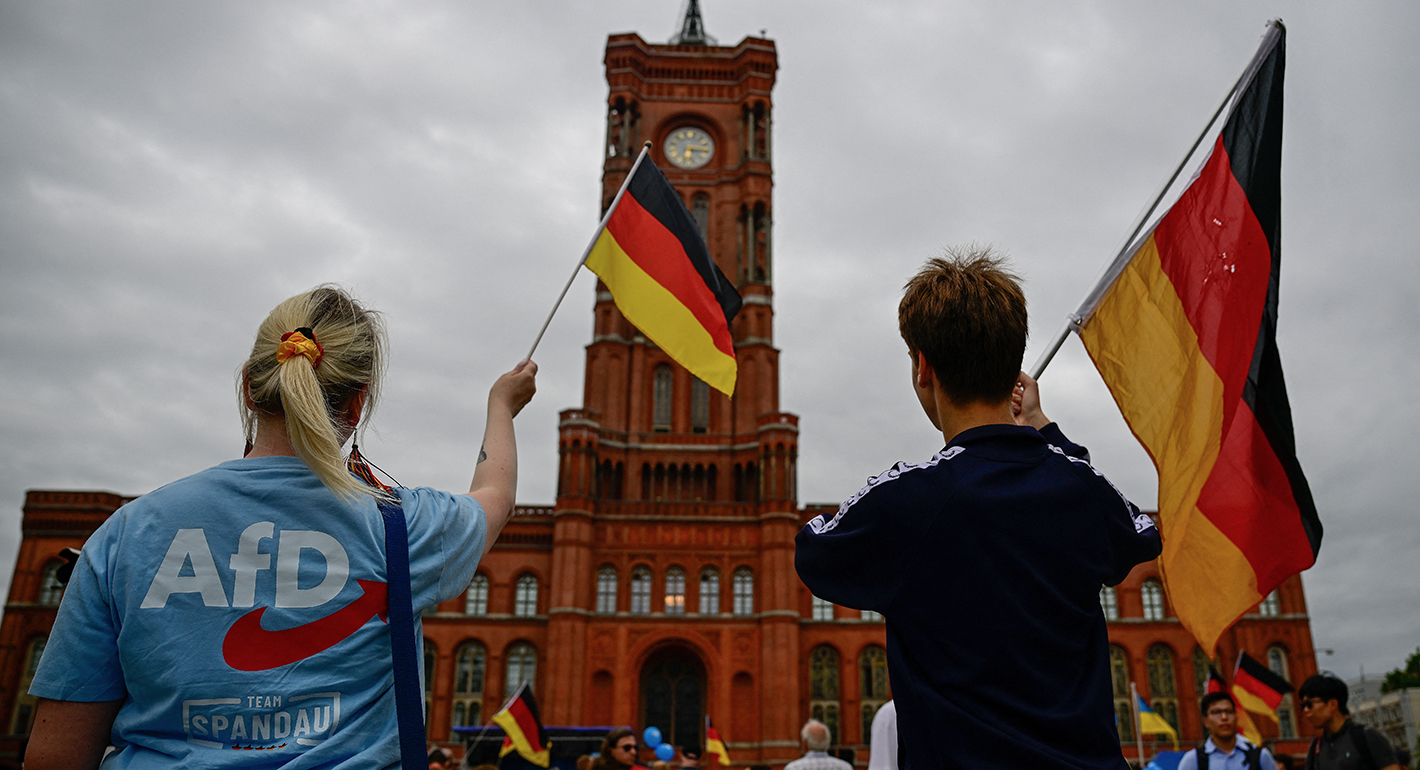
Unresolved tensions within the AfD may ultimately constrain the its potential as a leader among European and global populist forces.
Jeremy Cliffe
There is a deeply rooted assumption in post–Cold War American statecraft that overwhelming military and economic power translates directly into favorable political outcomes. But force alone is rarely enough. To meet the challenges of the mid-21st century, Washington needs a cultural shift toward a mindset that takes negotiation far more seriously.

Cecily Brewer