

Commentary
The books, podcasts, and films that explain the world it made.
Andrew Leber
{
  "authors": [],
  "type": "pressRelease",
  "centerAffiliationAll": "",
  "centers": [
    "Carnegie Endowment for International Peace",
    "Carnegie Europe"
  ],
  "collections": [
    "Europe’s Eastern Neighborhood"
  ],
  "englishNewsletterAll": "",
  "nonEnglishNewsletterAll": "",
  "primaryCenter": "Carnegie Endowment for International Peace",
  "programAffiliation": "",
  "programs": [],
  "projects": [],
  "regions": [
    "Europe"
  ],
  "topics": [
    "Foreign Policy"
  ]
}
Source: Getty
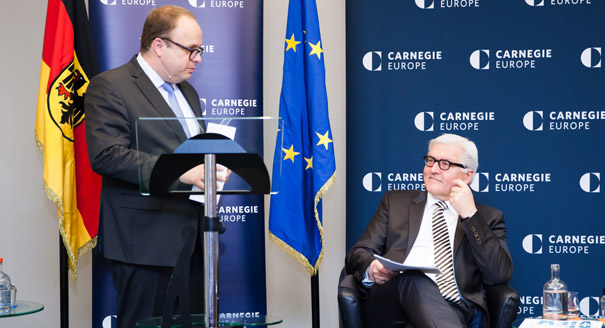
German Foreign Minister Frank-Walter Steinmeier discussed Germany’s recent and unprecedented foreign policy review, Review 2014.
BRUSSELS—German Foreign Minister Frank-Walter Steinmeier said at a Carnegie Europe event Monday that “today’s international crises—from Ukraine to ISIS—are not a coincidence. They are symptomatic of a world where the structures of international order are eroding.”
Speaking on Germany’s recent and unprecedented foreign policy review, Review 2014, Steinmeier explained that “as a globally connected society and an export-based economy, Germany, more than others, depends on a functioning rules-based order.”
For Steinmeier—in his second stint as foreign minister under Chancellor Angela Merkel—“the European Union is the world’s most sophisticated example of a regional order. As such, we need to defend it.”
Steinmeier emphasized that “Europe can only be strong on the outside if the inside architecture is solid.” He noted that he “could not imagine what the values, the reputation, and the strength of European foreign policy would come to if Great Britain weren’t a part of it, [or] what would happen to [Europe’s] outside credibility and effectiveness if Greece left the euro.”
On the Ukraine conflict, Steinmeier said: “We have to be sure that violence doesn’t escalate again. We need to make sure that the military situation is calmed down in order to set the preconditions necessary to bring about a political process stipulated in the Minsk agreements.”
However, he warned that “we shouldn’t fool ourselves . . . The process will be very long. I don’t exaggerate when I say that it could take years, or decades, or even longer, for a political solution [to the Ukraine conflict].”
On EU-Russia relations, Steinmeier said much “depends on whether Russia will be steering or disturbing the political process [in Ukraine]. The question will be whether we will be able to restore the trust that has been shattered.”
A transcript, audio, and video produced by Deutsche Welle from the event are available on the Carnegie Europe website.
Press Contact: Christine Lynch | +32 2 209 29 93 | clynch@ceip.org
Carnegie Europe is the Brussels-based center of the Carnegie Endowment for International Peace. Through publications, articles, seminars, and private consultations, Carnegie Europe aims to foster new thinking on the daunting international challenges shaping Europe’s role in the world.
Carnegie does not take institutional positions on public policy issues; the views represented herein are those of the author(s) and do not necessarily reflect the views of Carnegie, its staff, or its trustees.

The books, podcasts, and films that explain the world it made.

Andrew Leber
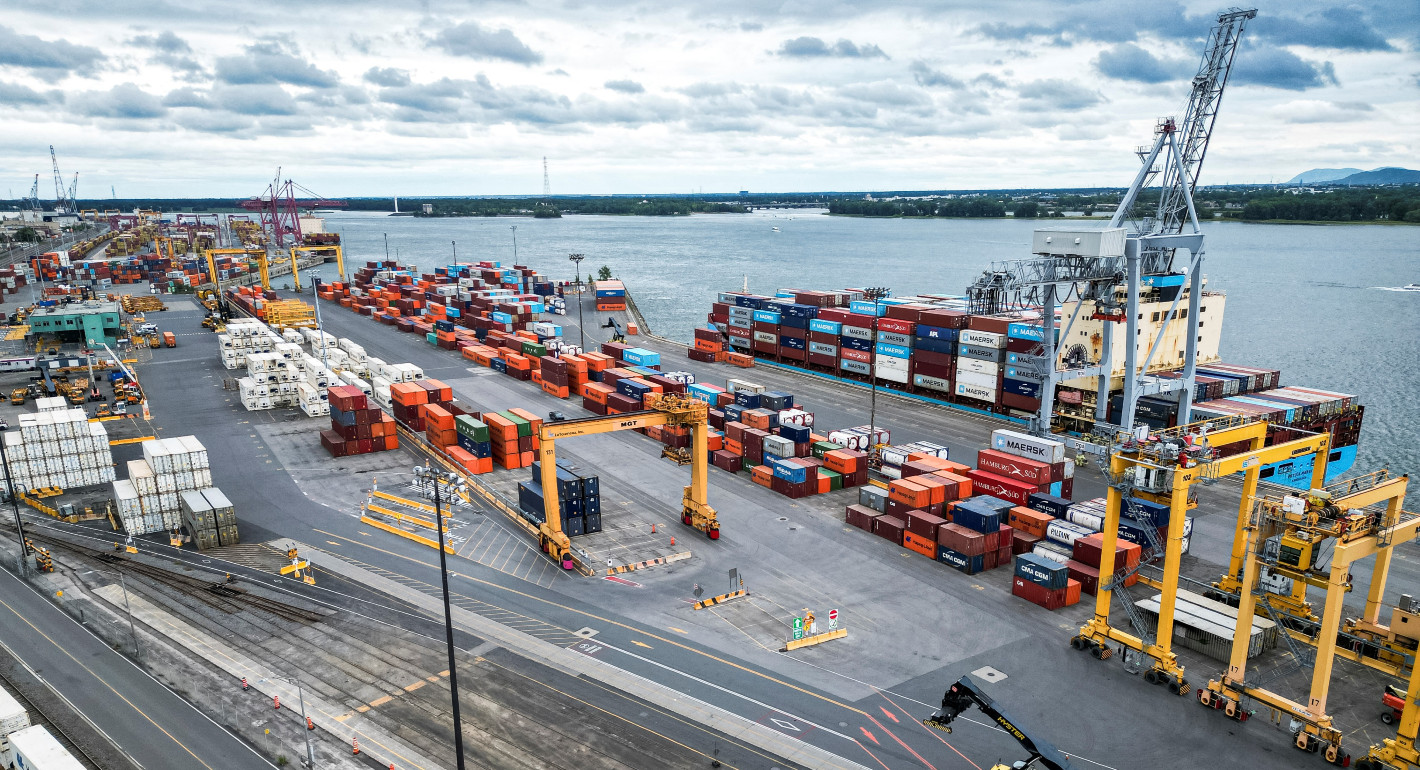
U.S. trading partners in Asia are closely watching the dispute for signs of how it may affect their own interests.
Barbara Weisel

The aftermath of the Ceuta crisis shows Europe has drawn the wrong lessons. Rather than doubling down on failed migration policies, the EU needs to address the underlying roots of such episodes.

Richard Youngs
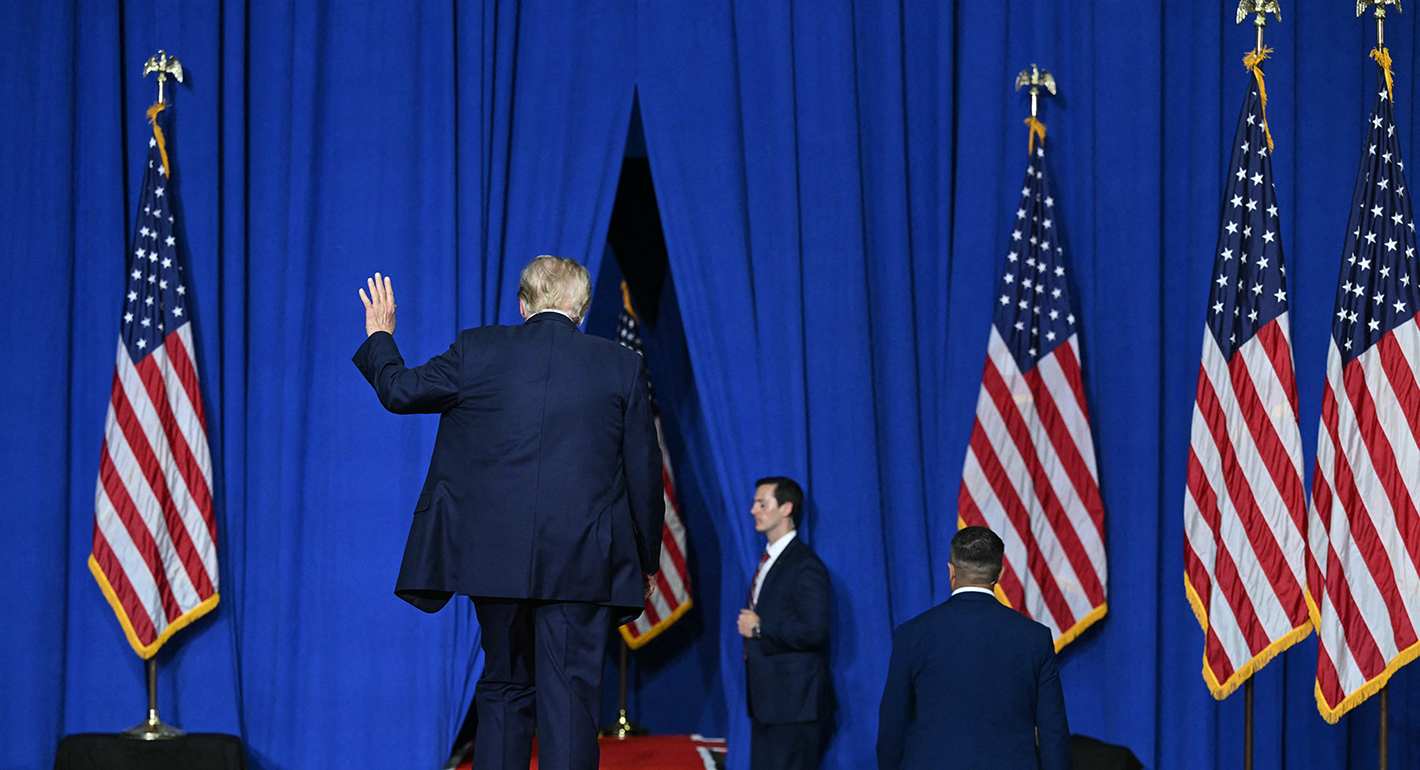
By abandoning past U.S. pro-democracy policies and adopting several lines of pro-autocratic action, the Trump administration has fundamentally repositioned the United States vis-à-vis democracy in the world.

Thomas Carothers
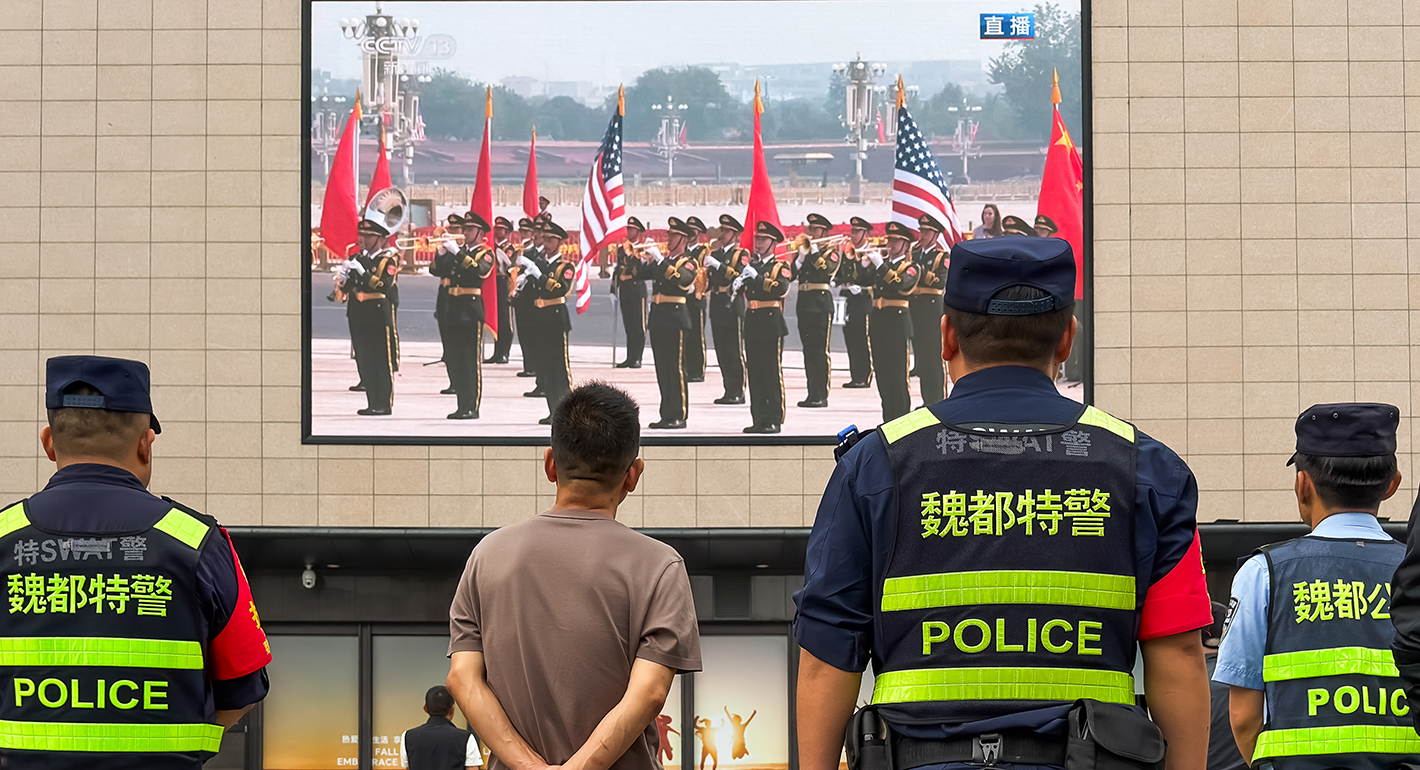
Chinese strategists are once again debating whether American power is declining and whether U.S. hegemony is experiencing irreversible decay.
Wu Xinbo