

Commentary
Yukon Huang, Isaac B. Kardon, Matt Sheehan
{
  "authors": [
    "Yukon Huang"
  ],
  "type": "legacyinthemedia",
  "centerAffiliationAll": "dc",
  "centers": [
    "Carnegie Endowment for International Peace"
  ],
  "collections": [],
  "englishNewsletterAll": "asia",
  "nonEnglishNewsletterAll": "",
  "primaryCenter": "Carnegie Endowment for International Peace",
  "programAffiliation": "AP",
  "programs": [
    "Asia"
  ],
  "projects": [],
  "regions": [
    "East Asia",
    "China"
  ],
  "topics": [
    "Economy",
    "Trade"
  ]
}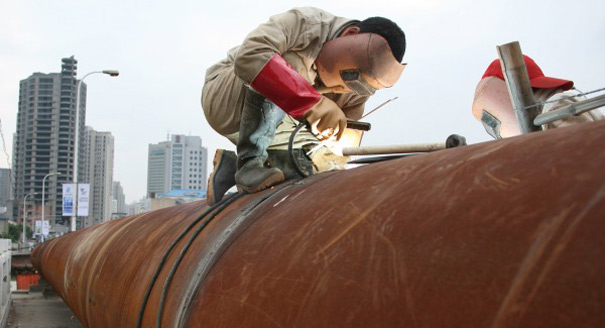
Source: Getty
The shaping of the Asian Infrastructure Investment Bank should be seen not as a threat to achieving the highest standards, but as a rare opportunity to help existing multilateral agencies develop the right standards.
Source: Financial Times
With nearly 50 applicants so far, the attention of the China-initiated Asian Infrastructure Investment Bank has shifted from concerns that it would not secure enough participants for a credible presence on the international stage to having possibly too many to coalesce on important issues. Now comes the hard part: creating a development institution that is responsive to both the diverse needs of its Asian borrowers and the governance concerns of its broader funding countries in Europe and elsewhere.
Joining the bank is not politically feasible for Washington in the foreseeable future given the negative congressional sentiments, but the messages coming from the US have become more constructive, shifting from adamant opposition to signalling a willingness to co-operate in statements from senior Treasury officials. Yet these statements continue to raise concerns about whether the AIIB — with an intended $100bn registered capital — will adhere to the “highest standards” and over conditions on safeguards relating to social and environmental consequences at project level. Some of the later applicant countries such as Australia have cited such reservations to justify their initially lukewarm approach to joining.
Such admonitions miss the point. The objective — as implied at press conferences — is not simply to duplicate the supposedly “highest standards” of existing institutions such as the World Bank, the IMF and the Asian Development Bank but to use this unique opportunity to establish the “right standards”.To the credit of these institutions, there have been serious efforts to develop more effective and responsive guidelines, but progress has been agonisingly slow. Having served in the World Bank as a manager responsible for countries as disparate as Russia, Bangladesh, Nepal and China, I can attest to the fact that both management and staff found the standards demanded and many operational procedures frustratingly bureaucratic, costly and ill-suited to dealing with the real needs of client borrowers. This is due to an archaic governance structure and the reluctance of some major shareholders, at both the World Bank and the IMF, to adjust the board’s voting power away from developed countries to reflect the larger role of emerging nations in the global economy.
So what would be the “right standards”? Here are three key elements.
First, multilateral institutions such as the World Bank have a resident board numbering 20 or more executive directors representing their countries or groups of countries. Could a big commercial bank or large multinational company operate effectively if it had to report not only to its chief executive but also to another 20 seats of authority representing diverse interests that get involved in operational and policy issues on a daily basis? The answer is No. The consequences are that staff and management spend far too much time preparing numerous lengthy reports for board approval or information, processing procedures are far too tortuous, there is a lack of focus and project preparation is excessively costly. Like all major companies and banks, the AIIB board should convene only periodically to review policies and provide guidance.
Second, the development business has become increasingly field-intensive in terms of staffing. Agencies such as the World Bank and the Asian Development Bank have resident missions in all their active borrowing countries and the costs in some countries of keeping 100 or more staff in the field are substantial. With its aim of a more specialised focus on infrastructure, less involvement in direct poverty-related activities such as education and health and possible reliance on the other agencies for macroeconomic reporting, the AIIB could avoid the need for large field operations. It could instead consider placing a few core staff in existing World Bank or Asian Development Bank field offices — providing efficiency gains as well as combined experience.
Finally, the concerns on safeguards to avoid or mitigate any negative social and environmental consequences of projects merit the attention they are receiving. The aim should be not to lower standards but to develop more sensible ones. Even within the existing multilateral development banks, there is general recognition that a new approach is needed and much thought has been given to developing better guidelines. The broad principle is to move away from a legalistic framework requiring compliance with overly rigid rules to a more risk-based approach that considers outcomes. Most projects in fact pose limited risks regarding social and environmental harm. The current tendency to apply the same guidelines to all projects unnecessarily increases costs and makes it harder to give the necessary attention to those where the risks are both real and significant.
The shaping of the AIIB should be seen not as a threat to achieving the highest standards, but as a rare opportunity to help existing multilateral agencies develop the right standards. The supportive statements from the management of the IMF, the World Bank and the Asian Development Bank on their interest in collaborating with the AIIB are a helpful step in this direction.

Senior Fellow, Asia Program
Huang is a senior fellow in the Carnegie Asia Program where his research focuses on China’s economy and its regional and global impact.
Recent Work


Yukon Huang, Isaac B. Kardon, Matt Sheehan
Yukon Huang, Genevieve Slosberg
It should address the shortcomings of previous crisis communication efforts and adapt to the demands of frontier AI.

Lucy Luo

China’s police training infrastructure construction projects provide benefits to recipient countries, promote China’s image as a major global security provider, and are likely to reinforce alignment between Beijing’s security priorities and those of countries in the Global South.


Cameron Waltz, Sheena Chestnut Greitens, Kim Nguyen, …

AI capabilities are moving fast. Most institutions—including governments—can’t keep up.


Anton Leicht, Scott Singer
The Bureau of Industry and Security needs to adjust its focus and practices to maintain its position as the U.S. government’s primary champion of international technological competition.
Geoffrey Irving

Depleted financial reserves and a shrinking tax base mean it is no longer possible to simultaneously deliver high defense spending, price stability, and economic growth.

Alexandra Prokopenko