• Research
  • Emissary
  • About
  • Experts
Carnegie Global logoCarnegie lettermark logo
DemocracyIran
  • Donate
{
  "authors": [
    "David Livingston"
  ],
  "type": "other",
  "centerAffiliationAll": "dc",
  "centers": [
    "Carnegie Endowment for International Peace"
  ],
  "collections": [],
  "englishNewsletterAll": "ctw",
  "nonEnglishNewsletterAll": "",
  "primaryCenter": "Carnegie Endowment for International Peace",
  "programAffiliation": "SCP",
  "programs": [
    "Sustainability, Climate, and Geopolitics"
  ],
  "projects": [
    "Carnegie Oil Initiative"
  ],
  "regions": [
    "North America"
  ],
  "topics": [
    "Climate Change"
  ]
}

Source: Getty

Other

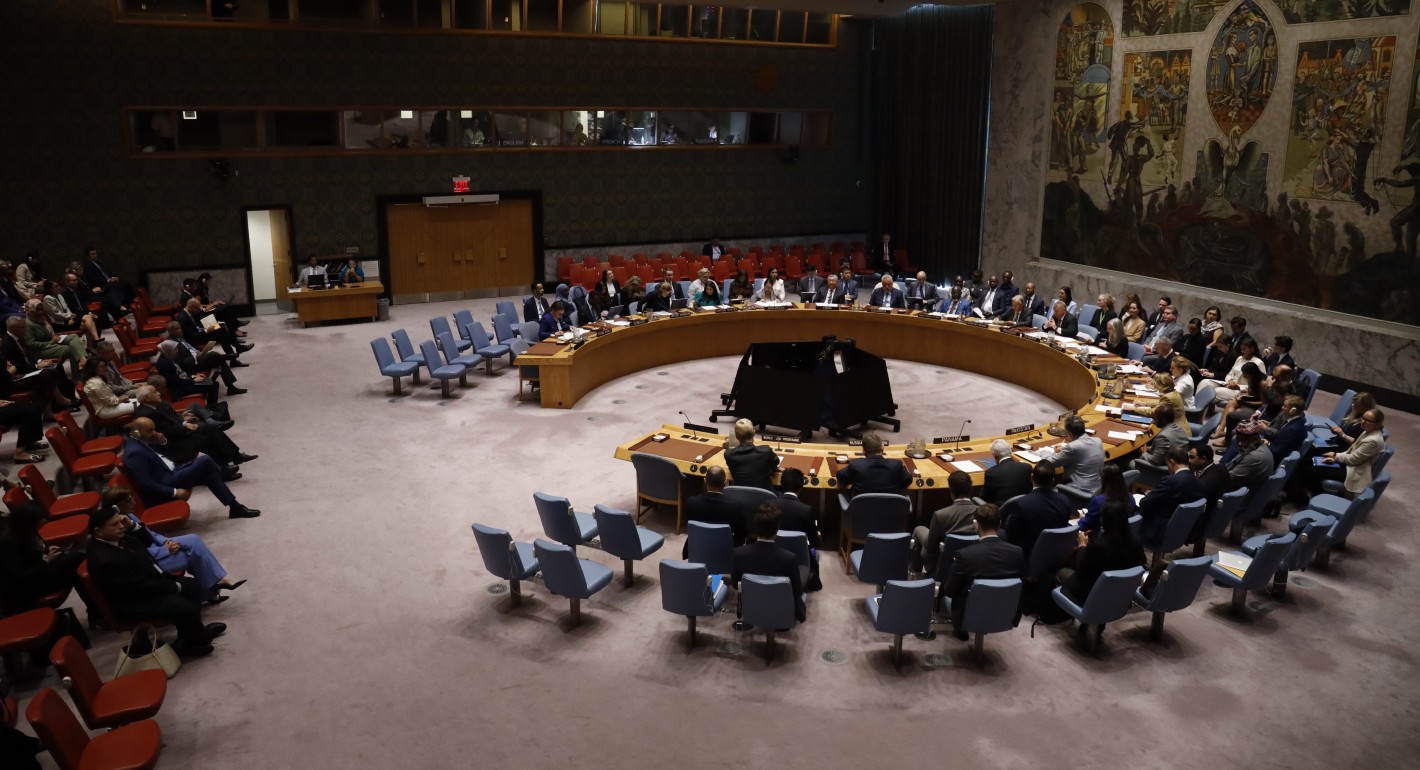
OPEC Panel Discussion

OPEC’s decision to maintain production levels despite falling prices was a surprise to many in the energy industry.

Link Copied
By David Livingston
Published on Apr 25, 2015
Program mobile hero image

Program

Sustainability, Climate, and Geopolitics

The Sustainability, Climate, and Geopolitics Program explores how climate change and the responses to it are changing international politics, global governance, and world security. Our work covers topics from the geopolitical implications of decarbonization and environmental breakdown to the challenge of building out clean energy supply chains, alternative protein options, and other challenges of a warming planet.

Learn More
Project hero Image

Project

Carnegie Oil Initiative

The Carnegie Oil Initiative analyzed global oils, assessing their differences from climate, environmental, economic, and geopolitical perspectives. This knowledge provides strategic guidance and policy frameworks for decision making.

Learn More

Source: World Affairs Council of Houston

Led by Saudi Arabia, OPEC’s decision to maintain production levels despite falling prices was a surprise to many in the energy industry. Various reasons for OPEC’s decision have been put forth such as a desire to discourage U.S. shale production or to undermine Iran’s oil based economy.

Panelists James B. Adams, Chris Faulkner, Pradeep Anand and David Livingston discussed the possible rational behind OPEC’s decision, what this means for the markets and the oil producing countries, and what we can expect for the near future.

This event was originally published by the World Affairs Council of Houston.

About the Author

David Livingston

Former Associate Fellow, Energy and Climate Program

Livingston was an associate fellow in Carnegie’s Energy and Climate Program, where his research focuses on emerging markets, technologies, and risks.

    Recent Work
  • Article
    Advancing Public Climate Engineering Disclosure

      Deborah Gordon, Smriti Kumble, David Livingston
  • Commentary
    Working Around Trump on Climate

      Erik Brattberg, David Livingston

David Livingston
Former Associate Fellow, Energy and Climate Program
Climate ChangeNorth America

Carnegie does not take institutional positions on public policy issues; the views represented herein are those of the author(s) and do not necessarily reflect the views of Carnegie, its staff, or its trustees.
More Work from Carnegie Endowment for International Peace

  • People visit the World Artificial Intelligence Conference (WAIC) at the Shanghai World Expo and Convention Center in Shanghai on July 28, 2025.
    Article
    China’s AI-Empowered Censorship: Strengths and Limitations

    Censorship in China spans the public and private domains and is now enabled by powerful AI systems.

      Nathan Law

  • Photo of cracked dry earth.
    Article
    Lessons Learned from the Biden Administration’s Initial Efforts on Climate Migration

    In 2021, the U.S. government began to consider how to address climate migration. The outcomes of that process offer useful takeaways for other governments.

      • Jennifer DeCesaro

      Jennifer DeCesaro

  • Teenagers hold a large banner reading "stop pollution in Gabes, stop pollution everywhere, save Gabes'' in English and Arabic
    Article
    Civil Society Restrictions in North Africa: The Impact on Climate-Focused Civil Society Organizations

    For climate-focused civil society in countries like Morocco, Algeria, and Tunisia to be most effective, organizations should work together to develop networks that extend their reach beyond their local area and connect across borders to share best practices and amplify each other’s work.

      • Sarah Yerkes

      Sarah Yerkes

  • The New International Politics of Decarbonisation and Climate Preservation
    Research
    The New International Politics of Decarbonisation and Climate Preservation

    A core challenge in the new era of uncertain climate relations lies not in technical solutions but in the politicization of climate policy coordination.

      Federica Genovese

  • Towards an orderly and just global energy transition by Peter Newell
    Research
    Towards an Orderly and Just Global Energy Transition

    It is ever more apparent that ambitious climate goals cannot be met without orchestrated efforts to support a fair phase out of fossil fuels.

      Peter Newell

Get more news and analysis from
Carnegie Endowment for International Peace
Carnegie global logo, stacked
1779 Massachusetts Avenue NWWashington, DC, 20036-2103Phone: 202 483 7600Fax: 202 483 1840
  • Research
  • Emissary
  • About
  • Experts
  • Donate
  • Programs
  • Events
  • Blogs
  • Podcasts
  • Contact
  • Annual Reports
  • Careers
  • Privacy
  • For Media
  • Government Resources
Get more news and analysis from
Carnegie Endowment for International Peace
© 2026 Carnegie Endowment for International Peace. All rights reserved.