

Commentary
Andrei Kolesnikov
{
  "authors": [
    "Andrei Kolesnikov"
  ],
  "type": "legacyinthemedia",
  "centerAffiliationAll": "",
  "centers": [
    "Carnegie Endowment for International Peace",
    "Carnegie Russia Eurasia Center"
  ],
  "collections": [
    "Inside Russia"
  ],
  "englishNewsletterAll": "",
  "nonEnglishNewsletterAll": "",
  "primaryCenter": "Carnegie Endowment for International Peace",
  "programAffiliation": "",
  "programs": [],
  "projects": [],
  "regions": [
    "Russia"
  ],
  "topics": [
    "Political Reform",
    "Democracy",
    "Economy",
    "Civil Society"
  ]
}
Source: Getty
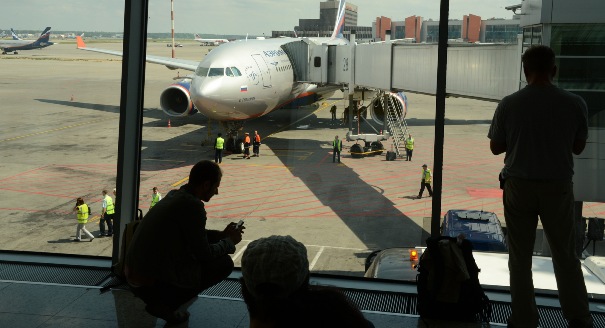
Non-government organizations have become “undesirable” in Russia, along with Russian experts and specialists. In fact, they are not undesirable for Russia, which actually needs them very badly, but undesirable for the current regime.
Source: Forbes
Tickets for Russia’s modern-day “philosophers’ ship” – a collective name for the exodus of educated Russians following the Bolshevik revolution – have been in demand ever since, as it continues to make its rounds of certain Western countries, regularly returning to Russia’s shores to pick up new loads of precious cargo, so badly needed at home, yet essentially marked “undesirable”.
In the latest wave, one of the first victims was Sergei Guriev – former provost of the New Economic School in Moscow and member of the Sberbank Supervisory Board (Sberbank is Russia’s top three banks).
He was slammed with a criminal lawsuit, put through a torturous obstacle course at customs every time he tried to cross the border, and was made to understand in various other invasive ways that he ought to leave the country. He now teaches economics at the Paris Institute of Political Science.Next, Sergey Aleksashenko – Senior Researcher at Moscow’s Higher School of Economics, who had been vocally critical of the Kremlin’s economic and international policies – began making his presence in Moscow scarce.
Now, the prominent liberal economist and commentator, Konstantin Sonin, has left Russia, after being offered a professorship at the University of Chicago.
Last week, the Russian Parliament increased pressure on foreign and international non-governmental organizations declared “undesirable” by adopting a new law that bars NGOs thought to be posing a threat to Russian constitutional order, defense or security. The Office of the Russian Prosecutor General was asked to investigate Amnesty International, Carnegie Foundation, Human Rights Watch and Memorial Center to see if they might be declared “undesirable”.
What do Russian economists with international reputations, Russian non-profits (now termed “foreign agents”), and foreign non-profits (soon to be dubbed “undesirable”), have in common? All of them, along with certain media outlets, have found themselves deemed undesirable in the Russian State.
Not undesirable for Russia, which actually needs them very badly, but undesirable for the regime currently ruling Russia.
Economists are to be let go, rather than fighting to keep them at home; “foreign agents” are not to be let in at all; and “undesirables” are to be booted out and shut down.
This is tantamount to harming the Russian economy, putting a stop to contemporary education, and turning a blind eye to practical professional ideas and opinions.
In recent years, the Russian Investigating Committee has investigated and harassed the panel of economic experts conducting an independent analysis of Mikhail Khodorkovsky’s YuKOS’s case (whose legal status remains unclear). Judging by that “experts case”, the only use the government sees in high-class economic professionals is as witnesses for the state, who are to prove the criminal nature of the activities of oligarchs that hold political views that oppose the Kremlin. Nothing else.
Russian economists don’t have much to do these days. The government and the administration are now working under a new mythology of “replacing imports with domestic goods and services”, so the state doesn’t need their expertise. Occasionally, they are invited to ornament the expert committees of large state corporations. Any initiative high professionals try to show goes unacknowledged.
But economists aren’t the only ones who have borne the brunt of this new attitude from the State. Take, for example, the recent story with the Russian Academy’s Institute of Scientific Information on Social Sciences in Moscow. First, the State refused to allocate funds to restore the Institute’s library and other facilities. Which is understandable—who needs a library? Then, when a fire devastated the library, the blame went to the director of the institute, Yuri Pivovarov. He is a world-class expert in German studies, and could easily have left, rather than selflessly bearing the burden of running the unique library with practically no government financing. Now, he has been accused of criminal negligence.
When asked to comment on the immigration of Konstantin Sonin, the President’s Press Secretary, Dmitriy Peskov said, “the Kremlin is sorry when well-known economists go to work abroad, just as the Kremlin is happy when well-known economists come to Russia to work—be they Russian, or foreign. This is a two-way street, so there’s nothing special about this particular case.”
Peskov’s statement is not exactly true: the fact is, those leaving are the most prominent and prospective specialists, while the incoming contingent has shrunk to a measly trickle, which owes its existence only to the efforts of a handful of leading universities of social and economic sciences. Much like the flight of capital from Russia, the brain drain is significant and symptomatic. Just as the country has become unattractive to investors, it has also become unattractive to economics experts.
It’s very telling that many experts who have spent their entire lives working with Russia have recently stopped coming here, even on short-term business trips. Paradoxically, the cause of this is very personal: it stems from a love of Russia, and a deep disappointment—a profound sense of enormous effort wasted.
In this climate, “undesirable” organizations will cease collaborating with Russia on their own, and no draconian or excessive laws will be required to shut them down. Meanwhile, the new law on “undesirables” mentions “foreign non-government organizations”, and explains that this refers not only to non-profits but also to commercial companies from abroad. Thus, the legislators wall off not only the political and expert fields in Russia, but also the economic field.
This article originally appeared in Russian on Forbes Russia. The translation originally appeared in Forbes.
Former Senior Fellow, Carnegie Russia Eurasia Center
Kolesnikov was a senior fellow at the Carnegie Russia Eurasia Center.
Recent Work
Andrei Kolesnikov
Andrei Kolesnikov
Carnegie does not take institutional positions on public policy issues; the views represented herein are those of the author(s) and do not necessarily reflect the views of Carnegie, its staff, or its trustees.

China’s banking crisis in the 2000s was resolved by transferring the costs to households through financial repression—a decision that recapitalized the banks while exacerbating the structural imbalances that continue to shape the Chinese economy today.

Michael Pettis
In the discussions made possible by the State Duma election campaign, one question is being asked more and more loudly. “What next?”

Andrey Pertsev
While the Nazis rushed ahead in a revolutionary fervor, Russia’s modern crusaders against enemies of the state work methodically, giving their targets time to adjust to restrictions before closing the loopholes.

Leonid Bershidsky
Media coverage suggests Kyiv’s fortunes have changed. That shift may be important, but it only goes so far.

Dara Massicot, Aaron David Miller, Andrew S. Weiss
Lee’s tour shows how Seoul is reorganizing its diplomacy away from Pyongyang and toward industrial networks and the geography of the compute economy.

Darcie Draudt-Véjares