

Article
Hans-Dieter Lucas, Adam Thomson, Pierre Vimont
{
  "authors": [
    "Pierre Vimont"
  ],
  "type": "legacyinthemedia",
  "centerAffiliationAll": "dc",
  "centers": [
    "Carnegie Endowment for International Peace",
    "Carnegie Europe"
  ],
  "collections": [
    "EU Integration and Enlargement"
  ],
  "englishNewsletterAll": "ctw",
  "nonEnglishNewsletterAll": "",
  "primaryCenter": "Carnegie Europe",
  "programAffiliation": "EP",
  "programs": [
    "Europe"
  ],
  "projects": [],
  "regions": [
    "Europe",
    "Western Europe",
    "Iran"
  ],
  "topics": [
    "EU",
    "Economy"
  ]
}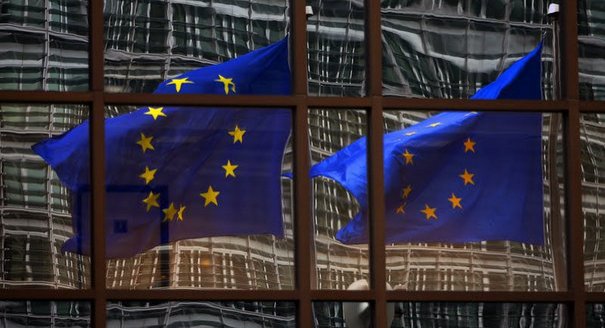
Source: Getty
The Greek crisis is the most difficult test the EU has ever had to face; it cannot be solved by austerity alone.
Source: Euronews
The threat of Greece leaving the EU, or a “Grexit,” has deeply shaken Europe.While officials prepared for a worse case scenario, eurosceptic leaders were cheering, like Nigel Farage from the UK Independence Party.
Is the Greek crisis only the starkest example of a multi-speed Europe headed for a downsizing or even extinction?
European leaders are also deeply divided over migration.
And will Spain be the next crisis? With elections there in autumn, euro-sceptic parties have surged in the polls amid anger over EU-mandated austerity policies.
On The Network, these issues are debated by Pavel Telicka, a Czech MEP and Vice President of the Alliance of Liberals and Democrats or ALDE; Pierre Vimont of the think tank Carnegie Europe and a former diplomat; and Pablo Bustinduy, co-ordinator of the European parliament delegation of Podemos, the Spanish leftist party.
This broadcast was originally aired on Euronews’s The Network.

Senior Fellow, Carnegie Europe
Pierre Vimont is a senior fellow at Carnegie Europe. His research focuses on the European Neighborhood Policy, transatlantic relations, and French foreign policy.
Recent Work

Hans-Dieter Lucas, Adam Thomson, Pierre Vimont
Pierre Vimont
Carnegie does not take institutional positions on public policy issues; the views represented herein are those of the author(s) and do not necessarily reflect the views of Carnegie, its staff, or its trustees.

The EU can impose sanctions but struggles to enforce them without the United States. With Washington increasingly disinterested in backing European interests, the bloc must now fend for itself.


Nicu Popescu, Tiago Antunes

Rubio’s recent visit brought welcome attention, but more capital requires governance changes that may be a hard sell for regional governments.

Jennifer B. Murtazashvili

Russia is testing the waters of NATO’s mutual defense clause. What do strikes in Romanian territorial waters mean for the alliance’s posture toward Moscow?

Dimitar Bechev

China has showcased its engineering prowess with small modular reactor demonstration projects. But turning these technological achievements into commercial success will be a greater challenge.

Tong Zhao

The truth of the strategic situation is that Europe and Russia are extremely unlikely to be able to “turn the page” on their confrontation within the next two decades.

Arkady Moshes