

Q&A
- +1
Sheena Chestnut Greitens, Oriana Skylar Mastro, Yukon Huang, …
{
  "authors": [
    "Yukon Huang"
  ],
  "type": "legacyinthemedia",
  "centerAffiliationAll": "dc",
  "centers": [
    "Carnegie Endowment for International Peace",
    "Carnegie China"
  ],
  "collections": [],
  "englishNewsletterAll": "asia",
  "nonEnglishNewsletterAll": "",
  "primaryCenter": "Carnegie China",
  "programAffiliation": "AP",
  "programs": [
    "Asia",
    "American Statecraft"
  ],
  "projects": [],
  "regions": [
    "East Asia",
    "China",
    "North America",
    "United States"
  ],
  "topics": [
    "Economy",
    "Trade"
  ]
}
Source: Getty
Internationalizing the renminbi would make sense as the outcome of a long-term process of opening up capital markets and liberalizing exchange and interest rates, but it should not be driving near-term policy choices that must respond to cyclical market shifts.
Source: Financial Times
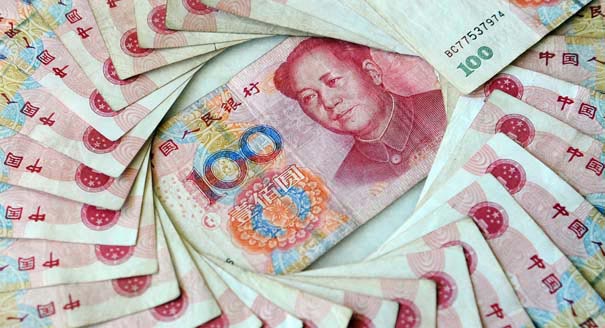
China wants the renminbi to be part of the International Monetary Fund’s basket of elite currencies—the Special Drawing Rights—and a major global currency for trade and reserve holdings. For this purpose it sees a stable and strong renminbi as desirable. It also wants the value of the renminbi to be increasingly determined by market forces. But the leadership cannot have it both ways unless it takes a different approach to managing rate adjustments. Its efforts so far have led to this month’s unexpected devaluation, generating turmoil and the widespread perception that Beijing has lost control over economic decision-making.
Internationalizing the renminbi would make sense as the outcome of a long-term process of opening up capital markets and liberalizing exchange and interest rates but it should not be driving near-term policy choices that must respond to cyclical market shifts. Yet this is what has been happening, causing confusion.In the avalanche of discussion on internationalizing the renminbi, surprisingly few have questioned the logic of doing it now or even if it is technically feasible. To begin with, for a currency to be used more abroad, it has to be available abroad. The US did this by running huge trade deficits and paying with dollars. It also gave dollars away through its aid programs. But China will not want to run trade deficits instead of surpluses, nor is there a strong case for a country ranking about 90th in per capita gross domestic product to give away its money to richer nations.
The benefits for China from such a move are also not obvious. Its leadership has historically placed a high value on maintaining economic stability. But internationalizing the currency will inevitably lead to greater volatility as controls over capital movements, interest rates and exchange valuations are relaxed. This is already happening. If promoting the renminbi as a global currency takes priority and the objective is to maintain stable rates, Beijing will be forced to sacrifice some control over monetary policy as pressure to maintain the renminbi’s value clashes with the need to address the current economic slowdown.
So why is China considering it? One obvious reason is for political prestige, but Beijing has not been known to pursue such elusive goals. More pertinent are security concerns as the leadership sees that US dominance of the international financial architecture provides it with a potentially lethal weapon in times of conflict — as exemplified in the financial sanctions on Iran.
Others have focused on the benefits that the US has received from the dollar’s position as the global currency, which allows it to run huge deficits by borrowing without limit abroad. But China has vehemently criticized the US for taking advantage of this “exorbitant privilege”.
Some believe that internationalizing the renminbi is a form of “reform by Trojan horse”, with China’s central bank seeing it not as an end goal, but as a pretext to push for more market reforms. There is logic in this argument, since it mandates improving the country’s rudimentary financial markets and eliminating its capital controls. China has made considerable progress in this regard. After years of steady appreciation, there is no overwhelming pressure for the renminbi to move either up or down but it should be allowed to respond flexibly to cyclical market pressures.
There is one area, though, where promoting renminbi usage could generate near-term benefits and show a path for the future. That is regional trade and investment. President Xi Jinping’s Silk Road initiative promotes improved physical and financial connectivity with Southeast Asia, central Asia, the Middle East and Europe. Four centuries ago, at the height of China’s global trade reach, Chinese copper coins were used as an international medium of exchange throughout Asia and beyond. The vision today for the renminbi is on a much larger scale.
Nearly half of China’s trade is processing-related — that is, it comprises parts and components from other East Asian countries that are assembled in China for export to the west. Currencies of several Asian countries already track the renminbi more closely than the dollar, which means it could be used as a “reference currency” for the production-sharing network. Asia generally would benefit from greater use of the renminbi to improve trade efficiency and reduce exchange-rate risk in intra-regional trade.
It is technically more feasible for the renminbi to be a regional currency than a global one, since China runs trade deficits with most of its network partners which makes it more likely that Beijing will settle payments in renminbi and its partners will hold it as a reserve currency. With the Silk Road initiative increasing the outflows of the renminbi for investment purposes, it will naturally become a more common medium of exchange.
For this to happen, the renminbi should move more in line with Asian currencies than be tied to the US dollar, as it has been. The peg to the dollar has meant the renminbi is overvalued in relation to its regional trading partners. Some depreciation is logical but this should have been done in a gradual and more flexible exchange rate adjustment process over the past year rather than bundled into an unexpected adjustment over a few days. The concept of maintaining stability to promote the renminbi as a reserve currency makes more sense in a regional context but this would require accepting increased volatility relative to the US dollar.
This article was originally published in the Financial Times.

Senior Fellow, Asia Program
Huang is a senior fellow in the Carnegie Asia Program where his research focuses on China’s economy and its regional and global impact.
Recent Work


Sheena Chestnut Greitens, Oriana Skylar Mastro, Yukon Huang, …


Yukon Huang, Isaac B. Kardon, Matt Sheehan
Carnegie does not take institutional positions on public policy issues; the views represented herein are those of the author(s) and do not necessarily reflect the views of Carnegie, its staff, or its trustees.

China’s political future will be shaped between now and next October. As the Communist Party enters its intense “campaign season” to prepare for a major political transition in 2027, reading Beijing's actions and responses may become more difficult as domestic politics weigh on its behavior more than usual.

Damien Ma

The EU can impose sanctions but struggles to enforce them without the United States. With Washington increasingly disinterested in backing European interests, the bloc must now fend for itself.


Nicu Popescu, Tiago Antunes

Rubio’s recent visit brought welcome attention, but more capital requires governance changes that may be a hard sell for regional governments.

Jennifer B. Murtazashvili

America’s foreign-policy objectives have grown more demanding while Americans have demanded greater focus on their own affairs.

Stephen Wertheim

China has showcased its engineering prowess with small modular reactor demonstration projects. But turning these technological achievements into commercial success will be a greater challenge.

Tong Zhao