

Paper
Networks—from international payments platforms to key economic sectors—underlie many aspects of U.S. power. But they are suffering under an extractive approach to foreign policy.
Daniel W. Drezner
{
  "authors": [
    "Balázs Jarábik",
    "Daria Goncearova"
  ],
  "type": "commentary",
  "centerAffiliationAll": "",
  "centers": [
    "Carnegie Endowment for International Peace",
    "Carnegie Russia Eurasia Center"
  ],
  "collections": [],
  "englishNewsletterAll": "",
  "nonEnglishNewsletterAll": "",
  "primaryCenter": "Carnegie Endowment for International Peace",
  "programAffiliation": "",
  "programs": [],
  "projects": [],
  "regions": [
    "Russia",
    "Eastern Europe",
    "Moldova"
  ],
  "topics": [
    "Political Reform",
    "Foreign Policy"
  ]
}
Source: Getty
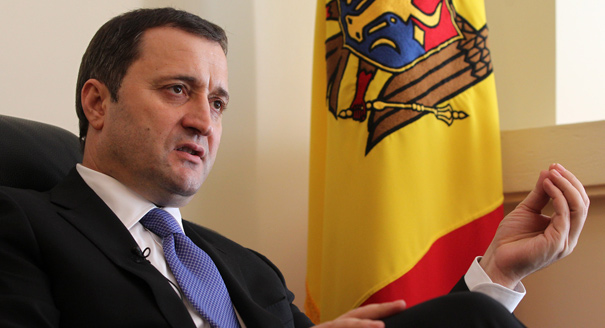
The dramatic arrest of former prime minister Vlad Filat is probably the work of his fiercest political rival utilizing an unprecedented mistake. It will help expose Moldova’s culture of corruption but may put a halt to its integration with the EU.
Moldova is undergoing a political earthquake. On October 29, the country’s short-lived pro-European government fell after being voted down by a no-confidence motion in Parliament. The governing coalition had looked to be doomed ever since; two weeks ago, the former prime minister Vlad Filat—who was also the leader of one of the chief parties in the current governing coalition—was arrested by masked anti-corruption officers right inside the country’s parliament building.
Filat is being accused of direct involvement in the massive corruption scandal termed the “robbery of the century.” For much of this year, after it was revealed that in 2014 1 billion dollars—or 15 percent of the GDP of one of Europe’s poorest countries—was mysteriously siphoned out of Moldova’s three main banks, tens of thousands of Moldovans have protested on the streets. The money has not been recovered.
The former prime minister is now in preliminary detention for thirty days. He has denied the charges, despite damaging new evidence implicating him in the banking scandal.
The speed of these events took Moldovans by surprise and looked like a setup by Filat’s main political opponent, Vlad Plahotniuc. A day earlier, according to an agreement between leaders of the governing coalition, the Prosecutor General was supposed to tender his own resignation in Parliament. Instead, the Prosecutor General requested that Filat be stripped of his parliamentary immunity. Rival party leaders spoke out against him, and 79 parliamentary deputies out of 101 voted in favor of the move.In an emotional speech in Parliament, Filat said that he was a scapegoat and those attacking him might be the next targets. However, evidence implicates Filat in taking more than 200 million dollars in bribes and establishes his links to Ilan Shor, the businessman who is the main suspect in the banking scandal.
For years, Moldova has been dominated by the “Two Vlads,” rival oligarchic politicians with a pro-European political ideology, ironically termed “the two roses of Moldovan politics” by Romanian analyst Dan Dungaciu.
The downfall of Filat looks to have been the work of the other Vlad, Vlad Plahotniuc. In 2013, Plahotniuc was already seen to have struck a deadly blow against Filat after the Constitutional Court banned Filat from holding the post of prime minister. The disillusioned Filat likely turned his attention to business (as usual).
An influential businessman initially closely connected to Communist leader and former president Vladimir Voronin, Plahotniuc entered politics shortly before the 2009 elections.
After becoming the leader of the Democratic Party, he consolidated both the party’s and his own influence in Moldova, gaining control of major media outlets, parts of the financial-banking system, hotel chains, and the oil trade.
On the same day as Filat was arrested, Plahotniuc left his own party, saying that he wanted to avoid any suspicion of interference in the judicial process until the investigation of the banking scandal was over. This by no means signifies, however, that he has left Moldovan politics.
Filat’s arrest is just the tip of the iceberg, concealing a pervasively corrupt political system.
Over the past six years, Moldova has undergone a sad decline, from being hailed as the “success story” of the Eastern Partnership to being called a “captured state” by the secretary general of the Council of Europe.
The politicization of state institutions deepened in 2009, the year a new pro-European coalition took office with Filat at its head as prime minister. Prominent state positions were distributed among the three governing parties. Strategically, Plahotniuc controlled the judiciary system and law enforcement from the beginning.
The billion-dollar banking scandal was only the most dramatic of many episodes of corruption. The years 2011¬2013 saw “raider attacks” on the economy that involved corrupt Moldovan judges, European companies, and shady Russian businesses.
In April of this year, British investigative company Kroll published a report—which was soon leaked—on the missing money, commissioned by the heads of the National Bank, the Anticorruption Center, and the Secret Service. They all claimed they were perfectly aware of the criminal schemes and had already informed the prime minister, the Parliament, and the president. This put the spotlight on a system where state servants had no independence but merely waited for instructions from their political masters.
What of the country’s supposed pro-European reforms? Experts claim they were a mere imitation carried out in order to obtain political and financial support from the EU. In part because of the geopolitics of EU¬Russia competition, international organizations only belatedly began noticing what ordinary Moldovans have known for years.
Filat’s arrest has put the country’s governing coalition in peril, leaving it vulnerable to a vote of no confidence, which collected the necessary 65 votes of support. Early elections are now on the cards.
Broadly speaking, Filat’s arrest might have a positive impact if it strikes a blow against the culture of political impunity and silence about high-level corruption. More legal cases may follow that will involve officials outside of Filat’s circle and empower law enforcement and anti-corruption officials.
The arrest should also be a signal for the EU that it is time to end its policy of pretending that Moldova’s leaders are genuinely committed to pro-European reform and the fight against corruption.
The now-defunct, nominally pro-European government fell victim to its own inability to fight corruption and modernize state institutions. There is a tangible prospect that the pro-Russian opposition will use popular revulsion to come to power and will fulfill its promise to stop Moldova’s cooperation with the EU. This is not likely to make life in Moldova any better. The lesson is clear—instead of focusing on geopolitics, the EU should put the wish of Moldovans to live in a better country first.
Correction: This commentary was updated on October 29 to reflect the no-confidence vote by Parliament that day.
Daria Goncearova is a former Moldovan diplomat and a Brussels-based researcher on the Eastern Partnership region. Balazs Jarabik is a visiting scholar at the Carnegie Endowment for International Peace.

Political analyst, former Slovak diplomat, and consultant specializing in Eastern Europe
Daria Goncearova
Carnegie does not take institutional positions on public policy issues; the views represented herein are those of the author(s) and do not necessarily reflect the views of Carnegie, its staff, or its trustees.

Networks—from international payments platforms to key economic sectors—underlie many aspects of U.S. power. But they are suffering under an extractive approach to foreign policy.
Daniel W. Drezner
While Russia is not ready to sue for peace on Europe’s terms, it could still either seek a ceasefire in Ukraine or try escalation. Brussels needs to prepare for both and prioritize that preparation over normative discussions.
Kadri Liik
Five major trends are shaping U.S. policy in the Middle East.


Daniel C. Kurtzer, Aaron David Miller
American power is entrenched in Europe. Yet the depth of this relationship has become a source of unease in Europe and Europeans are working to reduce their exposure to the vicissitudes of U.S. politics wherever they can.

Sophia Besch, Tara Varma

Autonomous AI agents are increasingly prevalent in cyberspace. The EU needs a real-time monitoring strategy, to invest in AI defenses, and to reduce its strategic dependence on U.S. frontier models.


Raluca Csernatoni, Patryk Pawlak