

Research
- +4
Milan Vaishnav, Rahul Verma, Rukmini S., …
{
  "authors": [
    "Christophe Jaffrelot"
  ],
  "type": "legacyinthemedia",
  "centerAffiliationAll": "dc",
  "centers": [
    "Carnegie Endowment for International Peace"
  ],
  "collections": [],
  "englishNewsletterAll": "ctw",
  "nonEnglishNewsletterAll": "",
  "primaryCenter": "Carnegie Endowment for International Peace",
  "programAffiliation": "SAP",
  "programs": [
    "South Asia"
  ],
  "projects": [],
  "regions": [
    "South Asia",
    "India"
  ],
  "topics": []
}
Source: Getty
The use of tantrics has been a routine practice for decades and this hidden face of politics in India is surprisingly under-reported.
Source: Indian Express
Last month, a video showing Nitish Kumar in the company of a tantric (who, on top of it, spoke against Lalu Prasad) went viral on social media. Certainly, to fight one’s political adversaries (or coalition partners!) by resorting to such “godmen” is not quite proper in the secular republic that is India. But this has been a routine practice for decades and this hidden face of politics in India — yet another — is surprisingly under-reported.
In Nine Lives, William Dalrymple narrates that he met several politicians in West Bengal and Bihar who turned to tantrics. They not only worshipped skulls but also offered animal sacrifices to the goddess before standing for election. One of them explained that in his state, Bihar, “politics is only for the strong” and that “tantra is much more powerful than conventional religion”. Indeed, it is all about power. And local politicians are not the only ones to resort to tantrics in the hope of benefitting from their power; even prime ministers have done the same.Indira Gandhi did it “privately” to protect Sanjay Gandhi after the Emergency. Pupul Jayakar wrote in her biography that she had performed Laskshachandi Path, a ritual where 1,00,000 verses were recited to invoke the primordial power and energy of Chandi, the all-encompassing mother. These rituals were held in the Kali temple of Jhansi. The yagna, the oblations to fire, and the recitation of the verses were conducted in secret from 1979 to 1983. It seems that she continued to do it after Sanjay died to disqualify a rival using the “evil eye”. According to Jayakar, she had received “secret reports of tantric rituals and black magic rites, being performed to destroy me and my sanity”.
This is one of the reasons why Indira Gandhi turned to Dhirendra Brahmachari, who “was one of those people who frightened Indira by evoking dark tantric rites practised in secret sanctuaries by those who wished to destroy both her and Sanjay. Brahmachari doubtless spoke to her of other equally powerful rites and mantras that could protect her from these evil forces”. Brahmachari was eased out of the Gandhi household in 1984, after the death of Indira. But other tantrics were used by top politicians in the 1990s.
Chandraswami is a case in point. He admitted to holding different powers corresponding to three kinds of ritual — the maha mrityunjay yajna (to conquer death), the bagla mughi yajna (to eliminate enemies) and the rudra mahayagya (to do harm to one’s adversaries). Chandraswami was remarkably popular across the board of Indian politics. Late PM Chandra Shekhar had been introduced to him in 1971 in New Delhi “by a friend, a Congress minister, who described him as a great person who had supernatural powers”.
But P.V. Narasimha Rao was perhaps his most prestigious follower. Chandraswami declared before the Jain Commission that when he visited Rao at his official residence as prime minister, his car was not inspected, which was a highly exceptional privilege. However, at the same hearing, he contested allegations that he had used yagya (sacrificial rites) to help Rao become prime minister.
Chandraswami used his status as an “eminence grise” to serve as an intermediary in all kinds of affairs. With disciples in the business world, he was well placed to intervene in transactions between them and Indian politicians. In his circle were Adnan Khashoggi, a Saudi arms merchant and, via him, the sultan of Brunei, as well as the al-Fayed brothers, Egyptian businessmen who bought Harrods of London in controversial circumstances.
Chandraswami also had contacts among the Indian diaspora, including pickle magnate Lakhubhai Pathak. He was designated as one of the close associates of then President Giani Zail Singh, who had sought to remove Rajiv Gandhi from the post of prime minister.
In Birbhum, Dalrymple was told that tantrics had been under attack because of the hostile attitude of the then CPM government. Today, the brand of secularism that communism once embodied is on the downward trend. But the tantric of Birbhum, whom Dalrymple interviewed, in any case told him, “I am not worried.
Our local communist MP may tell his followers that what we do is superstition, but that doesn’t stop him coming here with a goat to sacrifice when he wants to find out from us what the election results will be.” Indeed, the belief in the power of the tantrics is all pervasive.
Interestingly, last month, Nitish was not apologetic when the controversy gained momentum. Giriraj Singh, a minister of state in the Union government who was responsible for the release of the video, claimed that Nitish was so desperate to win the election that he resorted to black magic. Prime Minister Narendra Modi himself called Nitish Kumar “loktantric”.
Hindustani Awam Morcha chief Jitan Ram Manjhi denounced the duplicity of the chief minister in these terms: “On the one hand he talks about secularism and socialism and on the other hand he meets tantrics. He is taking Bihar back to the dark ages.” In reaction, Nitish simply declared that he was not an atheist, but a believer; that he had no problem in meeting an Aughad (tantric) and that others should have no objection to it either because, after all, tantricism was a sect of Hinduism.
This is revealing of the growing acceptability of practices that, till recently, had to remain secret. Just before the 2009 general elections, then Prime Minister Manmohan Singh had accused L.K. Advani of resorting to black magic and approaching tantrics to get to the seat of power. The BJP leader had then opted for the denial mode, but times are changing and the rational mindset is not the alpha and omega of the political discourse anymore.
This article was originally published in the Indian Express.
Former Nonresident Scholar, South Asia Program
Jaffrelot’s core research focuses on theories of nationalism and democracy, mobilization of the lower castes and Dalits (ex-untouchables) in India, the Hindu nationalist movement, and ethnic conflicts in Pakistan.
Recent Work

Milan Vaishnav, Rahul Verma, Rukmini S., …
Christophe Jaffrelot
Carnegie does not take institutional positions on public policy issues; the views represented herein are those of the author(s) and do not necessarily reflect the views of Carnegie, its staff, or its trustees.
Economic recovery has brought Sri Lanka a modicum of stability, but domestic strains and great-power rivalry could test how long it lasts.
Avinash Paliwal
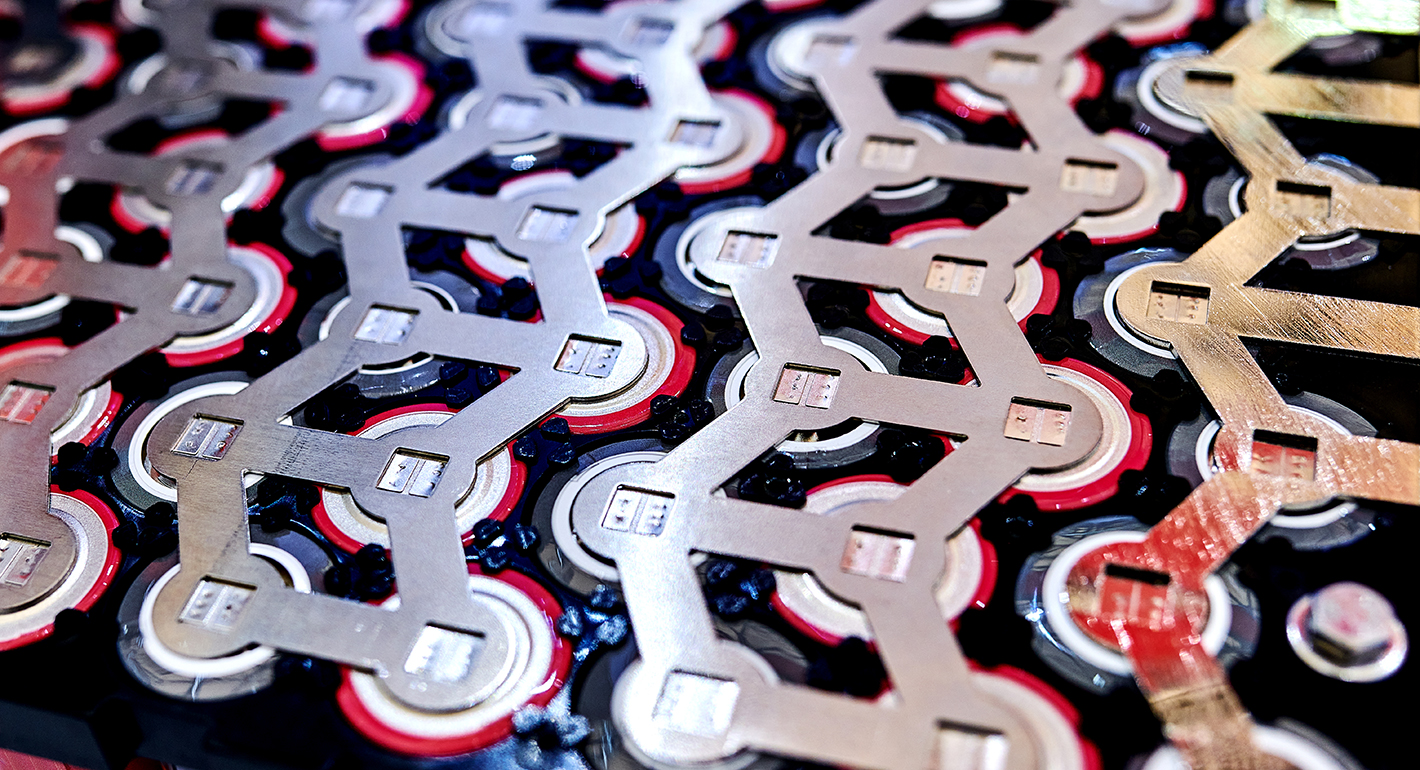
A deep dive into the policy ecosystems behind battery development in China, South Korea, Japan, the European Union (including some of its member states), the United States, Canada, and India.


Milo McBride, Herbert Crowther, Darcie Draudt-Véjares, …

With the growth in points of friction between the great powers, organizations like the SCO will continue to play a role in the strategic adaptation of the smaller powers caught between them.

Temur Umarov
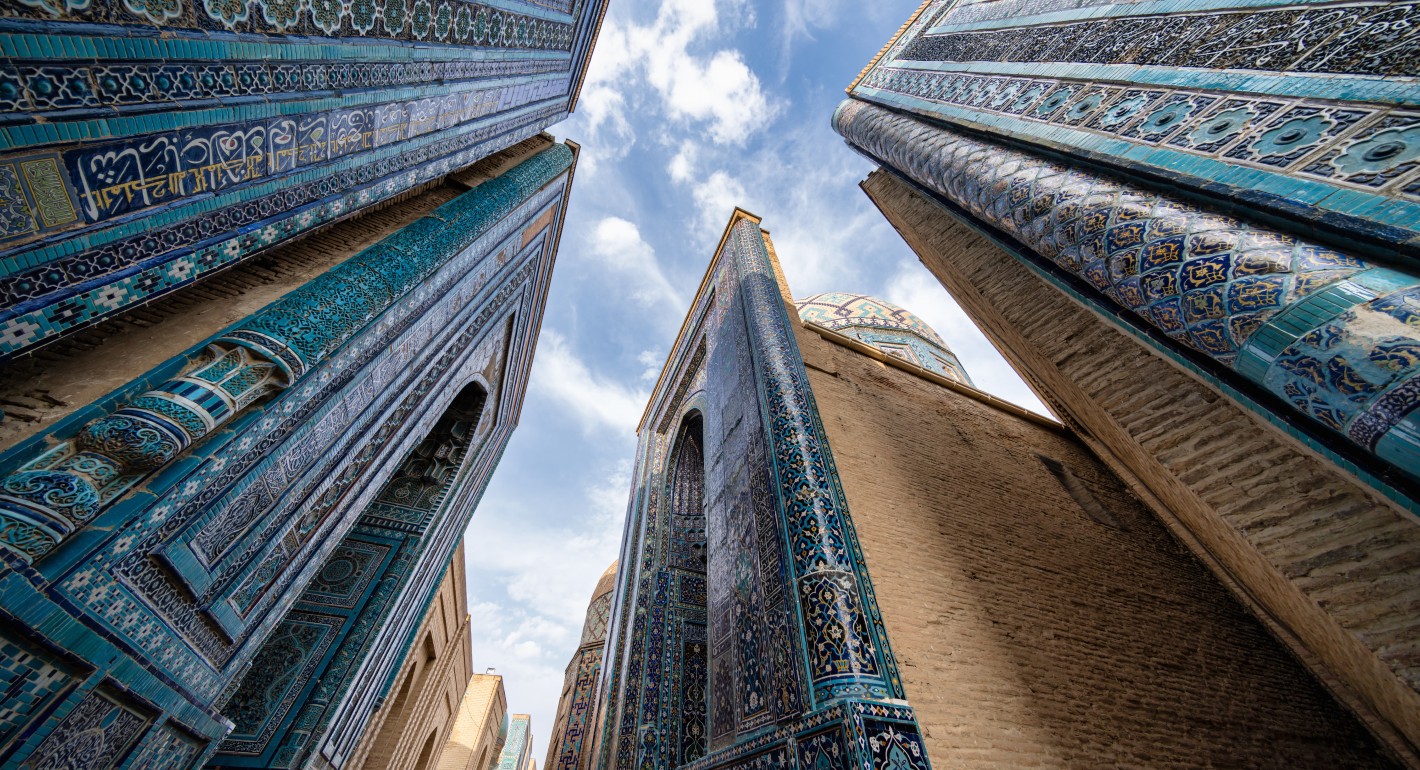
Xi, Putin, and other regional leaders are back-slapping in Bishkek, but the SCO has yet to answer the most serious questions about continental Asia's economic future.

Evan A. Feigenbaum

In any defense establishment, change is an ongoing process. However, despite the best of intentions, existing bureaucracies, bound by habit and years of socialization, have their limits in implementing transformative change.

Anit Mukherjee