

Commentary
Judy Dempsey
{
  "authors": [
    "Judy Dempsey"
  ],
  "type": "legacyinthemedia",
  "centerAffiliationAll": "dc",
  "centers": [
    "Carnegie Endowment for International Peace",
    "Carnegie Europe"
  ],
  "collections": [],
  "englishNewsletterAll": "ctw",
  "nonEnglishNewsletterAll": "",
  "primaryCenter": "Carnegie Europe",
  "programAffiliation": "EP",
  "programs": [
    "Europe"
  ],
  "projects": [],
  "regions": [
    "Europe",
    "Eastern Europe",
    "Iran"
  ],
  "topics": [
    "EU",
    "Economy",
    "Migration"
  ]
}
Source: Getty
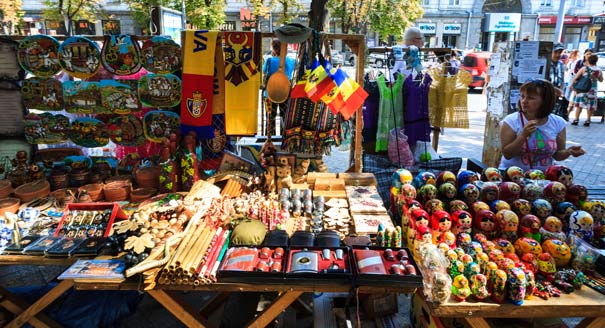
Migration from Eastern Europe to Western EU member states is partly driven by the corruption perpetuated by political elites and local oligarchs.
Source: Washington Post
Every summer, Svetlana Buzea and her family pack the car and drive from Germany through Poland and Ukraine to her native Moldova for vacation. Every time she comes back, Svetlana has no regrets about having left her homeland six years ago.
“People are now very, very poor in my country. Everything has become so expensive,” she said. “Above all, it’s the corruption. I can’t stand it. You even have to pay a bribe in order to get an appointment with the doctor. That is one of the main reasons why I left in the first place.”
“And you know what, its getting worse,”Svetlana, aged 40, told me. “Any money given by the E.U. is just wasted by those corrupt politicians. The ordinary people do not benefit. It’s very sad what is happening to my country. I can’t see myself returning home.”Svetlana’s story reveals a lot about the impetus for the mass migration of people from east to west in Europe, and the effect it is having on the countries they leave behind.
Hundreds of thousands of young people from across Central, Eastern and South-Eastern Europe have moved to work in Britain or Ireland, Germany or Sweden, Spain or Portugal. At the last count, there were 900,000 Poles working in Britain. Since the Berlin Wall was torn down in November 1989, nearly 20 million people from Central, Eastern and South Eastern Europe (CESEE) have left the region. That’s about 5.5 percent of the population, according to the International Monetary Fund.
The migration of talented people is not only linked to the lack of opportunity or to the lure of better living conditions in the Western member states of the E.U. It is also driven by the pervasive corruption perpetuated by the political elites and the local oligarchs, especially in the Western Balkan and South Eastern countries. Those who don’t want to become part of this institutional network of corruption escape.
But because they flee, they give the corrupt elites a life-line. The last thing these elites want is a vibrant, educated, civil society that will demand change, transparency, accountability and above all a vibrant democracy.
For the West, on the other hand, the benefits of migration are clear.
The receiving countries have access to highly motivated and generally well-educated people. It hard to nail down the statistics, but there are many migrants doing jobs commensurate with their qualifications, such as doctors and engineers. Others are buying time, opting for jobs way below their qualifications.
Svetlana, for example, is a graduate in public administration. In Berlin she has a regular job in a laundry. She sends back money to her ageing parents. The rest she saves in the hope of buying an apartment in the German capital.
The remittances are a major plus of migration. They fund education and accumulate savings, if one day the migrants might return home.
But as Daria Zakharova, one of the authors of a new IMF report on Emigration and its Economic Impact on Eastern Europe, told me, there’s a flip side. “Emigration of young and skilled people from Eastern Europe has likely benefited receiving countries in the West,” she said in an interview. “But it has had a negative impact on growth, competitiveness and income convergence in the sending countries.” Two-thirds of the CESEE countries had lower G.D.P. growth because of migration or lower skills back home.
In short, this brain drain has a debilitating effect on the economy. It is the best and brightest who often bolt, leaving behind unskilled and an ageing population. Remittances are no compensation for these CESEE countries wanting to attract foreign investment or find sufficient public funds to finance an ever-ageing population.
Then there are the political effects. During the Soviet era, the Kremlin either locked away dissidents or forced them into exile. Other communist countries used similar methods. It was all about containing or snuffing out any potential, bigger dissident movement.
Fast forward a quarter of a century later. The IMF study finds that the quality of the institutions, such as the rule of law, accountability and control of corruption affects the incentives to emigrate.
It argues that the weaker the institutions in their home countries, the more likely the young and educated are motivated to seek better opportunities abroad. If emigration leads to the exit of those who could have been agents of change, it can also slow the improvement of institutions.
Moldova is a prime example. Local and Russian-based oligarchs run the entire country. They own enterprises and have infiltrated the state structures and administration. They run the main political parties and own the banks. Two years ago they perpetrated a fraud that destroyed peoples’ savings and cost 13 percent of the country’s GDP. Despite mass protests, no one was held accountable and the same corrupt elite remains in power.
Svetlana saw the rot first-hand. “I worked in the interior ministry. I saw what was happening. You criticize, then you are kicked out or won’t get promoted. I ran out of energy. Hats off to those who remain to try and change things.”
This article was originally published by the Washington Post.

Nonresident Senior Fellow, Carnegie Europe
Judy Dempsey is a nonresident senior fellow at Carnegie Europe
Recent Work
Judy Dempsey
Judy Dempsey

While the EU and European governments are embracing the much-lauded middle-power moment, this entails three difficult conundrums.

Richard Youngs

Europe is facing rising populism internally as well as external pressures from Russia, China, Turkey, and the United States.

Dimitar Bechev

A notable degree of participative democracy has firmly arrived in Europe. But to have more far-reaching impact, democratic deliberation needs to move into a radically new phase.
Richard Youngs

Much has been said of the changes Brussels is trying to make to the EU enlargement process. Here’s why gradual integration might—or might not—be the answer.
Dimitar Bechev
Economic recovery has brought Sri Lanka a modicum of stability, but domestic strains and great-power rivalry could test how long it lasts.

Avinash Paliwal