

Article
Thomas Carothers
{
  "authors": [
    "Thomas Carothers"
  ],
  "type": "other",
  "centerAffiliationAll": "dc",
  "centers": [
    "Carnegie Endowment for International Peace"
  ],
  "collections": [
    "Violence and Conflict",
    "Civic Activism"
  ],
  "englishNewsletterAll": "democracy",
  "nonEnglishNewsletterAll": "",
  "primaryCenter": "Carnegie Endowment for International Peace",
  "programAffiliation": "DCG",
  "programs": [
    "Democracy, Conflict, and Governance"
  ],
  "projects": [],
  "regions": [],
  "topics": [
    "Democracy",
    "Foreign Policy",
    "Civil Society"
  ]
}
Source: Getty
The troubling, even alarming trend of closing space for civil society around the world has a direct but not always recognized link to the large problem of state fragility.
The complex nature of state fragility impedes the search for effective policy responses. While a useful shorthand, state fragility spans a vast sweep of contexts, from troubling patterns of poor state functioning to complete state breakdown. Different indices of fragility produce differing lists of fragile states. The range of causal factors contributing to fragility is wide. Yet as international attention to fragility has increased in recent years, it has converged around at least one central common feature of fragile contexts – systemic exclusion – and one common prescription – encouraging inclusive governance.
Of course, exclusivity and inclusivity are themselves not simple concepts, each having its own multiplicities of meaning and interpretation. The adjective “inclusive,” for example, now appears almost everywhere in policy discussions in the development world, attached to any number of nouns as a polymorphous good – whether it is inclusive politics, inclusive governance, inclusive economics, inclusive states, or inclusive development. Moreover, inclusivity is not just about politics and economics – social and cultural inclusiveness is also relevant. For some analysts, democracy is key to achieving inclusive governing systems. For others, democracy is chronically riddled with patterns of exclusivity due to the tendency of elites to dominate democratic politics.
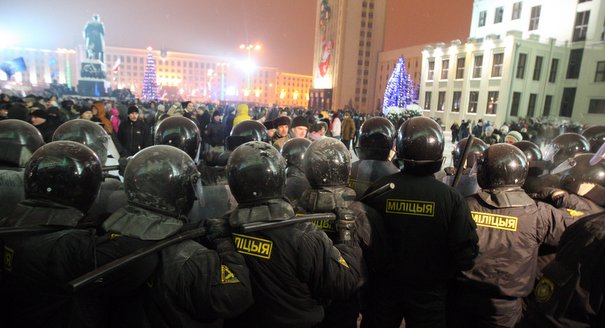
Understanding fragility through the lens of exclusion and inclusion highlights the important connection between fragility and the growing global trend of closing space for civil society. During the past 10 years, a startlingly large number of governments in developing and post-communist countries – by some measures more than 70 governments – have taken steps to curtail, sometimes drastically, independent civil society within their countries. They have done so through legal and regulatory measures restricting the ability of civic groups to organize and operate, extralegal harassment and intimidation, and political messaging that calls into question the legitimacy and authenticity of such organizations. A common element of governments’ efforts to close space for civil society is measures restricting foreign support for civil society and denunciations of such foreign support as subversive activity.

Harvey V. Fineberg Chair for Democracy Studies; Senior Fellow, Democracy, Conflict, and Governance Program
Thomas Carothers, a senior fellow in the Carnegie Endowment for International Peace’s Democracy, Conflict, and Governance Program, is a leading expert on comparative democratization and international support for democracy.
Recent Work
Thomas Carothers
Thomas Carothers
Carnegie does not take institutional positions on public policy issues; the views represented herein are those of the author(s) and do not necessarily reflect the views of Carnegie, its staff, or its trustees.

The EU can impose sanctions but struggles to enforce them without the United States. With Washington increasingly disinterested in backing European interests, the bloc must now fend for itself.


Nicu Popescu, Tiago Antunes
Global and rising powers will need to engage with Africa’s priorities and agency in order to secure the continent’s increasingly attractive partnerships.

Fonteh Akum

Rubio’s recent visit brought welcome attention, but more capital requires governance changes that may be a hard sell for regional governments.

Jennifer B. Murtazashvili

America’s foreign-policy objectives have grown more demanding while Americans have demanded greater focus on their own affairs.

Stephen Wertheim

Japan’s long-term security policy is driven by concerns about China, and there is little appetite for (or interest in) pursuing a confrontation with Moscow.

James D.J. Brown