

Paper
Christopher S. Chivvis, Rohan Mukherjee, Milan Vaishnav
{
  "authors": [
    "Milan Vaishnav"
  ],
  "type": "legacyinthemedia",
  "centerAffiliationAll": "dc",
  "centers": [
    "Carnegie Endowment for International Peace",
    "Carnegie India"
  ],
  "collections": [],
  "englishNewsletterAll": "ctw",
  "nonEnglishNewsletterAll": "",
  "primaryCenter": "Carnegie Endowment for International Peace",
  "programAffiliation": "SAP",
  "programs": [
    "South Asia"
  ],
  "projects": [],
  "regions": [
    "South Asia",
    "India"
  ],
  "topics": [
    "Political Reform",
    "Domestic Politics"
  ]
}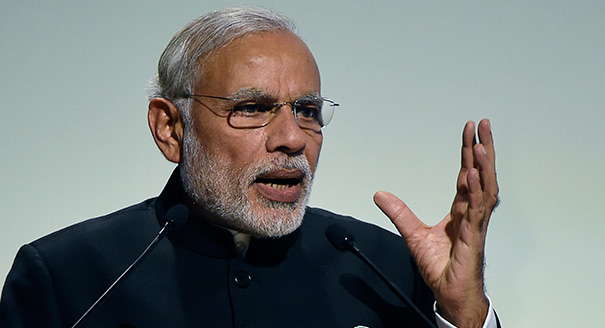
Source: Getty
Demonetization alone is not enough to end dirty money in Indian politics. Modi must also close legal loopholes, tie tax breaks to political parties with transparency, and directly attack the underlying drivers of the black economy.
Source: Financial Times
Leave it to India’s government to give America’s presidential election a run for its money in the race to claim the distinction of 2016’s greatest spectacle.
Nearly three weeks ago, Indian prime minister Narendra Modi shocked the country by announcing that high-denomination currency — together accounting for 86 percent of currency in circulation by value — would no longer be legal tender.
The move was a striking escalation of the government’s war on India’s black economy, which accounts for roughly twenty percent of gross domestic product. But what might have sounded straightforward in theory has proved far messier in practice. In the intervening days, the measure has triggered serpentine queues outside of banks and ATMs, disrupted normal business activity, and spawned dozens of bureaucratic amendments and clarifications meant to mitigate the dislocation. This short-term disarray has prompted harsh questioning about Modi’s strategic calculus.
First, Modi campaigned on a pledge to recover ill-gotten wealth laundered by crooked politicians and businesspeople and then channel it into the bank accounts of ordinary Indians. His government has made only incremental progress thus far, and the ruling party is desperate to demonstrate tangible victories as it nears the mid-point of its tenure.
Second, Modi hopes to reclaim the larger economic narrative at a time when the headline numbers show an Indian economy that is humming along, but micro-data suggest a market encumbered by debt-laden corporates, sagging public sector banks, and weak exports.
As is the case in so many countries, elections in India have become grotesquely expensive. In recent years, political competition has surged with an alphabet soup of parties contesting elections at all levels. In India’s last general election, no fewer than 464 political parties fielded more than 8,000 candidates. And there are more elections than ever; thanks to a 90s-era constitutional amendment that mandated a new, three-tier decentralised political structure, India added 3 million elected positions in one fell swoop.
The reality of increasingly costly elections has collided with ineffectual political finance regulations and a swelling black economy, where firms happily conduct business in the shadows to avoid taxes and government red tape.
On paper, there are strict limits on candidate expenditure: Rs7m for parliamentary elections ($102,000) and Rs2.8m ($41,000) for state elections. In practice, actual spending is orders of magnitude larger.
In a rare moment of honesty, the late BJP Member of Parliament Gopinath Munde admitted that he spent Rs80m ($1.2m) on his 2009 re-election. Munde is no outlier. In one state election campaign I tracked in Andhra Pradesh in 2014, local candidates were spending between $1.5m – $2m while some parliamentary candidates planned to expend multiples of that amount. According to a U.S. diplomatic cable obtained by Wikileaks, one sitting Member of Parliament joked in 2009 that he planned to spend an amount roughly equal to the legal limit on Election Day alone.
Candidates are pressed to splurge on salaries for party workers, attendance “fees” for participants at rallies, lavish feasts for constituents, and — crucially — gifts and handouts on the eve of voting. These handouts, which constitute a significant fraction of overall spending, run the gamut — from country-made liquor to free mobile phone recharges. While such gifts do not guarantee success, they do signal a candidate’s credibility.
According to the tax returns of India’s six national parties, as much as three-quarters of their income hails from undisclosed sources. The majority of these funds fill party coffers in the weeks and months preceding elections. Indeed, it is hardly a coincidence that Modi’s manoeuvre comes just months before state polls in Punjab and Uttar Pradesh — the latter is India’s most populous state and represents an especially coveted electoral prize.
While Modi’s ruling Bharatiya Janata Party (BJP) is hardly a paragon of virtue when it comes to managing its money, as the ruling party at the centre and the country’s most prominent political brand, it can weather a short-term cash crunch. The BJP has calculated that its smaller rivals, more reliant on cash-intensive small enterprises and less plugged into the world of high finance, will bear the brunt of the pain.
The move harkens back to Prime Minister Indira Gandhi’s 1969 move (later reversed) to ban corporate donations to political parties, which allowed her to appear as an anti-corruption hero while choking off funds to the Congress Party’s rivals. Gandhi — like Modi — knew that the powers of incumbency would ensure that party coffers would not be empty for too long.
On its own, not a chance. Indian authorities have already released new high-denomination notes to replace the obsolete ones. This new currency, while harder to counterfeit, will soon become a vehicle for new undocumented transactions. As one commentator noted, demonetisation is like liposuction: it represents a one-time reduction in body fat. But if the body wishes to maintain its new physique, a healthy diet and regular exercise are required.
First, he must work to plug glaring legal loopholes. Currently, parties are not required to disclose the identity of contributors who donate less than 20,000 rupees ($295). This means that donors can make innumerable contributions of 19,999 rupees — no questions asked. Furthermore, while there are limits on candidate expenditure, parties can spend an unlimited amount in a given race as long as they do so “on behalf of the party program.”
Second, the tax breaks parties enjoy must be tied to the adoption of rigorous transparency standards. Despite the fact that India’s information commission ruled that political parties are subject to India’s sweeping Right to Information Act, parties of all stripes — including the ruling BJP — have responded by questioning the body’s legal authority.
Finally, there is no substitute for a direct attack on the underlying drivers of the black economy. As long as the vestiges of India’s License Raj persist, firms will avoid doing business above board. The prime minister has pledged to upgrade India’s abysmal showing on the World Bank’s “ease of doing business” rankings, but progress has been halting.
If it succeeds (and initial reports of execution failures — from arbitrary exemptions to misprinted currency notes — raise alarm bells), his short-term position stands to benefit. But if Modi seizes the opportunity to push the envelope, he has a unique opportunity to cleanse the dark underbelly of Indian politics.
No one would dare call that business as usual.
This article was originally published in the Financial Times.

Director and Senior Fellow, South Asia Program
Milan Vaishnav is a senior fellow and director of the South Asia Program and the host of the Grand Tamasha podcast at the Carnegie Endowment for International Peace. His primary research focus is the political economy of India, and he examines issues such as corruption and governance, state capacity, federalism, and electoral behavior. He also conducts research on the Indian diaspora.
Recent Work

Christopher S. Chivvis, Rohan Mukherjee, Milan Vaishnav



Sophia Besch, Eric Ciaramella, Steve Feldstein, …
Carnegie does not take institutional positions on public policy issues; the views represented herein are those of the author(s) and do not necessarily reflect the views of Carnegie, its staff, or its trustees.
The Bureau of Industry and Security needs to adjust its focus and practices to maintain its position as the U.S. government’s primary champion of international technological competition.

Geoffrey Irving
Despite myriad challenges and occasional stumbles, the new Hungarian government is moving ahead with energy and conviction to uproot years of illiberalism and corruption and rebuild Hungarian democracy.

Thomas Carothers

Depleted financial reserves and a shrinking tax base mean it is no longer possible to simultaneously deliver high defense spending, price stability, and economic growth.

Alexandra Prokopenko

The books, podcasts, and films that explain the world it made.

Andrew Leber

Blurring the line between humans and animals is a long-standing tradition in social utopian prose. In his latest novel, Leonid Bershidsky reminds us that in social experiments, people are often treated no differently than animals.

Alexander Baunov