

Paper
Douglas H. Paal
{
  "authors": [
    "Douglas H. Paal"
  ],
  "type": "legacyinthemedia",
  "centerAffiliationAll": "dc",
  "centers": [
    "Carnegie Endowment for International Peace",
    "Carnegie China",
    "Carnegie Russia Eurasia Center"
  ],
  "collections": [
    "China’s Foreign Relations",
    "U.S.-China Relations"
  ],
  "englishNewsletterAll": "asia",
  "nonEnglishNewsletterAll": "",
  "primaryCenter": "Carnegie China",
  "programAffiliation": "AP",
  "programs": [
    "Asia"
  ],
  "projects": [],
  "regions": [
    "North America",
    "United States",
    "East Asia",
    "South Korea",
    "China",
    "Southeast Asia",
    "North Korea"
  ],
  "topics": [
    "Foreign Policy"
  ]
}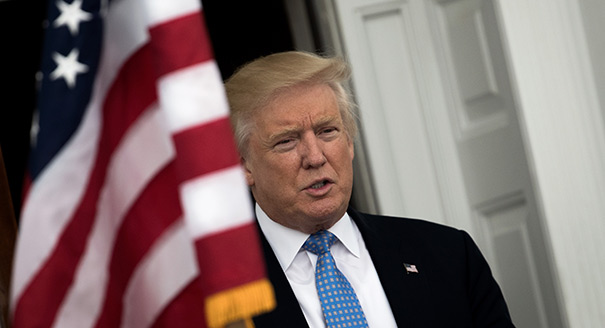
Source: Getty
The Donald Trump administration is beginning to take shape, but still has a long way to go in identifying personnel and defining policy goals, particularly in Asia.
Source: South China Morning Post
The Donald Trump administration is beginning to take shape, but still has a long way to go in identifying personnel and defining policy goals. In Asia, among other things, Trump has pulled back from the Trans-Pacific Partnership (TPP), called on allies to do more in their own defence, identified China as the key to dealing with North Korea, and promised to build up the US military, including the navy in Asia. It has still to articulate broader goals.
On trade, Trump wants to pursue more advantageous bilateral free trade agreements rather than the TPP. This might have the benefit of building on the agreements reached under the TPP, but it offers the disadvantage of risking exposure of American and other businesses to a crazy quilt of mismatched rules and tariffs. The Obama administration mismanaged the politics and procedures of the TPP, and the price of failure will be high, including giving China the lead in advancing multilateral trade agreements in the region at the expense of America’s traditional lead.
On defence spending, Trump is pushing against an open door in Japan, where Prime Minister Shinzo Abe welcomes foreign pressure to move his country to more spending and readiness on defence. Given Japan’s deep pacifism, however, movement in this direction can be expected to be halting and limited.
South Korea is in a political crisis caused by a scandal, but because of the threat from the North and the need for strategic support, Seoul should also be willing to boost its contribution to defence. But, with an election coming next year, the contest between conservative and liberal candidates is likely to lead to sharp debate.
North Korea has every incentive to step up provocations next year, both to test its new weapons to improve them, and also to rattle the South Korean voting public in an election year, hoping to return a liberal government to power. Previous liberal governments have been more generous to and less demanding of Pyongyang. The North’s provocations are likely to occur early and often, probably even before Trump can assemble a team in depth to manage this increasingly grave challenge to peace in the region. They should begin thinking about this challenge now.
Elsewhere, a legacy of the Obama administration is the apparent demise of the rebalance or pivot to Asia, America’s emblematic major effort to define the region. TPP was the economic leg of the rebalance and is now gone. The diplomatic leg continues but needs work to make up for its emphasis on defence rather than development and regional civilian architecture. The security leg was overplayed, more rhetorically than in substance, leaving an impression of trying to contain rather than balance China, without the clout to follow through.
The Obama primacy of rhetoric over substance is tilting the incoming Trump team in the opposite direction, towards a military build-up, which China can certainly match, thus auguring increased strategic competition.
Traditional American allies Thailand and the Philippines are increasingly estranged from Washington, leaving greater scope for Beijing to cultivate influence. Washington is not competing to meet the political and developmental needs of either nation. Similarly, Malaysia’s US-friendly prime minister quixotically is being investigated for corruption by US authorities, making the US more welcomed on the Malay street than before, but leaving Najib Razak little recourse but to turn to China.
American political campaigns are usually fought over past mistakes, and the incoming challengers tend to swing like pendulums against everything the previous administration stood for. This time is no different, but there is a pressing need to shift from looking in the rear-view mirror to looking at the new world taking shape.
As the Trump administration gathers itself, it should take stock of the post-cold-war re-emergence of regional great powers. America’s success in spreading development and democracy now gives it potential partners – and rivals – in ordering the world’s affairs. Moscow, Beijing and Delhi will join the US in defining the future of Asia, and Washington should figure out how best to advance its interests in this new era. Trump’s non-mainstream approach to Russia might provide an opening to reconstructing a more positive relationship with President Vladimir Putin to this end.
International economic governance is also being challenged. Obama took a mistaken approach to oppose China’s Asian Infrastructure Investment Bank. Beijing is promoting its “One Belt, One Road” integration of Asia, and offering large loans for development. The International Monetary Fund, World Bank and Asian Development Bank are having trouble keeping up with the times with resources and representative governance. The Trump team would do well to surprise the world with a call for an updated Bretton Woods that will more broadly distribute the responsibilities for advancing the economic future.
Finally, Trump can show vision by reorganising the Asian-related components of the US government. The organisation charts of the state and defence departments reflect an immediate post-second-world-war set of needs, not the newly emerging Eurasian reality. The office of European affairs will never take care of Central Asian concerns as well as an office that deals regularly with China and India, for example. This could be an opportunity for much needed downsizing in the government as well, after years of counterproductive bloat.
This article was originally posted in the South China Morning Post.
Distinguished Fellow, Asia Program
Paal previously served as vice chairman of JPMorgan Chase International and as unofficial U.S. representative to Taiwan as director of the American Institute in Taiwan.
Recent Work
Douglas H. Paal

Douglas H. Paal, Tong Zhao, Chen Qi, …
Carnegie does not take institutional positions on public policy issues; the views represented herein are those of the author(s) and do not necessarily reflect the views of Carnegie, its staff, or its trustees.

Ahead of a tough winter for Ukraine, Donald Trump’s swing back toward Russia bodes ill. But instead of panicking, Kyiv’s European allies are focusing on action.

Rym Momtaz

Without a ceasefire with Ukraine on attacking each other’s energy infrastructure—to which the Kremlin is unlikely to agree—the diesel agreement between Putin and Trump is largely for show, rather than representing a genuine increase in the volumes of Russian diesel on the global market.

Sergey Vakulenko

Despite its flop at the box office, the film raises important questions for the climate community to answer.

Leonardo Martinez-Diaz

Funding Ukraine remains a priority for European leaders. As Russia’s war of aggression heads into another winter, two feasible options to mobilize support for Kyiv should be fast-tracked.


Vladyslav Rashkovan, Gregory P. Wilson

In an interview, Rozina Ali discusses her new book on the rise and manifestations of Islamophobia in the United States.

Michael Young