

Article
C. Raja Mohan, Darshana M. Baruah
{
  "authors": [
    "C. Raja Mohan"
  ],
  "type": "legacyinthemedia",
  "centerAffiliationAll": "dc",
  "centers": [
    "Carnegie Endowment for International Peace",
    "Carnegie India"
  ],
  "collections": [],
  "englishNewsletterAll": "ctw",
  "nonEnglishNewsletterAll": "",
  "primaryCenter": "Carnegie India",
  "programAffiliation": "SAP",
  "programs": [
    "South Asia"
  ],
  "projects": [],
  "regions": [
    "United States",
    "South Asia",
    "India",
    "North America",
    "Russia"
  ],
  "topics": [
    "Foreign Policy",
    "Political Reform"
  ]
}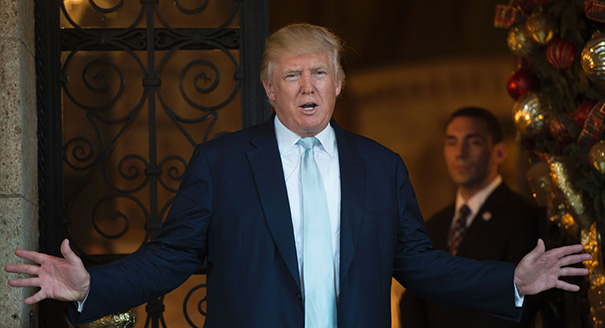
Source: Getty
New Delhi must be prepared for a major discontinuity in the way America and Russia deal with each other and Eurasia.
Source: Indian Express
The invocation of the “foreign hand” to explain unexpected political developments is quite common in the subcontinent. But the last place in the world to have a debate on the “foreign hand” is the United States. Usually, it is Washington that is accused of meddling in the internal affairs of other nations — from promoting military coups to propping up friendly regimes and engineering regime changes. But right now, it is America that is debating the nature and extent of the Russian President Vladimir Putin’s intervention in the elections last November. It is no longer an argument among political hacks in the middle of a bitterly contested election. The issue is serious enough for the US intelligence community to investigate and pronounce on it.
In a report issued last Friday, barely two weeks before Donald Trump is sworn in as the US President, the agencies, in a public version of a highly classified report, said, “Russian President Vladimir Putin ordered an influence campaign in 2016 aimed at the US presidential election. Russia’s goals were to undermine public faith in the US democratic process, denigrate Secretary Clinton, and harm her electability and potential presidency. We further assess Putin and the Russian government developed a clear preference for president-elect Trump.” Although Russia has always sought to fish in America’s domestic waters, the agencies argue that the recent “activities demonstrated a significant escalation in directness, level of activity, and scope of effort compared to previous operations.”
If the charges against Putin are extraordinary, Trump’s response has been unprecedented. After he got a classified briefing from the agencies, Trump tweeted there was “absolutely no evidence” that the Russian hacking of the Democratic Party’s National headquarters had “affected the election results”. Trump also reaffirmed his commitment to rebuild relations with Putin’s Russia. Having good relations with Russia, he tweeted “was not a bad thing. Only ‘stupid’ people, or fools, would think it is bad!” Those are strong words, even for Trump.
A number of things stand out in this fascinating episode. First is Russia’s resurgence. Since the end of the Cold War, Russia has been dismissed by the US and Europe as a power in terminal decline. While the West saw Putin as a nuisance rather than a threat until recently, it is now crediting him with the capacity to manipulate the domestic politics of the world’s most powerful nation! No wonder the Russian elite, which aches for a return to the great power status it enjoyed in the 20th century and deeply resents the perceived humiliation after the Cold War, is loving it.
Putin has brilliantly played a weak hand. His moves have included the annexation of Crimea in 2014, sustained pressure on eastern Ukraine, promoting anti-Western political trends in Eastern Europe and the use of force in Syria. Many in the West now fear that Putin is all set to poke his nose in the upcoming elections in the Netherlands, France and Germany. Putin has also surprised the world by rapidly modernising Russia’s conventional military forces, strengthening the nuclear deterrent, honing skills in hybrid warfare and directing Russia’s national power towards achieving specific international objectives. From being ignored to becoming feared in a short while is a significant achievement for any leader in international politics.
It is equally amazing to see an American political leader so relentlessly contest mainstream American thinking on foreign policy. Given the adversarial history with Moscow, every American political leader would recoil at the thought of being seen as soft on Russia. Trump has defied that conventional wisdom. Through his presidential campaign, Trump praised Putin as a strong leader and talked up the prospects for negotiating a deal with Russia. Those who hoped Trump might moderate his position after the elections, especially after receiving intelligence briefings, have been disappointed with his unyielding optimism on Russia.
The logic for a grand bargain between Trump and Putin is not difficult to discern. For Trump, a deal with Russia will help America recoup from an era of global adventurism that saw the squandering of American blood, treasure and reputation. As Trump tweeted last week, “We have enough problems around the world without yet another one” with Russia. He also hoped that both countries can “work together to solve some of the many great and pressing problems and issues of the world”.
For Putin, his bold manoeuvres have come with a considerable price — of unstable borders and international sanctions. As a realist, Putin knows he needs to cash in on the leverage he has built up over the last few years — sooner than later. This could well set the stage for a big effort by Trump and Putin to find accommodation on a range of issues, from cyber security to Syria, Ukraine to nuclear weapons.
While each of these issues is complicated in its own right, there is enough room for the two leaders to find ways to work together. To be sure, Trump will face huge resistance in Washington. Unlike Putin, Trump will not have a free hand in the divided government of the United States and the hostility of the foreign policy establishment and the mainstream media.
One way or another, the Trump-Putin bromance is likely to define international politics through much of 2017. A genuine accommodation could significantly alter great power equations and reshape Eurasian regional politics. Trying and failing to construct such a grand bargain might, however, push US-Russian ties into a deep freeze. Either way, Delhi must be prepared for a major discontinuity in the way America and Russia deal with each other and Eurasia. As Trump and Putin play for high stakes, Delhi must try and influence the new Russian and American calculus through its own activism. Hoping that a Trump-Putin deal will inevitably benefit India could turn out to be a huge mistake.
This article was originally published in the Indian Express.
Former Nonresident Senior Fellow, Carnegie India
A leading analyst of India’s foreign policy, Mohan is also an expert on South Asian security, great-power relations in Asia, and arms control.
Recent Work

C. Raja Mohan, Darshana M. Baruah


Alexander Gabuev, Paul Haenle, C. Raja Mohan, …
Carnegie does not take institutional positions on public policy issues; the views represented herein are those of the author(s) and do not necessarily reflect the views of Carnegie, its staff, or its trustees.
AI capabilities are moving fast. Most institutions—including governments—can’t keep up.


Anton Leicht, Scott Singer
The Bureau of Industry and Security needs to adjust its focus and practices to maintain its position as the U.S. government’s primary champion of international technological competition.
Geoffrey Irving

European Commission President Ursula von der Leyen is about to give her annual address on the state of the EU. Here’s what she won’t—but should—say.

Rym Momtaz

Depleted financial reserves and a shrinking tax base mean it is no longer possible to simultaneously deliver high defense spending, price stability, and economic growth.

Alexandra Prokopenko

Understanding the climatic pain points is necessary for policymakers hoping to minimize the war’s negative environmental consequences.



Alejandro Martin Rodriguez, Joy Arkeh, Sarah Yerkes