

Paper
Sarah Yerkes, Natalie Triche, Amr Hamzawy
{
  "authors": [
    "Amr Hamzawy"
  ],
  "type": "legacyinthemedia",
  "centerAffiliationAll": "dc",
  "centers": [
    "Carnegie Endowment for International Peace",
    "Malcolm H. Kerr Carnegie Middle East Center"
  ],
  "collections": [
    "Arab Awakening"
  ],
  "englishNewsletterAll": "democracy",
  "nonEnglishNewsletterAll": "",
  "primaryCenter": "Carnegie Endowment for International Peace",
  "programAffiliation": "DCG",
  "programs": [
    "Democracy, Conflict, and Governance",
    "Middle East"
  ],
  "projects": [],
  "regions": [
    "North Africa",
    "Egypt"
  ],
  "topics": [
    "Political Reform",
    "Democracy"
  ]
}
Source: Getty
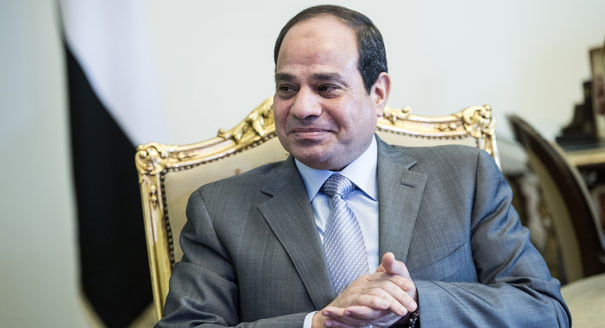
Since 2013, Egypt’s new authoritarian government has systematically widened its repression of the opposition to targets beyond the Islamist spectrum.
Source: Al Jazeera
Since 2013, Egypt's new authoritarian government has systematically widened its repression of the opposition to targets beyond the Islamist spectrum.
Voices of dissent have been targeted, including businessmen whose refusal to provide financial support to the government's mega construction projects has led to the confiscation of their assets.
And journalists like Ismail al-Iskandarani, whose independent reporting has resulted in accusations of terrorist affiliations and mock trials.
Student protests on university campuses and labour protests in industrial facilities have been met with excessive force, while public demonstrations have been subjected to various kinds of state-sponsored violence, including long provisional detention, dismissal from universities, and hefty prison sentences. In the case of labour activists, these include military trials along with disciplinary sanctions.
In order to disguise its human rights abuses as justifiable actions against "enemies of the nation", the government has systematically propagated alternative facts.
A number of human rights organisations as well as pro-democracy civil society groups have been defamed as forces of instability and chaos. Employing its tight grip over the media landscape, the government has accused centres such as the Cairo Center for Human Rights Studies and the Egyptian Center for Economic and Social Rights of constituting a so-called "fifth column", attempting to threaten national security and destroy the military establishment and security services through the "dissemination of false claims" regarding human rights abuses, and conspiring in favour of foreign actors.
Immersing itself in the propagation of alternative facts, the government claimed that these centres have been conspiring to carry out what have been termed "Muslim Brotherhood schemes", receiving foreign funds to spread chaos and fragment the country, and exhausting state and society through continuous internal conflicts.
Lashing out at groups of young citizens who spearheaded the 2011 revolution, stood against the 2013 coup, and have continued peacefully to protest against repressive policies, the authoritarian government has made them a prime target of its alternative facts.
They, too, have been defamed as "enemies of the nation" engaged in a grand and foreign funded conspiracy to turn Egypt into a failed state similar to Syria, Iraq, Libya, and Yemen.
In order to silence them, the government has consciously conflated the peaceful culture of protest of young Egyptians weary of human rights abuses and undemocratic policies with the violent agendas of radical and extremist groups.
One of the clearest signs of this conflation is the government-sponsored ban of the April 6 Movement as a terrorist organisation.
To round off its alternative facts, the government has used public and private media to deny any involvement in official violence or human rights abuses. For these media outlets, local and international reports documenting human rights abuses and narrating the personal tragedies of victims are outright lies.
The extrajudicial killings of hundreds of Egyptians are, according to the government narrative, acts of lawful elimination of terrorists and violent extremists, torture crimes in places of custody are individual mistakes committed by some members of the security services.
According to this narrative, statements decrying police brutality and violations of basic rights and freedoms become mere propaganda materials disseminated by "traitors" of the military establishment that has saved Egypt from slipping into chaos and destruction.
And when abuses and violations are documented and impossible to deny, public and private media outlets have justified them by promoting hate speech unequivocally towards the victims and towards the government's opponents in general.
This happened with the murder of leftist activist Shaimaa El-Sabbagh, who was shot dead in 2015 during a peaceful march to commemorate the fourth anniversary of the 2011 revolution. Her killing was first denied by the security forces.
Later, the authorities acknowledged that she was killed by rubber bullets fired to disperse the march and falsely blamed the demonstrators for inciting violence. In no way could the government afford to acknowledge the truth about El-Sabbagh's killing, as its authority is based on the brittle notion of its own popular legitimacy.
In other cases, victims of state-sponsored violence are labelled collectively as "terrorists", and their indiscriminate killing is justified as the legitimate right of the government. Since 2013, the military and security forces operating in Sinai have been announcing the killing of scores of alleged terrorists in an almost daily fashion.
The victims' identities are rarely revealed, their personal stories are never discussed, and the coverage of public and private media outlets is always confined to proclaiming continuous government successes in fighting terrorism.
Other times, the victims are defamed with arbitrary accusations of involvement in inciting violence or extremism.
In the world of the government's alternative facts, those who adopt the most extreme versions of hate speech and vengeance have enjoyed broader presence. Television presenters, journalists and pundits who have come to prominence after the July 2013 coup are those who defame the victims of the new authoritarianism and pressure citizens into acquiescence in the face of human rights abuses and undemocratic policies.
Since 2013, Egypt's new authoritarianism has exacerbated societal divisions by systematically propagating alternative facts. The labelling of opponents as enemies, terrorists, and violent actors has stirred up vengeful sentiments among wide segments of the population, which have come to demand measures of collective immediate punishment for the Muslim Brotherhood, like-minded Islamist movements, human rights activists, and liberal pro-democracy groups.
The government has propagated these alternative facts without paying attention to the dangerous repercussions they are bound to have on Egypt's societal fabric, without appreciating their negative impacts on notions of justice and the rule of law, without realising the correlations between all this and making Egypt truly unstable.

Director, Middle East Program
Amr Hamzawy is a senior fellow and the director of the Carnegie Middle East Program. His research and writings focus on Egypt’s and other middle powers’ involvement in regional security in the Middle East, particularly through collective diplomacy and multilateral conflict resolution
Recent Work

Sarah Yerkes, Natalie Triche, Amr Hamzawy
Amr Hamzawy
Carnegie does not take institutional positions on public policy issues; the views represented herein are those of the author(s) and do not necessarily reflect the views of Carnegie, its staff, or its trustees.

A notable degree of participative democracy has firmly arrived in Europe. But to have more far-reaching impact, democratic deliberation needs to move into a radically new phase.

Richard Youngs
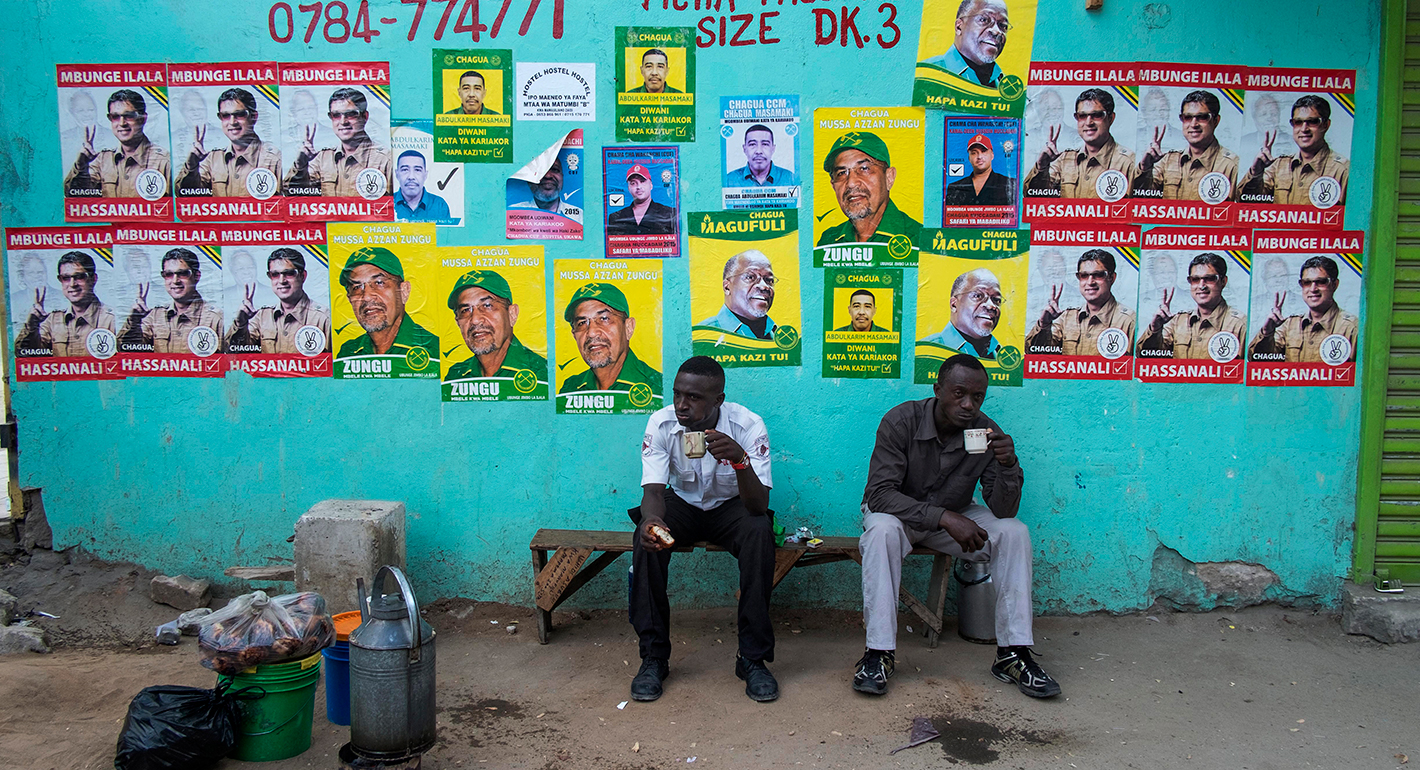
Today’s global democratic recession is partly rooted in a common perception that democracies have a delivery problem, with many citizens in both autocracies and democracies alike now believing that strongmen can achieve better governance outcomes. But a study of four countries in Africa reveals that democratic-leaning governments have demonstrated better governance performance than autocratic governments.
Sarah Yerkes, Natalie Triche, Amr Hamzawy
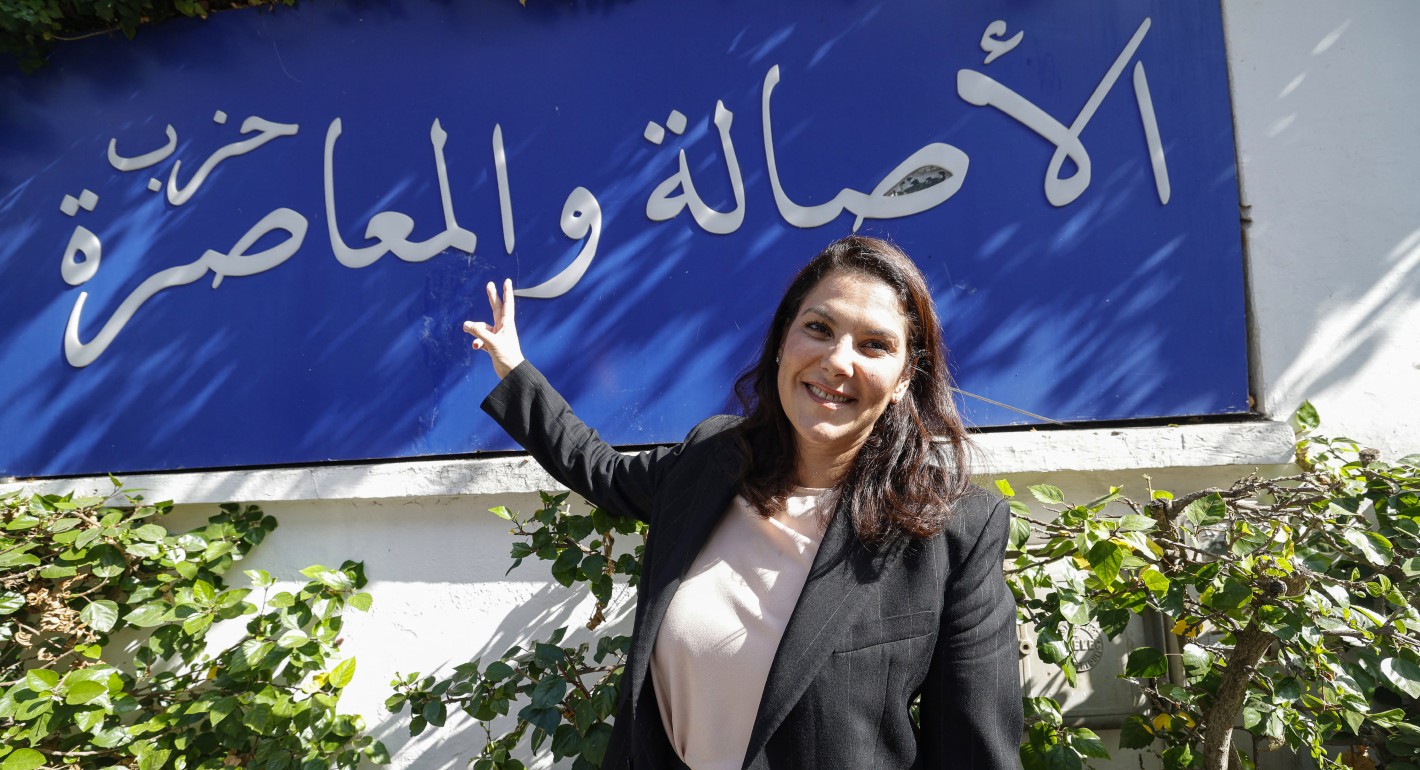
Fatima El Mansouri is the country’s first female prime minister. She’s also a privileged insider in a largely ceremonial position.
Sarah Yerkes

The domestic impacts of how long it is taking to end the war in Ukraine have pushed the French electorate to the political extremes and compromised the country’s diplomatic capacity.

Rym Momtaz

Sergei Kiriyenko used Russia’s parliamentary vote to further hone his strategy of corporate mobilization that is designed to maximize votes for United Russia.

Andrey Pertsev