

In The Media
David Rothkopf
{
  "authors": [
    "David Rothkopf"
  ],
  "type": "legacyinthemedia",
  "centerAffiliationAll": "",
  "centers": [
    "Carnegie Endowment for International Peace"
  ],
  "collections": [],
  "englishNewsletterAll": "",
  "nonEnglishNewsletterAll": "",
  "primaryCenter": "Carnegie Endowment for International Peace",
  "programAffiliation": "",
  "programs": [],
  "projects": [],
  "regions": [],
  "topics": [
    "Foreign Policy"
  ]
}
Source: Getty
The arts and culture are the glue that bind together civilizations and the drivers of social change and yet, more often than not, they are forced to sit at the children’s table when it comes to big public policy discussions.
Source: Foreign Policy
Art is not a luxury, not an adornment of civilization. It is a necessity. It is one of the central purposes of civilization. Artists lead in ways politicians, chief executives, or generals cannot. They enable us to explore the mysterious — deep within us and all around us. They find the universal within the quotidian and in what has never before been imagined — the links that bind us to one another in the most profound ways.
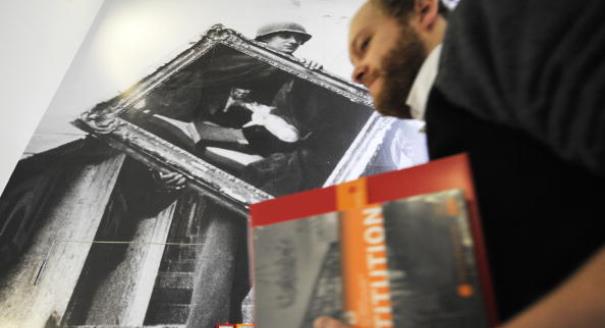
As a consequence, culture — the product of all of the arts within a society amplified and augmented and internalized by custom and social intercourse — is perhaps the most powerful force on the planet. Because culture, in all its myriad manifestations — from the food we eat to products of our genius to the myths and stories by which we identify who we are — is our system of beliefs come to life. That is why those who seek to break down or conquer societies often seek to destroy or steal their great works of art. These are seen as sources of power more formidable than armies. The Taliban blew up the ancient art of Afghanistan. The Islamic State did the same in Palmyra and across Syria and Iraq. Statues are toppled during revolutions. Art and artifacts that have become symbols of nations are seized or claimed almost as talismans that bring with them legitimacy or connections.
Throughout history, political leaders have sought to use the power of culture to bind nations or win supporters, to build bridges and heal. Advocates and champions of social change have used it to stir peoples and capture moments. Business leaders co-opt elements of both classical and popular culture to give identity to brands and to forge connections with potential customers. Because it is the most eloquent manifestation of the human spirit, because when it is great it always touches the heart as well as the intellect, art is perhaps the greatest agent of change the world has ever known.
Diplomats have found art and culture to be invaluable tools. When the delegates gathered for the Congress of Vienna in the beginning of the 19th century, Beethoven was summoned to compose for them. When the United States sought to win support during its rise as a great power, it regularly dispatched artists — whether composer Aaron Copeland and singer and actress Carmen Miranda to promote its Good Neighbor policy or jazz musicians like Louis Armstrong and Herbie Hancock during the Cold War. Russia did the same with the Bolshoi Ballet, and perhaps no country is embracing cultural diplomacy more actively as a tool than China is today.
Ask someone in any corner of the world to say the first thing they think of when they think of a country and it is more likely than not to be a manifestation of their culture — whether a Bollywood movie or K-Pop music or the work of a writer like Gabriela Mistral or Pablo Neruda (both of whom were also diplomats). Surely, Taylor Swift or Beyoncé have done far more to shape the perceptions of America than Rex Tillerson could ever do as secretary of state, or as CEO of Exxon for that matter.
Yet, paradoxically, in some countries, like the United States at this moment, a debate rages about whether the arts are worthy of government support. And almost everywhere in the world, arts education programs for children are underfunded — even though there is massive evidence that in the coming high-tech world of tomorrow the most in-demand capability will be creativity. (That is why the advocates of science-technology-engineering-and-math (STEM) education are now so often presenting themselves as champions of STEAM, adding the “A” for arts because it helps nurture creative capacity.) Further, the arts and cultural communities worldwide are very often seen as being at the margins of global leadership discussions, summits, and major conferences.
The arts and culture are the glue that bind together civilizations and the drivers of social change and yet, more often than not, they are forced to sit at the children’s table when it comes to big public policy discussions. (The entire amount required to fund the National Endowment for the Arts in the United States would pay for one F-35 fighter. Mention such an amount or the term “arts” at a “serious” policy discussion in Washington and many other capitals and top officials will just sniff and turn their attention back to other, often cruder, or less effective tools with which they might achieve their goals.)
That is true in some countries, but not all. Certainly, China is investing heavily in culture and is home today to more major new arts facilities built in the past 15 years than any other country in the world. But smaller countries are seeking to do likewise. The United Arab Emirates has turned itself into a magnet for tourism and sent a message that it seeks to be a global thought leadership capital through its investments in culture — ranging from the new Louvre museum, which will open in Abu Dhabi later this year, to the Guggenheim museum that will soon follow it to the opening of the Dubai Opera House (which sold all its tickets within three hours of them going on sale, even as institutions like New York’s Metropolitan Opera are averaging audiences at only two-thirds of capacity.) A media hub called Two Four 54 and other such enterprises have made the country a film-production capital for blockbusters from Star Wars to Mission: Impossible. This is not an accident. It is part of a recognition that cultural vitality is directly linked to economic vitality and intellectual vibrancy. It sends a message that the country seeks to be seen as a cosmopolitan hub and that it strives to prepare its residents to operate on the global stage.
Now, carrying this commitment a step further, the UAE through the Abu Dhabi Tourism and Culture Authority, the FP Group, and the arts advisory firm and producer TCP Ventures, is convening the world’s first truly global cultural summit — bringing together over 300 cultural leaders from 80 countries worldwide. The five-day event will feature government ministers, internationally known artists and arts administrators, media and tech leaders, and philanthropists in a program designed to explore the future of culture and how its power can be harnessed to produce positive social change: from combating violent extremism to reversing climate change, from empowering women to promoting arts education.
The goal is to harness a force-multiplier that cultural initiatives often fail to fully utilize — the power of community. In fact, the motivating force behind the event is that, thanks to technological advances like smartphones and the internet, we will soon reach the first moment in history when every single human on the planet is connected in a single cultural ecosystem for the very first time. This creates new opportunities for exchange and collaboration and raises new challenges regarding the impact of such connections — from backlash to changing business models and requirements for new thinking about funding or intellectual property protection. We will also honor pioneers of cultural diplomacy in an effort to draw attention to its power and help to professionalize its practice. And there will be art — performance and visual arts from some of the best in the world — that will give the summit the feeling of a festival. Throughout, though the focus will be on identifying actions the group can take together to help harness the power of culture for social good internationally.
It will approach an ancient idea in a new way and with a sense of urgency — one that is driven home by the challenges faced by the region in which we will be holding the meeting, the Middle East. It is just a beginning. Foreign Policy is committed to making this an annual event. But we also hope to produce an impact right now, raising awareness of the opportunity that exists if we recognize that the most potent force for good on the planet is our collective imagination.
Former Visiting Scholar
David Rothkopf was a visiting scholar at the Carnegie Endowment as well as the former CEO and editor in chief of the FP Group.
Recent Work
David Rothkopf
David Rothkopf
Carnegie does not take institutional positions on public policy issues; the views represented herein are those of the author(s) and do not necessarily reflect the views of Carnegie, its staff, or its trustees.

It should address the shortcomings of previous crisis communication efforts and adapt to the demands of frontier AI.

Lucy Luo

Washington’s decision to support some UN functions while letting others wither is pulling the organization apart at the seams.

Stewart Patrick, Theodore Zaritsky

Are Germany’s economic, industrial, and political struggles becoming a liability for the EU’s ability to rise to the geopolitical moment?

Rym Momtaz, ed.

China’s police training infrastructure construction projects provide benefits to recipient countries, promote China’s image as a major global security provider, and are likely to reinforce alignment between Beijing’s security priorities and those of countries in the Global South.


Cameron Waltz, Sheena Chestnut Greitens, Kim Nguyen, …

The Bureau of Industry and Security needs to adjust its focus and practices to maintain its position as the U.S. government’s primary champion of international technological competition.

Geoffrey Irving