

Article
China has showcased its engineering prowess with small modular reactor demonstration projects. But turning these technological achievements into commercial success will be a greater challenge.
Tong Zhao
{
  "authors": [
    "Ulrich Kühn",
    "Tristan Volpe"
  ],
  "type": "other",
  "centerAffiliationAll": "dc",
  "centers": [
    "Carnegie Endowment for International Peace"
  ],
  "collections": [],
  "englishNewsletterAll": "ctw",
  "nonEnglishNewsletterAll": "",
  "primaryCenter": "Carnegie Endowment for International Peace",
  "programAffiliation": "NPP",
  "programs": [
    "Nuclear Policy"
  ],
  "projects": [],
  "regions": [
    "Western Europe",
    "Germany"
  ],
  "topics": [
    "Nuclear Policy"
  ]
}
Source: Getty
Nuclear weapons will not solve Europe’s current security woes, but Washington should not dismiss German nuclear yearnings, as they reflect a growing sense of uncertainty in Berlin.
Source: Foreign Affairs
The election of U.S. President Donald Trump last November confounded Berlin. What, German politicians, policymakers, and journalists wondered, should they make of Trump’s vague or even hostile stances toward the EU and NATO or his apparent embrace of Russia? Some hoped that Trump meant to push NATO members to spend more on defense but would, in the end, leave the long-standing U.S. guarantee of European security intact. Others, less optimistic, argued that the days when Germany could rely on the United States for its defense were over—and that the country must start looking out for itself.
Those fears have given new life to an old idea: a European nuclear deterrent. Just days after Trump’s election, Roderich Kiesewetter, a senior member of Chancellor Angela Merkel’s Christian Democratic Union, said that if the United States no longer wanted to provide a nuclear shield, France and the United Kingdom should combine their nuclear arsenals into an EU deterrent, financed through a joint EU military budget. Then, in February, Jaroslaw Kaczynski, the leader of Poland’s ruling Law and Justice party, spoke out in favor of the idea of the eu as a “nuclear superpower,” as long as any EU deterrent matched Russian capabilities.
Some German commentators even suggested that those proposing a British-French deterrent under the auspices of the EU didn’t go far enough. Berthold Kohler, one of the publishers of the influential conservative newspaper Frankfurter Allgemeine Zeitung, argued that the British and French arsenals were too weak to take on Russia. He suggested that Germany consider “an indigenous nuclear deterrent which could ward off doubts about America’s guarantees.” Other German analysts, such as Thorsten Benner, head of the Global Public Policy Institute, in Berlin, and Maximilian Terhalle, a scholar of international relations, have come to the same conclusion. “Germany needs nuclear weapons,” Terhalle wrote in Foreign Policy in April.
For now, those calling for a German bomb are a fringe minority. For decades, Germany has stood as one of the world’s staunchest supporters of nuclear nonproliferation and global disarmament. In February, a spokesperson for Merkel told the press, “There are no plans for nuclear armament in Europe involving the federal government.” She and others evidently recognize that such plans are a bad idea: a German arsenal would destabilize EU-Russian relations and heighten the risk that other countries would attempt to go nuclear.
But even though Germany’s current nuclear flirtation may reflect nothing more than a passing reaction to Trump’s presidency, it reveals a deeper problem: insecurity in Berlin, caused by years of meandering U.S. policy toward Russia and Europe. To solve this problem, Germany and the United States must work together. Merkel’s government should encourage the EU to coordinate more effectively on defense. The Trump administration, meanwhile, should double down on the U.S. commitment to the success of the EU and NATO while also pushing for broader negotiations with Russia over the future of European security....

Former Nonresident Scholar, Nuclear Policy Program
Ulrich Kühn was a nonresident scholar at the Carnegie Endowment for International Peace, and the head of the arms control and emerging technologies program at the Institute for Peace Research and Security Policy at the University of Hamburg.

Former Nonresident Fellow, Nuclear Policy Program
Tristan Volpe was a nonresident fellow at the Carnegie Endowment for International Peace and assistant professor of defense analysis at the Naval Postgraduate School.
Carnegie does not take institutional positions on public policy issues; the views represented herein are those of the author(s) and do not necessarily reflect the views of Carnegie, its staff, or its trustees.
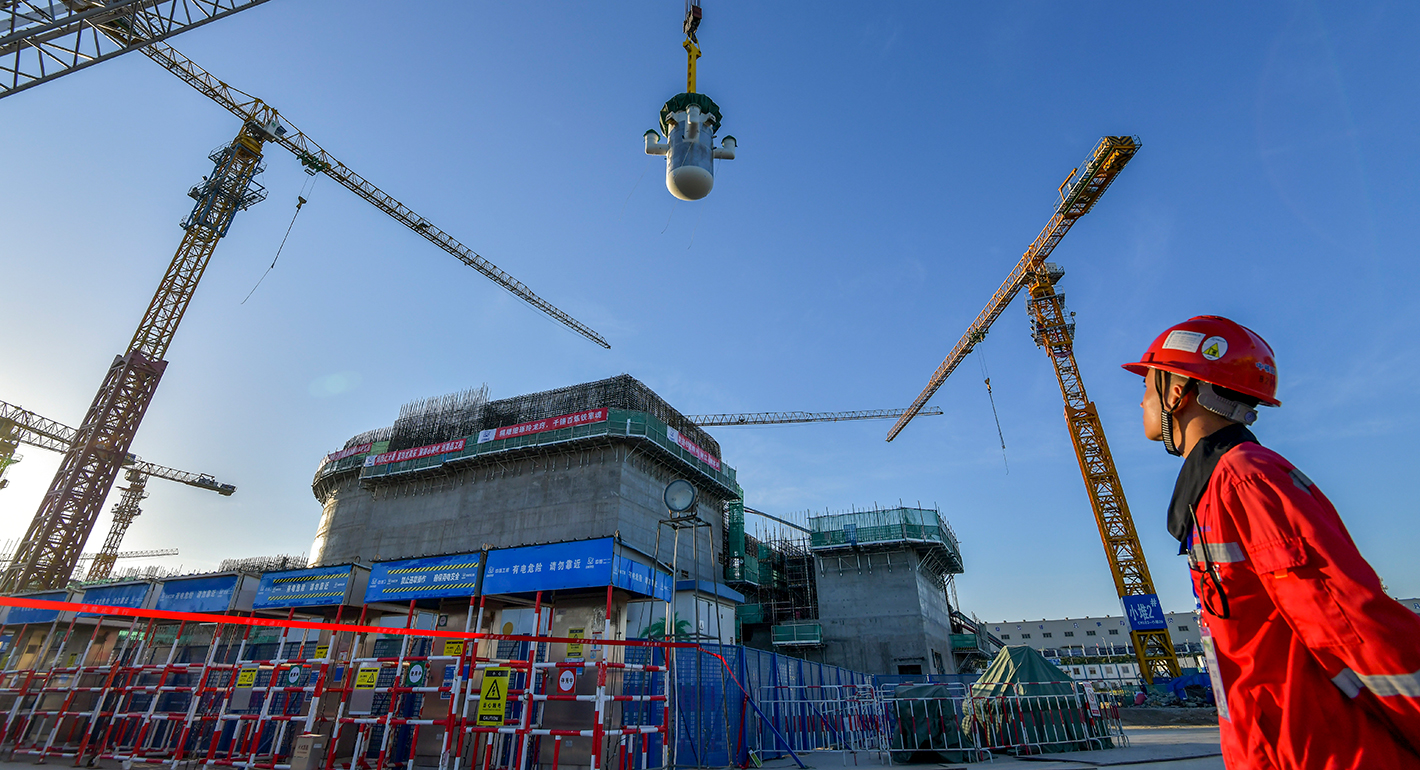
China has showcased its engineering prowess with small modular reactor demonstration projects. But turning these technological achievements into commercial success will be a greater challenge.

Tong Zhao

A notable degree of participative democracy has firmly arrived in Europe. But to have more far-reaching impact, democratic deliberation needs to move into a radically new phase.

Richard Youngs

Before the next wave of EU enlargement takes place, the union needs to grapple with thorny questions of how power is distributed among its members.


Emil Sondaj Hansen, Ditte Brasso Sørensen

The nuclear relationship between China and the United States is increasingly shaped by widening perception gaps rather than deliberate strategic design.
Tong Zhao

Are Germany’s economic, industrial, and political struggles becoming a liability for the EU’s ability to rise to the geopolitical moment?

Rym Momtaz, ed.