

Paper
Richard Youngs, Thomas Carothers
{
  "authors": [
    "Richard Youngs"
  ],
  "type": "legacyinthemedia",
  "centerAffiliationAll": "dc",
  "centers": [
    "Carnegie Endowment for International Peace",
    "Carnegie Europe"
  ],
  "collections": [
    "Civic Activism"
  ],
  "englishNewsletterAll": "democracy",
  "nonEnglishNewsletterAll": "",
  "primaryCenter": "Carnegie Europe",
  "programAffiliation": "DCG",
  "programs": [
    "Democracy, Conflict, and Governance",
    "Europe"
  ],
  "projects": [
    "Civic Research Network"
  ],
  "regions": [
    "Europe",
    "Eastern Europe",
    "Russia",
    "Western Europe",
    "Iran"
  ],
  "topics": [
    "EU",
    "Democracy",
    "Civil Society"
  ]
}
Source: Getty
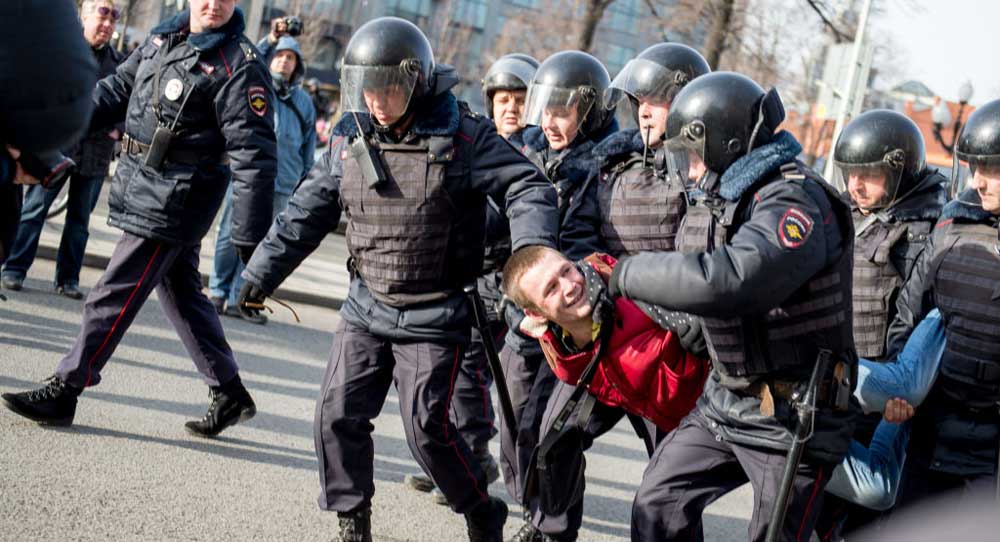
Civic mobilization is an increasingly significant element of global politics—and an increasingly effective one.
Source: Conversation
Mass protest is becoming one of the defining features of global politics in 2017. Protesters have recently been out in force in Russia, Poland, Hungary, northern Morocco and Venezuela; sizeable democracy marches have mobilised to mark key moments in Hong Kong and Turkey, while violent protests rocked the G20 summit in Hamburg.
The protests of recent months are especially noteworthy because many observers and activists had begun to suspect that what looked like an era of mass demonstrations was winding down. Starting around 2010, an exciting window of democratic opportunity seemed to open as the world shook with the fervour of mass protests. Protests against austerity and inequality erupted across Europe and the US, while the popular revolts of the Arab Awakening mobilised against autocrats across the Middle East and North Africa.
But the fever seemed to break after 2012, when enthusiasm gave way to civic pessimism. The European protests failed to soften EU austerity policies, much less produce a new economic consensus. The Arab world as a whole did not transition towards democracy; Egypt is a dictatorship once again; Libya is close to being a failed state; and Syria is still mired in catastrophic conflict. Many thinkers and theorists despair that the new and fluid forms of social mobilisation they were celebrating just years ago have proven ineffectual, and in some cases even harmful for democracy.
Much of the disappointment is justified. But recent trends indicate that the “age of rage” is far from over – and that it’s taking on a strikingly different form.
After a dip in large-scale protests after 2012, several surveys and databases show that in 2016, the intensity of citizen revolts picked up once again. This trend seems to be continuing. Yet it’s not attracting the analytical attention it merits – perhaps because global protest is morphing into a different kind of phenomenon.
The concentration of protests in 2010-2012 attracted such intense interest from analysts, in part because many of the most dramatic events took place in Western democracies; as protests become a more geographically dispersed phenomenon, perhaps Western observers are simply paying less attention.
It’s also true that the massive protests of 2011 and 2012 were built around clear, all-embracing narratives. In the West, they were a fundamental challenge to globalisation, neo-liberalism and even capitalism in general; in the Arab world, they were expressly about ejecting regimes from power.
But in their latest phase, many protests are changing shape. To be sure, plenty of protests still focus on big global issues rather than the national or local. The violent protests at the G20 summit in Hamburg seemed to revive the tradition of anti-capitalist mobilisation around international summits. And other recent protests have certainly had highly political and ambitious aims, such as demanding a president leave office, as happened in The Gambia, South Korea and Venezuela.
But then there are the increasing number of protests targeted at specific, clearly defined problems and policy areas – and these are often the ones that really put governments on the defensive.
Latin America in particular is witnessing its most intense concentration of protests for many years. Beyond the dramatic events in Venezuela, citizens have this year taken to the streets in their hundreds of thousands over corruption in Honduras, petrol prices in Mexico, human rights impunity in Argentina, political corruption in Brazil, and a possible change to presidential term limits in Paraguay.
In Lebanon, it was the problem of rubbish collection that sparked protests in 2015 and 2016. In Turkey, local communities are increasingly mobilising around development projects that threaten to damage the environment. Protests in Tunisia this year focused on working conditions at an oil and gas plant in the impoverished south of the country. Ongoing protests in the Rif region of Morocco began as a call for justice for a fishmonger crushed to death in a rubbish truck, but gradually evolved to take on poverty and local corruption.
In Belarus, citizens rose up not against the regime’s brazen election manipulation, but against a proposed measure to tax the underemployed. In Armenia, citizens took to the streets against electricity price hikes (which were ultimately suspended).
And while this year’s anti-Kremlin protests in Russia began as a reaction to revelations of the prime minister’s corruption, Russian citizens are also increasingly engaged in campaigns against extortion within local development projects.
Clearly it’s time to revisit some of the usual assumptions about what civic activism is and how it works. These sorts of technocratic and locally-focused protests are noticeably different from the overtly anti-regime political uprisings that surged five years ago. A common criticism of spontaneous, supposedly non-organised protests is that they fail to define their aims clearly, invariably dissolving into a visceral, nebulous anti-politics rather than achieving real change. But some of the most notable of recent protests have done exactly the opposite, focusing at least initially on very specific and tightly defined issues.
Mobilisations are increasingly local or nationally specific, rather than transnational movements for systemic changes to regional or global orders. The resulting campaigns may be less spectacular, but some are proving notably more effective than those that erupted around 2010-2012. Belarusians might live in “Europe’s last dictatorship”, but they still managed to see the hated unemployment tax scrapped. Many protest movements are also starting to engage with mainstream political operations such as NGOs and political parties. Rather than a “new politics” setting out to supplant traditional politics, the future will be about how the old and the new interact with each other.
Far from an age of fatigue and disillusionment, this is a time where civic mobilisation is an increasingly significant element of global politics – and an increasingly effective one.

Senior Fellow, Democracy, Conflict, and Governance Program
Richard Youngs is a senior fellow in the Democracy, Conflict, and Governance Program, based at Carnegie Europe. He works on EU foreign policy and on issues of international democracy.
Recent Work

Richard Youngs, Thomas Carothers
Richard Youngs
Carnegie does not take institutional positions on public policy issues; the views represented herein are those of the author(s) and do not necessarily reflect the views of Carnegie, its staff, or its trustees.
This year’s wars have made alternative routes to transit through Russia no less risky for Central Asian countries.

Galiya Ibragimova
By burying disagreements in imprecision, the new deal risks same fate as its predecessors.

James M. Acton
The United States and Israel may have unwittingly revived the Islamic Republic’s “zombie regime.”



Suzanne Maloney, Aaron David Miller, Karim Sadjadpour

When the U.S.-Iran memorandum of understanding was announced, the UK, France, Germany, and Italy declared their readiness to help demine the Strait of Hormuz and lift nuclear sanctions on Tehran. But does Europe need new tools to recover a diplomatic role?

Rym Momtaz, ed.
The ruling elites in contemporary Russia are not a political class, but a community of managers who are not subject to competition or public accountability. The state is becoming an operating apparatus without any internal autonomy.

Alexandra Prokopenko