

Q&A
Eugene Rumer
{
  "authors": [
    "Eugene Rumer"
  ],
  "type": "legacyinthemedia",
  "centerAffiliationAll": "dc",
  "centers": [
    "Carnegie Endowment for International Peace"
  ],
  "collections": [],
  "englishNewsletterAll": "ctw",
  "nonEnglishNewsletterAll": "",
  "primaryCenter": "Carnegie Endowment for International Peace",
  "programAffiliation": "russia",
  "programs": [
    "Russia and Eurasia"
  ],
  "projects": [],
  "regions": [
    "North America",
    "United States",
    "Russia"
  ],
  "topics": [
    "Political Reform",
    "Democracy"
  ]
}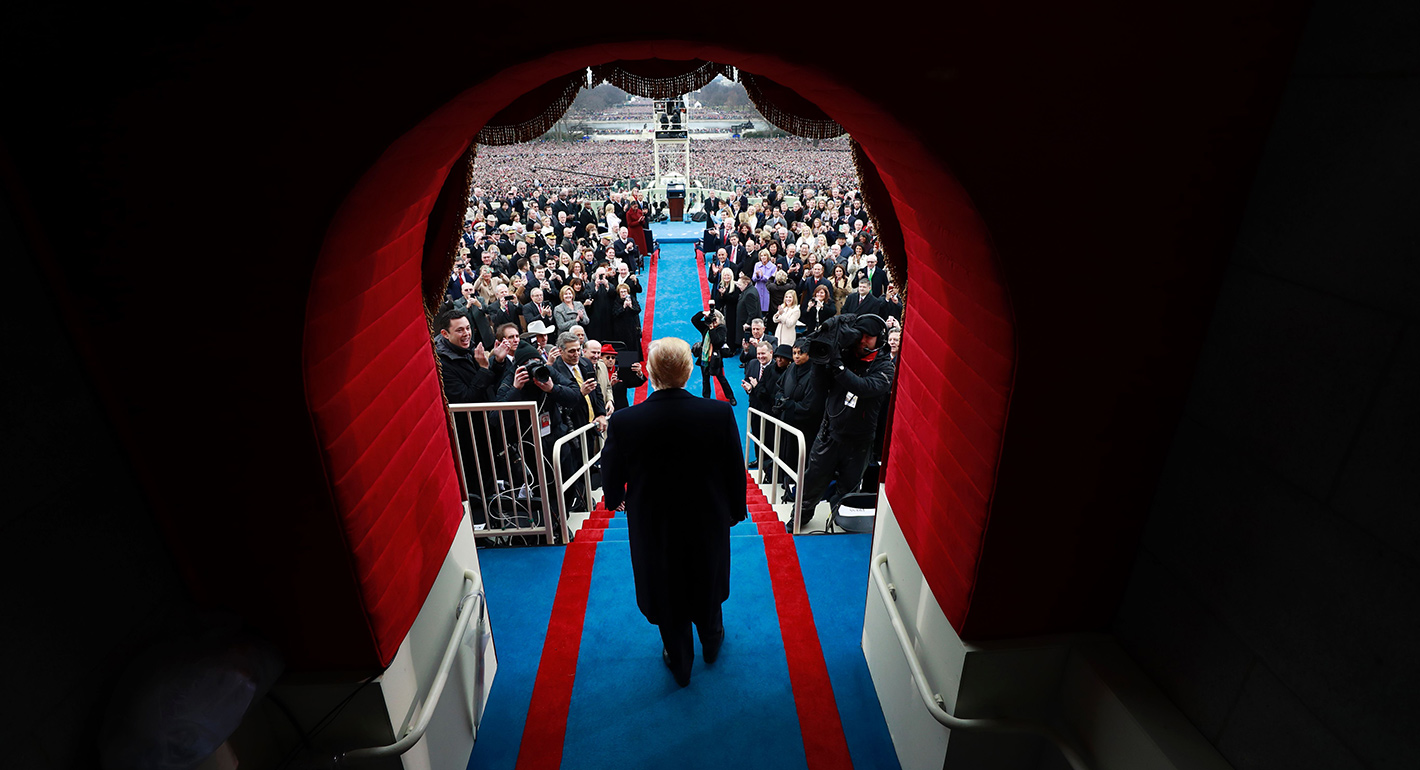
Source: Getty
Conventional wisdom holds that the present situation in Washington is unprecedented. But veteran Russia-watchers have seen this before. They remember Russia in the 1990s.
Source: Politico Magazine
Conventional wisdom holds that the present situation in Washington is unprecedented. The hyperpartisanship, the dysfunctional administration, the accusations of conflicts of interests, the embattled and erratic White House and the president’s reliance on a small circle of trusted insiders, first and foremost his family, have stunned Washington and much of the country and the world. But veteran Russia-watchers have seen this before. They remember Russia in the 1990s.
The president, Boris Yeltsin, a charismatic figure often unable to control his impulses, was a prisoner of the Kremlin, or his out-of-town residence near Moscow. A heavy drinker, he was frequently reported to be unable to perform the duties of his office. He ended up relying on a small group of advisers who became known in Moscow as the "family.” At the center of it was his immediate family, who controlled access to him and his flow of information. First daughter Tatyana was his chief adviser and gatekeeper. Yeltsin’s press spokesman, Valentin Yumashev, who later married Tatyana and became Yeltsin’s chief of staff, was another key figure in the “family.” At one time or another, members of the “family” were reported to be under investigation by various Russian law enforcement agencies on suspicion of corruption. None ever went to trial, but allegations of corruption and ethical violations by those closest to Yeltsin became virtually an everyday feature of Russian political life, and in 1999 Yeltsin sacked the man in charge of the investigation.
The cabinet of ministers led by the prime minister was nominally in charge of the economy. However, real economic power was concentrated in the hands of seven bankers who had used their ties to the Kremlin to amass vast fortunes in the course of the privatization campaign. Together they were reported to control as much as half of the Russian economy. They also controlled major media outlets and used them liberally to promote their business interests, to attack each other, or to support or undercut the Kremlin, depending on whether its policies fit their preferences. Fake news proliferated as a weapon in political and business struggles. When circumstances warranted, some of these oligarchs became government officials and were rewarded for their service—usually not very long—with tax breaks or other benefits for their businesses.
The legislature—the Duma—was rendered dysfunctional by a combination of partisan politics and a new Russian constitution that greatly enhanced the power of the presidency. After the fall of the Soviet Union, competitive elections greatly increased the role of money in political campaigns in an environment marked by few established rules of conduct and legal norms. As a result, many deputies and parliamentary factions became beholden to big money interests. With the Duma unable to legislate, the Kremlin ruled the country by presidential decrees—executive orders—often rumored to be the handiwork of the “family.”
The courts, nominally independent, never really recovered from the blow they suffered during the October 1993 constitutional crisis, when Yeltsin shut down the Constitutional Court and used military force to disband the Supreme Soviet, the Duma’s predecessor. Lacking a tradition of judicial independence, the courts in Russia have never acquired the role of a full-fledged third branch of the Russian government, and in a Kremlin-dominated system slipped into irrelevance.
With Moscow consumed by palace intrigue, the rest of the country could not, would not wait for the “family” to act. Regional governors took matters in their own hands. None followed Chechnya’s lead to fight a war of independence, but some, such as Tatarstan’s leader, Mintimer Shaymiyev, or Kalmykia’s Kirsan Ilyumzhinov, turned their provinces into virtual fiefdoms largely outside of Moscow’s control.
Economic ruin, shattered confidence and political dysfunction were the country’s inheritance at the end of the Yeltsin decade. Russians were sick, depressed and humiliated. Western media declared boldly that “Russia is finished.”
Then along came Vladimir Putin, a former KGB officer handpicked by the “family,” a reliable successor to Yeltsin who would protect its interests. He promised to make Russia great again and promptly restarted the “small victorious war” in Chechnya to boost the country’s sagging morale. He warned the oligarchs to stay out of politics; those who did not went to prison or exile. He reined in the media. He put the governors in their place. He kept his word to the “family” and protected it, but moved it aside and replaced it with his own clan—the “siloviki”—drawn mostly from the intelligence community and law enforcement.
Throughout the tumult of ‘90s Russia, the thought that something like that could happen in the United States was far from the minds of Russia-watchers or Americans in general. The conventional wisdom held that this country’s institutions were strong, its democracy, its economy, its medicine, its education, its military were the envy of the world. The United States is not like the Soviet Union or Russia. But everything there changed rapidly and with no warning, and nobody had expected or predicted it. After a decade of turmoil, Russians welcomed Putin as the strong leader they hoped would save their country from itself.
Director and Senior Fellow, Russia and Eurasia Program
Rumer, a former national intelligence officer for Russia and Eurasia at the U.S. National Intelligence Council, is a senior fellow and the director of Carnegie’s Russia and Eurasia Program.
Recent Work
Eugene Rumer
Eugene Rumer
Carnegie does not take institutional positions on public policy issues; the views represented herein are those of the author(s) and do not necessarily reflect the views of Carnegie, its staff, or its trustees.

It should address the shortcomings of previous crisis communication efforts and adapt to the demands of frontier AI.

Lucy Luo

If the Russian-speaking community in Latvia cannot articulate their interests without being seen as disloyal, they could end up embracing a pro-Kremlin agenda.

Sergejs Potapkins

Washington’s decision to support some UN functions while letting others wither is pulling the organization apart at the seams.

Stewart Patrick, Theodore Zaritsky

While there are notable demographic, economic, and geographic divides over AI, there is also substantial alignment between Republicans and Democrats.

Ian Klaus, Mark Baldassare, Rachel George, …

Russia’s ruling party would have benefited from Putin appearing as its distant patron, but as an active frontman imposing his views on the public, he has done nothing but harm both the party’s election campaign and the ruling system overall.

Andrey Pertsev