

Report
- +2
George Perkovich, Jessica Tuchman Mathews, Joseph Cirincione, …
{
  "authors": [
    "Jon Wolfsthal"
  ],
  "type": "other",
  "centerAffiliationAll": "dc",
  "centers": [
    "Carnegie Endowment for International Peace"
  ],
  "collections": [],
  "englishNewsletterAll": "ctw",
  "nonEnglishNewsletterAll": "",
  "primaryCenter": "Carnegie Endowment for International Peace",
  "programAffiliation": "NPP",
  "programs": [
    "Nuclear Policy"
  ],
  "projects": [],
  "regions": [],
  "topics": [
    "Nuclear Policy"
  ]
}
Source: Getty
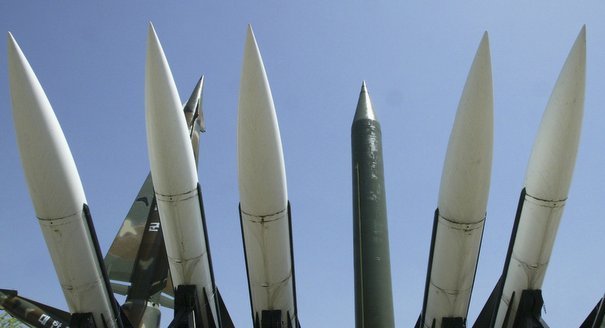
If states truly want to help eliminate nuclear weapons, there are a few meaningful steps they can take to address urgent threats to the cause of global disarmament.
Source: War on the Rocks
A new convention that tries to ban nuclear weapons and make it illegal to possess or use them was opened for signature on Sept. 20. But you would be forgiven if you hadn’t heard about it, since none of the countries that actually have nuclear weapons are likely to sign. Many nuclear experts are concerned about this treaty’s shortcomings, including in the area of inspections and verification, but also about the choice made by many signatories to put negotiation of the treaty above more pressing, and arguably more effective, approaches to advancing disarmament.
Indeed, all of the countries that negotiated the Treaty on the Prohibition of Nuclear Weapon have long been on record opposing the possession of nuclear weapons and are legally committed to not possessing these weapons themselves. So while the treaty will have no immediate impact, it is a clear expression by many countries that nuclear weapons states are not moving fast or earnestly enough to get rid of them, and that far too many are boosting their reliance on nuclear weapons. And these countries are right. But while many of the signatories’ motives are to be respected, bringing together a group of like-minded countries to declare what they have already committed to does not materially advance the cause of disarmament. Those who negotiated the ban took on no new obligations or responsibilities for themselves in this global endeavor.
All countries should move away from a reliance on nuclear weapons and take steps to make that possible. The United States, at least until recently, has championed that goal and put real effort, resources, and capabilities toward making nuclear weapons a smaller part of its defense plans. Finding new ways to reaffirm that goal, the central idea behind the ban, is a step in the right direction. Yet there is much more all states can and must do to show that they are serious about eliminating nuclear weapons. It is easy to repeat previous commitments, but harder and less dramatic for states to take direct steps that require compromise, hard work, and financial and technical investments. States have to put money and political capital behind disarmament if we are to make needed progress in an increasingly dangerous world. Sadly, some of the ban advocates and signatories come up short.
Fortunately, there are things that can be done. If states truly want to help eliminate nuclear weapons, here are a few concrete steps they can take – steps that are more meaningful and address more urgent threats to the cause of global disarmament.
This article was originally published in War on the Rocks

Former Nonresident Scholar, Nuclear Policy Program
Jon Wolfsthal was a nonresident scholar with the Nuclear Policy Program.
Recent Work



George Perkovich, Jessica Tuchman Mathews, Joseph Cirincione, …
Jon Wolfsthal
Carnegie does not take institutional positions on public policy issues; the views represented herein are those of the author(s) and do not necessarily reflect the views of Carnegie, its staff, or its trustees.

The nuclear relationship between China and the United States is increasingly shaped by widening perception gaps rather than deliberate strategic design.

Tong Zhao

A look at why states without nuclear weapons are seeking naval nuclear propulsion, whether they can legally and technically deliver it, what it will cost them, and what responsible stewardship of the capability would look like.

Jamie Kwong

Congress should ask tough questions about the agreement’s more unique features and whether they advance U.S. interests or compromise them.

Jane Darby Menton

Nuclear and maritime communities face a long and challenging journey to deploy commercial nuclear applications at sea.

Jamie Kwong, Toby Dalton
A look at how public opinion influences the credibility of coercive nuclear threats,and how it enables and constrains strategies of nuclear coercion.

Lauren Sukin, Samuel Seitz