

Commentary
Dmitri Trenin
{
  "authors": [
    "Dmitri Trenin"
  ],
  "type": "legacyinthemedia",
  "centerAffiliationAll": "",
  "centers": [
    "Carnegie Endowment for International Peace",
    "Carnegie Russia Eurasia Center"
  ],
  "collections": [],
  "englishNewsletterAll": "",
  "nonEnglishNewsletterAll": "",
  "primaryCenter": "Carnegie Russia Eurasia Center",
  "programAffiliation": "",
  "programs": [],
  "projects": [],
  "regions": [
    "Russia"
  ],
  "topics": [
    "Foreign Policy"
  ]
}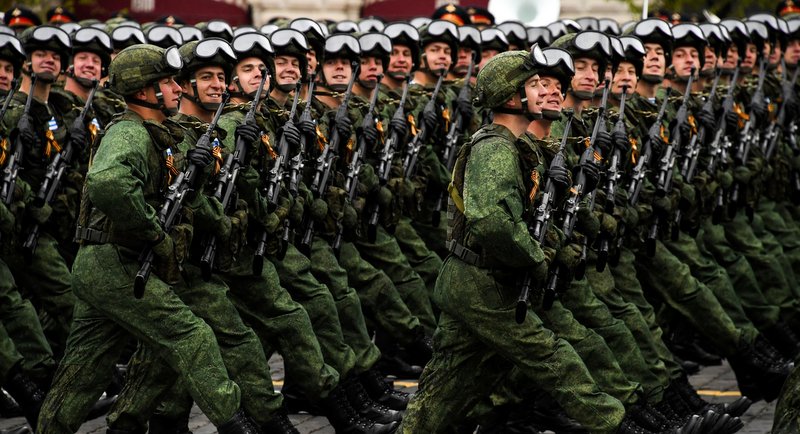
Source: Getty
Today, Moscow militates against the global order dominated by a single power – the United States of America.
Source: Raisina Files 2018
In Russia’s foreign policy, the notion of the national interest and the yearning for a particular global regime of the world order, including Russia’s own status within it, are closely intertwined. Modern Russia has always had to work its way up the international rungs, seeking recognition by the high and mighty and admission to exclusive ‘clubs’ – as a great power in early 18th century Europe; as a member of the short-lived G8. Bolshevik Russia, with its universal mission of bringing the world to some sort of a socialist paradise, was a historic aberration.
Traditionally, from the 19th century Concert of Europe to the 21st century “multipolarity,” Russia has been coming out in favor of a pluralistic international regime of several major players, with itself necessarily part of that concert. Today, Moscow militates against the global order dominated by a single power – the United States of America.
This article was originally published in the Observer Research Foundation's Raisina Files 2018
Former Director, Carnegie Moscow Center
Trenin was director of the Carnegie Moscow Center from 2008 to early 2022.
Recent Work
Dmitri Trenin
Dmitri Trenin
Carnegie does not take institutional positions on public policy issues; the views represented herein are those of the author(s) and do not necessarily reflect the views of Carnegie, its staff, or its trustees.
It should address the shortcomings of previous crisis communication efforts and adapt to the demands of frontier AI.

Lucy Luo
Washington’s decision to support some UN functions while letting others wither is pulling the organization apart at the seams.

Stewart Patrick, Theodore Zaritsky

Are Germany’s economic, industrial, and political struggles becoming a liability for the EU’s ability to rise to the geopolitical moment?

Rym Momtaz, ed.

Russia’s ruling party would have benefited from Putin appearing as its distant patron, but as an active frontman imposing his views on the public, he has done nothing but harm both the party’s election campaign and the ruling system overall.

Andrey Pertsev

China’s police training infrastructure construction projects provide benefits to recipient countries, promote China’s image as a major global security provider, and are likely to reinforce alignment between Beijing’s security priorities and those of countries in the Global South.


Cameron Waltz, Sheena Chestnut Greitens, Kim Nguyen, …