

Commentary
The Bureau of Industry and Security needs to adjust its focus and practices to maintain its position as the U.S. government’s primary champion of international technological competition.
Geoffrey Irving
{
  "authors": [
    "Saksham Khosla"
  ],
  "type": "legacyinthemedia",
  "centerAffiliationAll": "",
  "centers": [
    "Carnegie Endowment for International Peace",
    "Carnegie India"
  ],
  "collections": [],
  "englishNewsletterAll": "",
  "nonEnglishNewsletterAll": "",
  "primaryCenter": "Carnegie India",
  "programAffiliation": "",
  "programs": [],
  "projects": [
    "Political Economy"
  ],
  "regions": [
    "South Asia",
    "India"
  ],
  "topics": [
    "Economy"
  ]
}
Source: Getty
While there is much uncertainty about its final form, it is clear that the quest for universal basic income involves navigating the tricky waters of weak state capacity and the urgency of improving India’s existing welfare architecture.
Source: Livemint
Talk of a universal basic income is no longer limited to Silicon Valley moguls and Scandinavian social democrats. The idea is swiftly gaining currency among economists long frustrated by convoluted welfare bureaucracies and weak state capabilities. Universal basic income is an alluring alternative to traditional poverty alleviation programmes: would it not be easier to just hand out cash?
In India, a growing emphasis on Aadhaar-based direct benefit transfers, small basic income trials, and the search for alternatives to flagship welfare schemes have created a fertile environment for discussion about universal basic income. This debate was re-energized by the Economic Survey 2017, which included a full chapter on financing, targeting, and distributing an Indian universal basic income. The survey argued that by transferring benefits directly from state coffers into Aadhaar-linked bank accounts, universal basic income could sidestep the exclusion, misallocation, and leakage found in major welfare schemes.
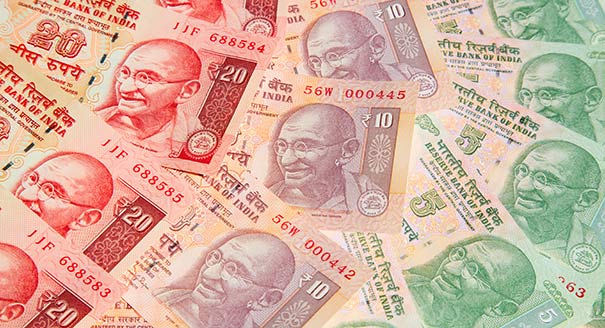
According to its headline estimates, an annual transfer of Rs7,620, distributed to 75% of the population, would push all but India’s absolute poorest above the 2011-12 Tendulkar poverty line and bring the national poverty rate down to 0.5%. This would cost approximately 4.9% of India’s gross domestic product (GDP), fiscal room for which could be found among major subsidies for the poor and those accruing to the well-off, as well as some of the largest Central government programmes. The survey advocated a quasi-universal transfer, citing political and fiscal prudence, and suggested methods ranging from affluence testing to self-targeting to exclude the top 25% of the income distribution.
The survey’s chapter deserves praise for explaining the internal logic behind the pursuit of a universal basic income and firmly embedding it within mainstream policy discourse. By articulating the rationale for such a policy and discussing the instruments at India’s disposal, constraints on policy design, and strategies for implementation, it provided a substantive blueprint around which to structure discussions of an Indian universal basic income. Aware of the tricky logistics of last-mile delivery and the thorny politics of carving out fiscal room, the survey prudently concluded that it was time for further discussion, not implementation.
However, should future Indian policymakers wish to implement a universal basic income, the Economic Survey 2017’s proposal alone offers a weak foundation. A close examination of the proposal’s core features and assumptions reveals the large gap between a universal basic income as it is typically understood and its real-world application. The proposed transfer considers neither the impact of the loss of consumption from removing existing welfare benefits, nor the costs of transitioning to a cash-based safety net. Combined with the use of the Tendulkar poverty line in its calculations, widely criticized for being too low, the sum seems hardly a basic income.
It is also not clear whether universal basic income can effectively outperform major social programmes. The empirical literature on the PDS (public distribution system) and MGNREGA (Mahatma Gandhi National Rural Employment Guarantee Act) reveals that both schemes have improved significantly in terms of targeting performance, coverage, and impact on poverty reduction. Other national programmes seek to accomplish long-term development goals, few of which can be accomplished by cash transfers. This leaves scant space for a meaningful, budget-neutral basic income, while efforts to exclude the rich could reintroduce a role for targeting methods that carry high associated costs for administrators and citizens. Evaluations of direct benefits transfer pilots and Aadhaar implementation show that far from disintermediating a sclerotic administrative machinery, Aadhaar-linked payments throw the limits of the Indian state into sharp relief.
While there is much uncertainty about its final form, it is clear that the quest for universal basic income involves navigating the tricky waters of weak state capacity and the urgency of improving India’s existing welfare architecture. While a true universal basic income seems unworkable at India’s current level of development, certain dimensions of basic income policies may prove more promising.
Small unconditional cash transfers targeted at vulnerable groups have been used by governments from Pakistan to Zambia to successfully improve development outcomes, and can help plug gaps in the patchwork of current social security programmes. A cost-effective step in this direction is to scale up benefits and coverage for social pensions and maternity entitlements, which are backed by evidence of progressive targeting and low leakage levels. Relaxing eligibility criteria and moving towards universalization of existing schemes—the PDS, in particular, has benefited from this approach—presents an alternative path to a less paternalistic and more effective welfare state. The preconditions for such scale-up include rationalizing delivery mechanisms and fund-flows, mitigating delays, and building institutional strength.
Finally, if universal basic income’s allure still proves too powerful to resist, a basic income trial can generate much-needed evidence to effectively dismiss or champion the idea. Such a pilot should be administered by public agencies across several districts or states, evaluated by an independent entity, with robust ethical oversight and protections for participants. Since the core empirical question is whether the Indian government can efficiently deliver cash transfers at scale, this experiment could pay close attention to the impact of programme design and implementation (such as payment channels and transfer size), cost-effectiveness, and targeting performance, in addition to individual and community outcomes.
Until such data is available, the policy discourse must clearly distinguish between efforts to provide a genuinely universal, unconditional, and livable income, and interventions that may derive inspiration from a universal basic income but share little in the way of form or substance. Even so, if a universal basic income can impel a greater focus on universalistic principles in making social policy choices, and strengthening institutions of service delivery, then it may have proven its worth through discussion alone.
Saksham Khosla
Former Research Analyst, Carnegie India
Saksham Khosla was a research analyst at Carnegie India.
Carnegie does not take institutional positions on public policy issues; the views represented herein are those of the author(s) and do not necessarily reflect the views of Carnegie, its staff, or its trustees.

The Bureau of Industry and Security needs to adjust its focus and practices to maintain its position as the U.S. government’s primary champion of international technological competition.

Geoffrey Irving

Depleted financial reserves and a shrinking tax base mean it is no longer possible to simultaneously deliver high defense spending, price stability, and economic growth.

Alexandra Prokopenko
U.S. trading partners in Asia are closely watching the dispute for signs of how it may affect their own interests.

Barbara Weisel

With the growth in points of friction between the great powers, organizations like the SCO will continue to play a role in the strategic adaptation of the smaller powers caught between them.

Temur Umarov
Amid celebrations of bilateral ties was a deeper focus on stability in the Middle East.

Amr Hamzawy