• Research
  • Emissary
  • About
  • Experts
Carnegie Global logoCarnegie lettermark logo
DemocracyIran
  • Donate
{
  "authors": [
    "Katherine Charlet"
  ],
  "type": "other",
  "centerAffiliationAll": "dc",
  "centers": [
    "Carnegie Endowment for International Peace"
  ],
  "collections": [
    "Cyber and Digital Policy"
  ],
  "englishNewsletterAll": "ctw",
  "nonEnglishNewsletterAll": "",
  "primaryCenter": "Carnegie Endowment for International Peace",
  "programAffiliation": "TIA",
  "programs": [
    "Technology and International Affairs"
  ],
  "projects": [],
  "regions": [
    "North America",
    "United States",
    "Iran"
  ],
  "topics": [
    "Security",
    "Technology"
  ]
}

Source: Getty

Other

Understanding Federal Cybersecurity

Federal cybersecurity will be an enduring mission, always evolving and changing to stay ahead of the threat.

Link Copied
By Katherine Charlet
Published on Apr 1, 2018
Program mobile hero image

Program

Technology and International Affairs

The Technology and International Affairs Program develops insights to address the governance challenges and large-scale risks of new technologies. Our experts identify actionable best practices and incentives for industry and government leaders on artificial intelligence, cyber threats, cloud security, countering influence operations, reducing the risk of biotechnologies, and ensuring global digital inclusion.

Learn More

Source: Belfer Center for Science and International Affairs

Federal networks are attractive targets for foreign intelligence services and other malicious actors in cyberspace. Networks serving over 100 agencies and millions of employees enable government missions and operations, handle sensitive internal communications, and store personal data on millions of Americans. The level of threat faced by federal government networks has few parallels, and agencies have been unable to keep up.

Federal cybersecurity is a dense, inaccessible topic to those outside the information security community and even to some inside it. Information is scattered across a variety of government documents, with no “one stop shop” to understand the topic. This report fills the gap by:

  • Characterizing the federal cybersecurity landscape, to include describing roles and responsibilities of various federal agencies and identifying systemic challenges.
  • Summarizing recent federal drives to improve it, such as through information technology modernization, identification of high value assets, using shared services and commercial technologies, detecting and blocking threats, identifying and fixing risk factors, and improving incident response.
  • Reviewing efforts to improve the foundations of federal cybersecurity by enhancing the cyber workforce, research and development efforts, acquisition, and leadership.

Securing federal civilian networks and systems is a complex and daunting prospect. Several systemic factors contribute to a challenging environment:

  1. Difficult tradeoffs between centralized and decentralized management. The overall federal structure is largely decentralized, with each agency managing its own risk, and implementing its own security solutions. Full centralization would bring its own challenges, such as limiting agencies’ ability to develop tailored, agile solutions to their cybersecurity challenges.
  2. Varying levels of engagement of agency top leadership on cyber risk management. Successful agency heads develop an awareness of cyber risk and actively manage it. Within agencies, the authorities of chief information officers vary widely.
  3. Varying effectiveness of levers to direct, incentivize, and enforce action by nonperforming federal agencies. The Department of Homeland Security and Office of Management and Budget have some levers to drive action by individual agencies, and DHS’ increasing operational authority has been critical.
  4. Resource constraints and a rigid government budgeting cycle. Properly resourcing cybersecurity priorities can be expensive, and the structure of the government budgeting process poses challenges for agency cybersecurity efforts.
  5. Scattered congressional oversight. No single congressional body has the full picture of federal cybersecurity measures, and legislative requirements are spread across many bills, making it complicated for federal agencies to adapt to threats.

In developing approaches to better manage cyber risk to federal government systems, policymakers, agency leaders, cybersecurity professionals, and congressional staff should consider the following themes:

  • Sound risk management underpins all federal cybersecurity efforts. Federal agencies cannot and will not prevent every incident or intrusion. Agencies must identify the most important missions and assets, then craft strategies to reduce, mitigate, or accept the risks.
  • Sustained, high-level leadership from agency heads is critical to success. Agencies with engaged department heads or deputies are much more likely to use resources strategically, force mission or business owners to attend to cybersecurity, and empower chief information officers to take steps needed to protect systems and enforce standards.
  • Effective management demands clarity on roles and responsibilities. The federal cybersecurity system is complex. This is not inherently bad but it does demand constant effort to refine, clarify, and institutionalize roles and responsibilities to ensure coherence.
  • Steady, incremental progress makes a difference. The Cyber Sprint in 2016, modest as it was, demonstrated that agencies can make progress when held accountable for discrete milestones, especially on issues of basic cyber hygiene often exploited by intruders.
  • Some areas, however, require constant innovation, or even a fundamental “rethink.” The most advanced agencies have policies that reward and implement innovative ideas on topics like workforce, procurement, and executive education.
  • Congress plays a critical role. Congress authorizes and appropriates agency missions, authorities, and budgets. Very little can be done without strong support and engagement from the legislative branch.
  • Resources matter. Skimping on resources for modernizing networks or attracting cybersecurity talent will reduce the ability of agencies to secure their core missions, with real impacts to both government and citizens.
  • Evolving technology will change the game. Innovation in the digital ecosystem, like automation, will bring both new threats and new defensive applications. The government will need to plan 5- to 10-years ahead to keep from lagging behind.

There are no silver bullets for federal cybersecurity. The system will retain its inherent complexity, necessitating close coordination and partnership. Federal cybersecurity will be an enduring mission, always evolving and changing to stay ahead of the threat. In other words, there is no “finish line”—only continual improvement, adaptation, and cooperation to secure the federal government and those it serves.

Read Full Text

This report was originally published by the Belfer Center.

About the Author

Katherine Charlet

Former Director, Technology and International Affairs Program

Katherine Charlet was the inaugural director of Carnegie’s Technology and International Affairs Program.

    Recent Work

  • Commentary
    Campaigns Must Prepare for Deepfakes: This Is What Their Plan Should Look Like

      Katherine Charlet, Danielle Citron

  • Article
    What the Machine Learning Value Chain Means for Geopolitics
      • +3

      Charlotte Stanton, Vivien Lung, Nancy (Hanzhuo) Zhang, …

Katherine Charlet
Former Director, Technology and International Affairs Program
SecurityTechnologyNorth AmericaUnited StatesIran

Carnegie does not take institutional positions on public policy issues; the views represented herein are those of the author(s) and do not necessarily reflect the views of Carnegie, its staff, or its trustees.
More Work from Carnegie Endowment for International Peace

  • Commentary
    Carnegie Politika
    Is There a Place for Russia in the New Race Back to the Moon?

    Despite having the resources and expertise, the Russian space industry missed the opportunity to offer the United States or China a mutually rewarding partnership in the lunar race.

      Georgy Trishkin

  • Man standing next to a pile of burned cars
    Commentary
    Emissary
    The Myriad Problems With the Iran Ceasefire

    Four Middle East experts analyze the region’s reactions and next steps.

      • Andrew Leber
      • Eric Lob
      • +1

      Amr Hamzawy, Andrew Leber, Eric Lob, …

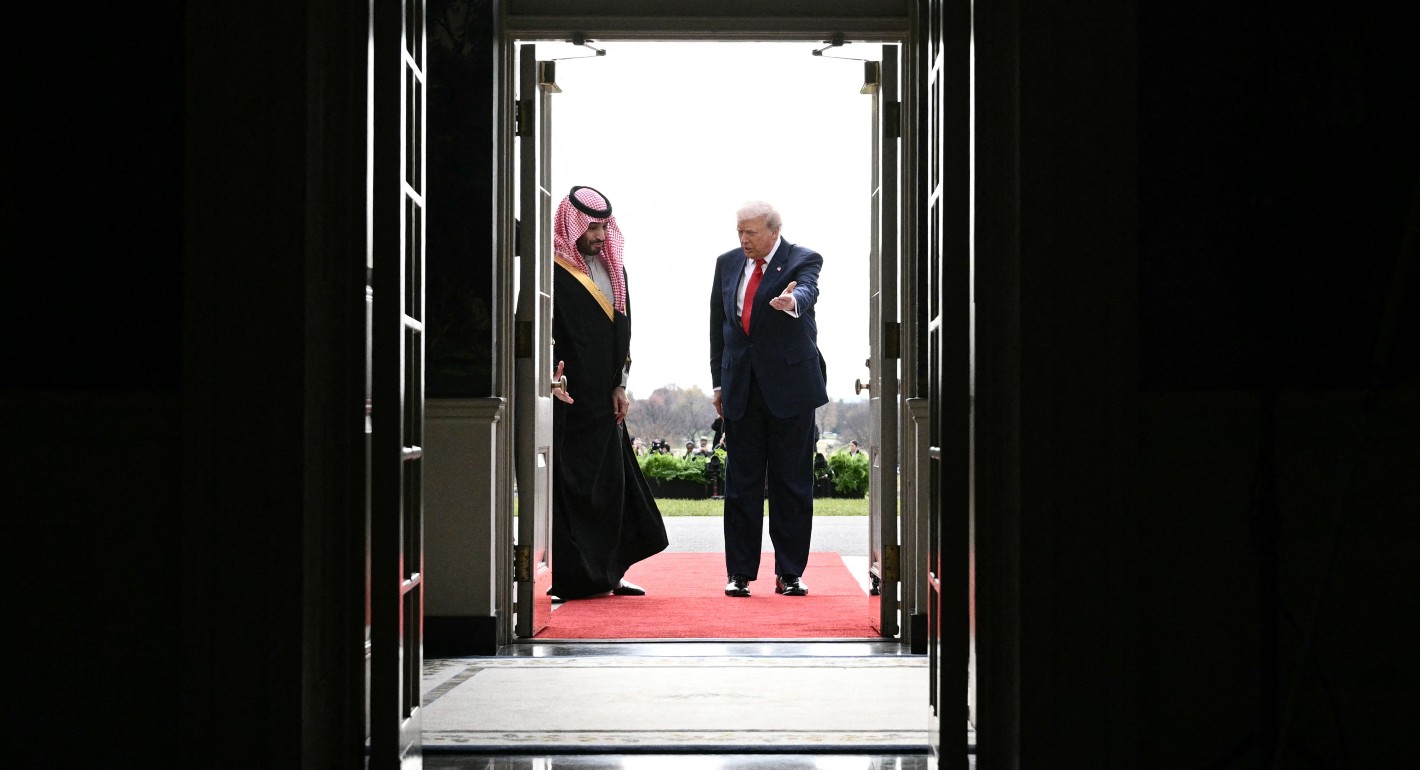
  •  A machine gun of a Houthi soldier mounted on a police vehicle next to a billboard depicting the U.S. president Donald Trump and Mohammed Bin Salman, the Crown Prince and Prime Minister of Saudi Arabia, during a protest staged to show support to Iran against the U.S.-Israel war on March 27, 2026 in Sana'a, Yemen.
    Collection
    The Iran War’s Global Reach

    As the war between the United States, Israel, and Iran continues, Carnegie scholars contribute cutting-edge analysis on the events of the war and their wide-reaching implications. From the impact on Iran and its immediate neighbors to the responses from Gulf states to fuel and fertilizer shortages caused by the effective shutdown of the Strait of Hormuz, the war is reshaping Middle East alliances and creating shockwaves around the world. Carnegie experts analyze it all.

  • Commentary
    Carnegie Politika
    Power, Pathways, and Policy: Grounding Central Asia’s Digital Ambitions

    Central Asia’s digital ambitions are achievable, but only if policy is aligned with the region’s physical constraints.

      Aruzhan Meirkhanova

  • Commentary
    Strategic Europe
    Taking the Pulse: Can NATO Survive the Iran War?

    Donald Trump has repeatedly bashed NATO and European allies, threatening to annex Canada and Greenland and deploring their lack of enthusiasm for his war of choice in Iran. Is this latest round of abuse the final straw?

      • Rym Momtaz

      Rym Momtaz, ed.

Get more news and analysis from
Carnegie Endowment for International Peace
Carnegie global logo, stacked
1779 Massachusetts Avenue NWWashington, DC, 20036-2103Phone: 202 483 7600Fax: 202 483 1840
  • Research
  • Emissary
  • About
  • Experts
  • Donate
  • Programs
  • Events
  • Blogs
  • Podcasts
  • Contact
  • Annual Reports
  • Careers
  • Privacy
  • For Media
  • Government Resources
Get more news and analysis from
Carnegie Endowment for International Peace
© 2026 Carnegie Endowment for International Peace. All rights reserved.